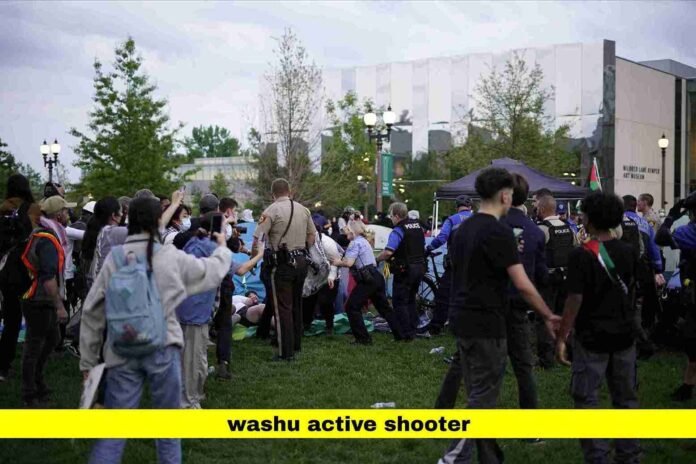

The washu active shooter alert sent shockwaves through Washington University’s Danforth Campus after emergency messages warned of an armed person and instructed students and staff to take immediate protective action. Within minutes, classrooms locked down, officers flooded the area near Brookings Hall, and thousands of people sheltered in place as authorities worked to determine whether a threat existed.
This comprehensive report details what unfolded, how law enforcement responded, what safety systems were activated, and what the campus community experienced during the tense hours that followed. Every fact included reflects confirmed official updates provided today.
Recent Information : February 24, 2026
Lockdown Lifted at WashU Danforth Campus as Police Investigate Possible False Active Shooter Report
The lockdown at Washington University’s Danforth Campus has been lifted after authorities completed a thorough search and found no evidence of an armed individual. University officials confirmed that normal campus operations have resumed, allowing students, faculty, and staff to return to regular activities. Law enforcement continues to investigate the incident, focusing on reports that may have triggered the alert, including the possibility of false or mistaken information that led to the temporary emergency response.
Emergency Alert Sent Across Campus
Shortly after 9 a.m., the university activated its emergency notification system with a message warning of an armed individual on the Danforth Campus. The alert instructed people to run, hide, or fight and to lock or barricade themselves inside secure rooms. Those who were not on campus were told to stay away until further notice. The notification reached students, faculty, and staff through text messages, email, and campus alert platforms simultaneously, ensuring rapid awareness across the community.
The language of the alert followed established emergency response guidance used nationwide when a potential armed threat is reported. Officials did not confirm an active shooter at the time the alert was sent. Instead, they responded to a report of a person believed to be carrying a weapon, treating the situation as potentially dangerous until it could be fully verified.
Police Response Near Brookings Hall
Law enforcement officers responded immediately and focused their efforts on buildings near Brookings Hall, a central academic and administrative structure on campus. Officers began systematically checking rooms, hallways, stairwells, and common areas while maintaining a visible presence outside to secure surrounding walkways.
The response involved university police and coordination with local authorities to ensure a thorough search. Officers moved carefully from building to building, prioritizing safety and verification. During this period, individuals inside buildings were instructed to remain locked down until police could confirm their area was secure.
Authorities emphasized that while a report had been received, there was no confirmation of an active shooter during the search process. The precautionary measures were designed to prevent harm while officers assessed the credibility of the initial information.
Lockdown Procedures Put Into Action
Once the alert went out, classrooms and offices across campus immediately implemented lockdown protocols. Professors stopped lectures, locked doors, and instructed students to move away from windows and remain quiet. Many turned off lights and silenced phones to reduce visibility and noise.
Students in residence halls and library spaces also sheltered in place. Dining facilities paused service and restricted entry. Administrative offices secured entry points while waiting for official updates. The coordinated response demonstrated how preparedness training translates into action during high-stress moments.
The “run, hide, fight” framework provided flexibility depending on location. Individuals near secure rooms remained inside, while anyone who could safely leave the area before police sealed buildings was advised to do so quickly and move away from campus.
Campus Operations Disrupted
The emergency alert halted normal campus life. Morning classes paused. Meetings were interrupted. Students walking between buildings sought the nearest secure shelter. Faculty members reassured students while monitoring official updates.
Transportation routes around campus experienced delays due to law enforcement activity. Parents and family members began contacting the university after receiving messages from students describing the situation.
University officials focused on delivering clear instructions and preventing unnecessary movement that could complicate police operations. The goal remained simple: keep people protected while officers verified the report.
How Communication Systems Functioned
The emergency messaging system worked as designed. Text notifications reached registered phones within seconds. Email alerts followed immediately. Online safety pages displayed the same instructions, ensuring consistent messaging across platforms.
This layered communication approach reduces the chance that someone might miss critical information. Redundancy ensures that even if one system fails or lags, others deliver the message.
Officials continued to send updates as officers progressed through their search, reminding everyone to remain sheltered until further notice.
Clarification on the Nature of the Threat
Throughout the response, university authorities clarified that the alert stemmed from a reported armed individual, not a confirmed shooting. The distinction is important. A report of a weapon triggers immediate protective action even if no shots have been fired and no injuries have been confirmed.
Police treated the report seriously, but they did not confirm that an active shooter was present. This cautious communication avoided speculation while emphasizing safety.
Emergency management teams always err on the side of protection. If credible information suggests possible danger, alerts go out quickly to prevent delay.
Investigation and Building Checks
Officers conducted a thorough sweep of buildings in the affected area. They interviewed witnesses, reviewed available surveillance footage, and assessed any information related to the original report. The methodical process ensured that no part of the campus core was left unchecked.
During these sweeps, individuals who had sheltered in classrooms or offices remained inside until officers confirmed that each space was secure. The investigation required patience, as rushing through buildings could create additional risks.
Authorities maintained visible patrols even after initial checks to reassure the campus community and ensure ongoing safety.
Emotional Impact on Students and Staff
Even without confirmed violence, emergency alerts create significant stress. Students described tense moments waiting quietly behind locked doors. Faculty members focused on maintaining calm while monitoring official channels. Staff in administrative offices balanced safety procedures with communication responsibilities.
Situations like this remind communities how quickly routine academic life can shift. The experience underscores the importance of preparedness and mental health support after emergency events.
Universities often provide counseling services following major alerts to help students and employees process the emotional strain that accompanies uncertainty.
Preparedness and Safety Infrastructure
Washington University maintains a comprehensive campus safety structure that includes a professional police department, controlled building access systems, surveillance cameras, and emergency call stations. These systems support rapid response and coordinated action.
Regular training sessions educate students and staff about lockdown procedures and emergency protocols. Today’s response demonstrated how those preparations function in real-world conditions.
The combination of trained officers, communication technology, and community awareness creates layers of protection designed to reduce risk.
Why Precautionary Alerts Are Necessary
Some may question why such a large response occurs without confirmation of a shooter. The answer lies in risk management. Waiting for absolute confirmation before warning the community could result in unnecessary danger.
Precautionary alerts allow individuals to protect themselves immediately while authorities verify details. Even if a threat ultimately proves unfounded, the early action ensures that people were not left unaware during a potentially dangerous window.
Safety systems prioritize prevention over reaction.
What Happens Before the All-Clear
Before lifting a lockdown, authorities must verify that no armed individual remains on campus, confirm that no injuries occurred, and ensure that all buildings have been searched thoroughly. Only after these conditions are satisfied can officials issue an all-clear message.
Until that confirmation arrives, shelter-in-place guidance remains active. Clear communication signals when it is safe to resume normal activities.
The careful approach reduces the chance of reopening areas prematurely.
Community Cooperation Played a Key Role
Students and staff responded quickly to instructions, which allowed law enforcement to work without interference. Compliance with lockdown procedures helps officers conduct searches efficiently and reduces confusion during tense situations.
Officials acknowledged that cooperation across campus made the response smoother and more controlled.
Looking Ahead After the WashU Active Shooter Alert
As investigations conclude and authorities finalize their assessment, campus operations will gradually return to normal. Classes will resume, offices will reopen fully, and students will continue their academic routines.
The experience reinforces the importance of staying informed and following official guidance during emergencies. It also highlights how preparedness and rapid response systems protect communities during uncertain moments.
The washu active shooter alert demonstrated how quickly a university can mobilize its safety infrastructure when a report of danger surfaces. Swift communication, coordinated law enforcement, and community compliance formed the foundation of today’s response.
Share your thoughts below and stay connected for continuing updates as the situation fully resolves.