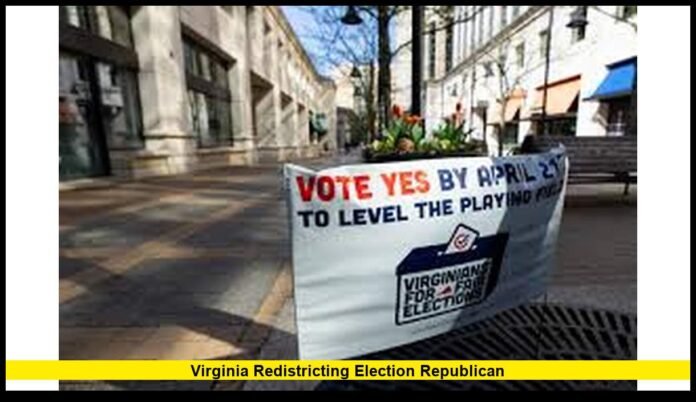

The virginia redistricting election republicans battle has entered a decisive phase as voters prepare to weigh in on a controversial proposal that could redraw congressional districts years ahead of schedule and reshape the balance of power in Washington.
This high-stakes vote is unlike a typical state ballot measure. It carries national consequences, drawing intense attention from political leaders, advocacy groups, and voters who understand that what happens in Virginia could ripple across the country.
The debate has grown into one of the most closely watched political developments of 2026, fueled by heavy spending, legal challenges, and sharply divided public opinion.
If you’re following U.S. politics, this is a moment that could influence the next several election cycles.
A Rare Mid-Decade Redistricting Push
Redistricting typically occurs once every ten years, following the U.S. Census. This process ensures that congressional districts reflect population changes.
However, Virginia’s current proposal would allow lawmakers to redraw district boundaries before the next census cycle, making it a rare mid-decade adjustment.
Supporters argue that extraordinary circumstances justify the move. Opponents insist it breaks with long-standing norms and risks undermining voter trust.
The unusual timing is exactly what has turned this into a national flashpoint.
Understanding the Current Political Map
Virginia sends 11 representatives to the U.S. House. Right now, those seats are closely divided between Democrats and Republicans, creating a competitive environment that reflects the state’s evolving political identity.
The proposed redistricting plan could dramatically alter that balance.
Key projections suggest:
- Several competitive districts could shift toward one party
- The number of safe seats may increase
- The overall delegation could become significantly less balanced
For Republicans, this raises concerns about losing influence not just in Virginia but in Congress as a whole.
Why Republicans Are Pushing Back
Republican leaders and voters have framed this issue as one of fairness and process.
Their arguments center on several core points:
- Redistricting outside the normal cycle disrupts established rules
- The proposed map could favor one party disproportionately
- Voters deserve stable and predictable district boundaries
Many Republicans also argue that frequent changes to district lines can confuse voters and weaken accountability.
They see this election as a chance to prevent what they describe as a politically motivated redraw.
The Democratic Argument for Change
Democrats backing the proposal present a different perspective.
They argue that redistricting is already being used strategically in other states, and failing to act would put Virginia at a disadvantage.
Supporters claim the plan is about:
- Responding to national political dynamics
- Ensuring fair representation across districts
- Correcting perceived imbalances in current maps
They also emphasize that the proposal is temporary and designed to address immediate concerns rather than permanently alter the system.
Massive Spending Reflects High Stakes
The scale of financial investment in this election is striking.
Tens of millions of dollars have been spent on advertising, outreach, and voter mobilization efforts.
Key trends include:
- Heavy spending on television and digital campaigns
- Mailers and targeted messaging reaching voters statewide
- National political organizations playing a significant role
This level of investment signals just how much both sides believe is on the line.
It also highlights how state-level decisions can attract national attention when congressional power is at stake.
Legal Challenges Shape the Battlefield
The path to this vote has included significant legal disputes.
Opponents challenged the process used to place the measure on the ballot, raising questions about procedural compliance and constitutional limits.
Courts ultimately allowed the vote to proceed, but legal questions have not fully disappeared.
This creates a unique situation where:
- Voters may approve the measure
- Courts could still weigh in afterward
- The final outcome may depend on both legal and electoral decisions
The legal backdrop adds another layer of complexity to an already intense political fight.
Voter Engagement Reaches New Levels
One of the most notable aspects of this election is the level of voter participation.
Early voting has been strong, with large numbers of residents casting ballots ahead of Election Day.
This surge in engagement suggests:
- Voters recognize the significance of the issue
- Awareness campaigns have been effective
- Interest spans across political and geographic lines
High turnout could play a decisive role in determining the outcome.
How the Outcome Could Reshape Congress
The implications of this vote extend far beyond Virginia.
If the measure passes and new district lines are implemented:
- The balance of Virginia’s congressional delegation could shift
- The U.S. House margin could be affected
- Party strategies heading into future elections may change
Even a small change in seat distribution can influence legislative priorities and national policy direction.
That’s why the virginia redistricting election republicans fight has drawn attention from across the country.
Campaign Messaging Intensifies
As Election Day approaches, messaging from both sides has become increasingly aggressive.
Voters are seeing:
- Competing ads emphasizing fairness and representation
- Arguments about political influence and voter rights
- Efforts to frame the issue in simple, relatable terms
Each side is working to shape how voters interpret the proposal.
For some, it’s about correcting imbalance. For others, it’s about protecting democratic norms.
Candidates Prepare for Possible Changes
Even before the vote is finalized, potential candidates are positioning themselves for a new political landscape.
This includes:
- Exploring runs in newly proposed districts
- Adjusting campaign strategies
- Building early support networks
The anticipation of change has already begun to influence political planning across the state.
What Happens If Voters Approve the Measure
If the proposal passes, the next steps would move quickly.
Lawmakers would begin the process of drawing new district maps, which could then be used in upcoming elections.
This process would involve:
- Drafting and reviewing district boundaries
- Public input and feedback
- Potential legal scrutiny
The timeline would likely be accelerated to ensure implementation before the next major election cycle.
What Happens If Voters Reject It
If voters vote against the measure:
- Current district maps would remain in place
- Redistricting would follow the traditional census-based schedule
- Political strategies would adjust accordingly
A rejection would signal voter preference for maintaining established processes.
The Broader Debate on Redistricting
This election highlights ongoing national debates about how district lines should be drawn.
Key questions include:
- Should redistricting adapt to political realities between census cycles?
- How can fairness be defined and measured?
- What role should voters play in approving changes?
Virginia’s decision may influence how other states approach similar issues in the future.
Why This Moment Matters
This is more than a policy debate. It’s a test of how voters view representation, fairness, and political power.
The outcome will:
- Shape Virginia’s political future
- Influence national party strategies
- Set a precedent for future redistricting efforts
In a time of closely divided government, even small shifts can have significant consequences.
Conclusion
As voters head to the polls, the stakes could hardly be higher.
The decision they make will determine whether Virginia becomes a model for mid-decade redistricting or a case study in maintaining tradition.
Either way, the impact will be felt far beyond state lines.
This election captures the tension between change and stability, strategy and principle, local decisions and national consequences.
What’s your take on this pivotal vote? Join the conversation and keep following as the results unfold.