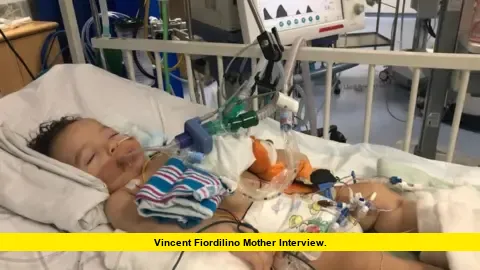

The Vincent Fiordilino mother interview has brought renewed attention to a disturbing medical incident in Gilbert, Arizona, in which 18-month-old Vincent Lorenzo Fiordilino was pronounced dead after a near-drowning emergency but discovered alive in a hospital morgue more than five hours later. His mother, Alexus Fiordilino, has now spoken publicly about the traumatic experience, the moments when she feared she had lost her son, and the questions she believes still need answers.
In her first widely reported interview about the incident, Alexus described the emotional shock of being told that her toddler had died and the overwhelming relief she felt when she learned he was still alive. Her account has also renewed scrutiny of the medical decisions made at Mercy Gilbert Medical Center, particularly the timing of blood-test results and the circumstances surrounding the declaration of death.
The case first drew national attention in February 2026. The latest interview, published in October, has brought the family’s experience back into the spotlight and raised fresh questions about medical accountability, emergency procedures, and how such an extraordinary mistake could occur.
What Did Vincent Fiordilino’s Mother Say in Her Interview?
Alexus Fiordilino described the incident as an experience she continues to relive months later. She recalled believing that her young son had died after emergency responders and hospital staff attempted to save him following a near-drowning incident.
One of the most striking aspects of her account was the emotional transition from grief to disbelief when she learned Vincent was alive.
She expressed how difficult it was to comprehend that a child who had been pronounced dead could subsequently be found breathing in a hospital morgue.
Alexus also spoke about the distress of knowing that her son had been alone during the hours between the declaration of death and his discovery by medical examiner personnel.
Her comments have helped bring a personal perspective to a case that has otherwise focused heavily on medical records, police documentation, and questions about hospital procedures.
For the family, the incident was not simply an unusual medical event. It was a frightening experience involving the apparent loss of a child, followed by an unexpected opportunity for him to survive.
The interview has prompted renewed public interest in Vincent’s recovery and the circumstances that led to the emergency.
How Did Vincent Fiordilino End Up in the Hospital Morgue?
The incident began on February 8, 2026, during a Super Bowl gathering at the family’s home in Gilbert, Arizona.
Vincent was found floating face down in a swimming pool. The situation quickly became a medical emergency, and family members sought help to save the toddler.
Police officers arrived and began cardiopulmonary resuscitation (CPR) before paramedics transported him to Mercy Gilbert Medical Center.
Medical personnel continued efforts to resuscitate Vincent. However, emergency room physician Dr. Aryan Toosi pronounced him dead at approximately 6:20 p.m.
The family believed that their son had died.
Several hours later, the situation took an extraordinary turn. When personnel from the Maricopa County Medical Examiner’s Office arrived to collect Vincent’s body, they discovered that the toddler was still breathing.
The discovery occurred at approximately 11:52 p.m., more than five hours after he had been pronounced dead.
Vincent was subsequently provided medical care and survived the incident.
The circumstances surrounding his declaration of death and the delay before his discovery became the focus of investigations and widespread public scrutiny.
What Happened Between the Death Declaration and the Discovery?
One of the most important questions in the Vincent Fiordilino case concerns what happened during the hours between the doctor’s declaration and the discovery that the child was alive.
According to reporting published by Arizona’s Family in October 2026, documents shared by the family’s attorney raise questions about the timing of a blood-gas test and when the results became available.
The reported timeline indicates that Vincent arrived at the hospital at approximately 6:04 p.m. An arterial blood-gas test was ordered at 6:08 p.m., but that test was subsequently canceled. Blood samples were collected at approximately 6:11 p.m.
Vincent was pronounced dead at 6:20 p.m. The blood-gas results reportedly did not become available until 6:38 p.m., after the declaration had already been made.
Police body-camera footage also reportedly captured officers asking whether the blood-gas results were available before Vincent was pronounced dead.
These details have intensified questions about the information available to the treating physician when the decision was made.
However, the timing of the test and the subsequent discovery of Vincent alive do not, by themselves, establish every medical or legal conclusion about what occurred. A complete assessment requires consideration of the medical records, clinical circumstances, applicable protocols, and findings from any relevant review.
The family has called attention to these questions because they believe the decision-making process deserves closer examination.
Why Is Alexus Fiordilino Questioning the Doctor’s Decision?
A central issue in the mother’s interview is her concern about how quickly the decision to declare Vincent dead was made and whether all relevant medical information had been considered.
Alexus said the family went to the hospital expecting professionals to do everything possible to save their son. After the death declaration, they believed that those efforts had failed.
Learning that Vincent was alive hours later changed the family’s understanding of what had happened.
The newly reported details about the canceled blood-gas test and the timing of laboratory results have added another dimension to her concerns.
The family’s attorney has questioned the medical decision-making process and has indicated that the family intended to file a complaint against the hospital and physician following the October reporting.
These are allegations and concerns raised by the family and its legal representative. They should not be treated as established findings of medical negligence.
As of the latest widely reported developments available on October 22, 2026, the publicly reported information does not establish a final legal determination of responsibility for Vincent’s death declaration.
The distinction matters because an unusual and deeply troubling outcome does not automatically establish that a particular person committed malpractice. That determination depends on the evidence, applicable professional standards, and any resulting legal proceedings.
What Did Vincent’s Mother Say About Finding Out He Was Alive?
For Alexus, the news that her son was alive brought an almost unimaginable change in circumstances.
She had been told that Vincent had died and was trying to process the loss of her toddler. The later discovery that he was still breathing transformed the situation from one of apparent bereavement into an urgent effort to reunite with him and understand what had happened.
In her interview, she described feeling grateful when she learned that Vincent was alive. She also expressed distress over the thought that he had been alone in the morgue.
Her account highlights an important aspect of the story: the emotional consequences for a family that experienced what appeared to be the death of a child, only to learn hours later that the child had survived.
The incident has also raised questions about how families should be informed when a major medical event occurs and how hospitals should communicate when unexpected developments change the situation.
For Alexus and her family, the experience did not end when Vincent was found alive. The questions surrounding his treatment and the circumstances of the death declaration have continued to shape their response to the incident.
Who Is Vincent Fiordilino?
Vincent Lorenzo Fiordilino is an Arizona toddler whose case received national attention after he was pronounced dead following a near-drowning incident and subsequently found alive in a hospital morgue.
He was 18 months old at the time of the February 2026 emergency.
His mother, Alexus Fiordilino, and father, Angelo Fiordilino, became the focus of public attention during the initial investigation into the circumstances of the near-drowning.
The case later developed into two related but distinct areas of concern: the circumstances that led to Vincent entering the pool and the medical decisions made after he arrived at the hospital.
The family has also faced public scrutiny because police initially recommended potential child-abuse charges against both parents. However, the Maricopa County Attorney’s Office announced in July 2026 that neither parent would be charged.
The decision followed a review of the available evidence and the legal standard required for a reasonable likelihood of conviction. Prosecutors cited the safety measures in place at the home, the presence of multiple adults, and the absence of evidence that the parents showed obvious signs of impairment.
That decision is an important part of the case’s history and should not be confused with the separate questions surrounding the hospital’s treatment of Vincent.
Will Vincent Fiordilino’s Parents Face Criminal Charges?
As of the latest reported update, Alexus Fiordilino and her husband, Angelo Fiordilino, will not face criminal charges in connection with their son’s near-drowning incident.
The Maricopa County Attorney’s Office announced the decision in July 2026 after reviewing the case submitted by Gilbert police.
Police had recommended child-abuse charges, but prosecutors concluded that the evidence did not meet the standard necessary to pursue a case with a reasonable likelihood of conviction.
The prosecutor’s decision reflected the legal requirements for criminal prosecution rather than a finding that the incident itself was insignificant.
This distinction is particularly important because public discussion of the case has sometimes combined the initial pool incident with the later hospital events.
The decision not to charge the parents addressed the potential criminal allegations arising from the near-drowning. It did not resolve questions about the doctor’s declaration of death or the hospital’s procedures.
The family’s October interview has therefore renewed attention on a different set of issues, including clinical decision-making, the availability of test results, and the handling of a patient after death has been declared.
Is Mercy Gilbert Medical Center Under Investigation?
The events at Mercy Gilbert Medical Center have prompted questions about the hospital’s emergency procedures and the decisions made during Vincent’s treatment.
The latest October reporting has focused particularly on medical documentation, the timing of laboratory results, and the period between the declaration of death and the discovery that Vincent was alive.
The family’s attorney has questioned aspects of the medical response and has indicated that a complaint against the hospital and doctor was planned.
Separately, the Arizona Attorney General’s Office was reported as saying it had not decided whether to review the case at the time of the October coverage.
These details do not establish that a new investigation has formally begun or that a regulator or court has found wrongdoing.
It is also important to distinguish an attorney’s stated intention to file a complaint from a complaint being formally filed, accepted for investigation, or resolved.
As of October 22, 2026, readers should look for verified announcements about any formal review, disciplinary action, civil lawsuit, or court decision before drawing conclusions about the case’s legal status.
The hospital’s handling of the incident remains an important subject of public interest because the circumstances involve both the declaration of death and the subsequent discovery of signs of life.
What Are the Main Unanswered Questions in the Vincent Fiordilino Case?
The mother’s interview has brought several important questions back into public discussion.
1. Why was Vincent pronounced dead before the reported blood-gas results became available?
The reported timeline raises questions about what information was available to the treating physician at the time of the declaration. Understanding the medical significance of that information requires a careful review of the complete clinical record.
2. What signs of life were observed after the declaration?
Earlier reporting described police body-camera footage and observations that have prompted questions about whether signs of life were noticed before the medical examiner’s personnel discovered Vincent in the morgue.
A complete explanation requires a verified timeline of the observations, the responses they prompted, and the medical circumstances involved.
3. How was Vincent discovered alive?
The reported account states that medical examiner personnel found Vincent breathing when they arrived to collect his body more than five hours after the death declaration. The circumstances of that discovery remain central to understanding the incident.
4. Will a formal review determine whether hospital procedures were followed?
The October coverage highlighted questions about the timing of laboratory testing and medical documentation. Any definitive conclusion about compliance with professional standards would need to come from an appropriate medical, regulatory, or legal review.
5. Will the family pursue legal action?
The family’s attorney indicated an intention to file a complaint against the hospital and doctor. The latest reported developments do not, by themselves, establish the outcome of any complaint or whether a civil lawsuit has proceeded.
These questions explain why the case continues to attract attention beyond the initial near-drowning incident.
Why Has the Vincent Fiordilino Mother Interview Attracted So Much Attention?
The story combines an extraordinary medical outcome with serious questions about emergency care and the experience of a family in crisis.
The fact that an 18-month-old child was pronounced dead and subsequently found alive in a morgue is unusual enough to attract widespread attention. The mother’s account has made the consequences more immediate by explaining what the family experienced during the intervening hours.
There is also a broader public-interest issue. Hospitals and emergency medical professionals make decisions under difficult circumstances, particularly when a patient has suffered a life-threatening event. Those decisions must be evaluated using the medical evidence and the standards that apply to the situation.
When a case raises questions about whether a death declaration was made correctly, the public has a legitimate interest in understanding how the event occurred and whether safeguards worked as intended.
At the same time, responsible reporting requires a distinction between confirmed facts, allegations, and conclusions that have not yet been established.
Alexus Fiordilino’s interview adds an important first-person account to the public record. It does not replace a formal medical investigation, but it helps explain why the family continues to seek answers.
What Happens Next in the Vincent Fiordilino Case?
The next significant developments will depend on whether the family’s planned complaint proceeds, whether any relevant authorities decide to conduct a formal review, and whether further medical documentation or investigative findings become public.
The October reports have drawn renewed attention to the timing of the blood-gas test, the declaration of death, and the discovery of Vincent alive.
Any new findings could help clarify the medical decisions made that evening and establish whether further accountability measures are warranted.
For now, it is important not to confuse reported concerns with a final determination of fault. The parents’ criminal charging question has already been addressed by prosecutors, while the separate questions about the hospital’s handling of the case require their own evidence-based assessment.
The family’s account remains a significant part of the story because it documents the human consequences of an incident that has raised difficult questions about emergency medical care.
As additional verified information becomes available, the most important developments will be those that clarify the timeline, explain the medical decisions, and establish the status of any formal review or legal action.
The Vincent Fiordilino case continues to raise important questions about emergency care and medical accountability. What do you think should happen next? Share your thoughts in the comments and stay tuned for verified updates.