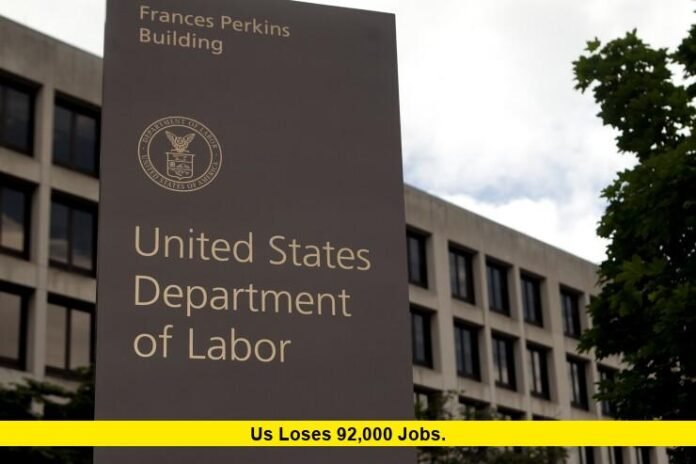

The US loses 92,000 jobs in a surprising setback for the labor market, marking one of the largest monthly employment declines in recent months. New federal labor data released in early March 2026 shows employers cut tens of thousands of positions in February, signaling a sharp shift from the steady hiring seen earlier this year.
The unexpected downturn caught economists off guard. Many analysts had predicted job growth during the month, but payrolls instead shrank across multiple industries. The report suggests the labor market may be entering a more uncertain phase after several years of resilience.
Readers tracking the economy closely should continue watching employment trends and policy responses, as the job market remains one of the clearest signals of broader economic health.
Unexpected Drop in Employment
According to the latest labor statistics, American employers eliminated 92,000 positions in February, reversing the gains recorded just one month earlier. The unemployment rate also moved higher, reaching 4.4%, compared with 4.3% in January.
The data shocked economists because forecasts had predicted around 60,000 new jobs would be added during the month. Instead, payrolls contracted, highlighting growing uncertainty among employers.
January had delivered a stronger performance with roughly 126,000 jobs added, making February’s reversal even more striking.
Economists say monthly job reports can fluctuate due to weather, strikes, or seasonal changes, but a drop of this scale often raises concerns about slowing economic momentum.
Industries Hit by Job Losses
The decline was not limited to one sector. Job cuts appeared across several parts of the economy, suggesting broader caution among employers.
Key sectors affected include:
- Healthcare: Around 28,000 jobs were lost, partly tied to labor strikes involving healthcare workers earlier in the month.
- Construction: Employers cut approximately 11,000 positions, with severe winter weather likely slowing building activity.
- Manufacturing: Factories reduced payrolls by about 12,000 jobs, continuing a longer trend of manufacturing layoffs.
- Restaurants and hospitality: Nearly 30,000 jobs disappeared, reflecting weaker demand in parts of the service economy.
Administrative services and courier businesses also reported significant job cuts, adding to the overall employment decline.
Despite the broader slowdown, the financial sector added roughly 10,000 jobs, showing that some parts of the economy continue to expand.
Why the Labor Market Shifted
Several factors contributed to the employment downturn in February.
One major factor was labor strikes, particularly in the healthcare industry. Tens of thousands of nurses and healthcare workers temporarily stopped working during labor disputes, reducing payroll numbers for the month.
Weather disruptions also played a role. Harsh winter conditions slowed construction and other outdoor work across several states.
At the same time, businesses remain cautious about hiring because of higher borrowing costs and economic uncertainty. Companies often slow hiring during periods when interest rates remain elevated, as financing expansion becomes more expensive.
Another factor affecting the outlook is rising global uncertainty. Energy costs have surged in recent months, adding pressure to both businesses and consumers. Economists say higher operating costs can lead companies to delay hiring or reduce staffing levels.
What the Data Means for the Economy
The latest employment report provides an important snapshot of the U.S. economy at the start of 2026.
For the past several years, the labor market had been a key source of strength. Even when inflation rose and interest rates increased, hiring remained relatively stable. February’s figures suggest that momentum may be slowing.
The rise in unemployment to 4.4% remains historically moderate, but the increase shows that job growth is no longer as strong as it was in earlier stages of the economic recovery.
Financial markets reacted quickly to the data, as employment trends often influence interest rate decisions and investment expectations. Strong employment typically supports consumer spending, while weaker hiring can slow economic growth.
Implications for Federal Reserve Policy
Employment data plays a major role in how policymakers set interest rates.
When job growth slows, pressure can build for the central bank to reduce borrowing costs in order to stimulate economic activity. However, policymakers must balance employment conditions with inflation risks.
If job losses continue in the coming months, economists expect increased debate about whether monetary policy should shift to support hiring and business investment.
For now, officials are closely monitoring economic indicators such as payroll growth, wage increases, and consumer spending.
What Comes Next for U.S. Workers
Although the headline numbers appear concerning, economists emphasize that the labor market still retains several strengths.
Average hourly wages continued to rise during the month, showing that workers still have bargaining power in many industries.
Additionally, unemployment remains relatively low by historical standards. Many businesses continue to report difficulty filling certain skilled positions, especially in technology, finance, and healthcare.
Future job reports will reveal whether February’s decline represents a temporary disruption or the beginning of a broader slowdown.
What do you think about the latest jobs report? Share your thoughts below or check back for more updates as the U.S. economy continues to evolve.