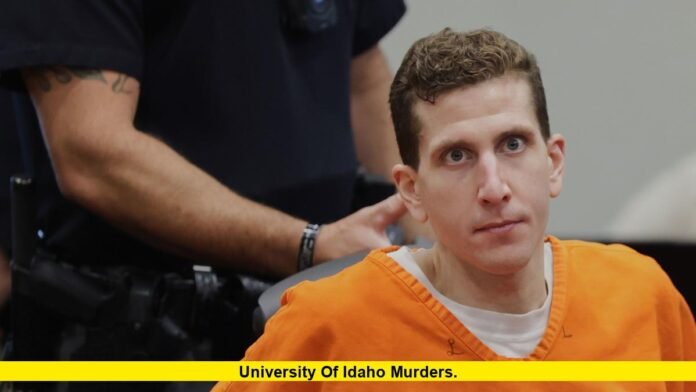

The University of Idaho murders case has taken a dramatic new turn as Bryan Kohberger, the man serving four life sentences for killing four college students, now claims he is innocent and wants his guilty plea thrown out. More than a year after he stood in an Ada County courtroom and admitted to the crimes, Kohberger has filed a handwritten petition asking a judge to let him withdraw that plea and take the case to trial.
The filing has reopened a wound that many hoped had closed for the Moscow, Idaho community and for the families of Madison Mogen, Kaylee Goncalves, Xana Kernodle, and Ethan Chapin. Here’s everything confirmed so far about this fast-moving legal development.
What Happened This Week
On July 27, 2026, Kohberger filed a post-conviction relief petition in Ada County District Court. In it, he asks the court to vacate his conviction and reopen the case entirely.
The New York Times first reported the filing after speaking with Kohberger inside the Idaho Maximum Security Institution near Boise, where he is currently housed. He gave the outlet a written statement that read, in part, that his “actual innocence” is his truth, and that the plea deal must be withdrawn because it rested on false promises.
That statement stands in stark contrast to what Kohberger told the court under oath just over a year earlier.
A Reversal From His Own Sworn Testimony
On July 2, 2025, Kohberger appeared before 4th District Judge Steven Hippler and pleaded guilty to four counts of first-degree murder and one count of felony burglary. During that hearing, the judge asked him directly whether he was pleading guilty because he was, in fact, guilty. Kohberger answered yes.
He confirmed at the time that he was entering the plea freely and voluntarily, without threats or outside pressure. Three weeks later, on July 23, 2025, he was sentenced to four consecutive life terms without the possibility of parole, plus a decade for burglary and roughly $290,000 in restitution to the victims’ families.
Now Kohberger claims that testimony doesn’t reflect what actually happened. In his new filing, he argues his defense attorneys pressured him into the deal by making promises they couldn’t keep and painting an exaggerated picture of what awaited him on death row.
Specific Claims in the Petition
According to court documents made public this week, Kohberger’s petition raises several arguments:
- His attorneys allegedly told him life in prison would come with contact visits, freedom of movement within the facility, and even employment opportunities.
- He claims his lawyers described “elaborate lies” about the conditions of death row to frighten him into accepting the deal.
- He says his plea “need not be truthful,” despite what he calls his own repeated denials of guilt during private conversations with his legal team.
- He argues his counsel failed to disclose or properly review evidence that could have helped his defense.
Kohberger waived his right to appeal as part of the original plea agreement. However, legal experts note that waiver does not prevent him from separately challenging whether the plea itself was valid in the first place.
Why This Is a Steep Legal Climb
Idaho law sets a high bar for anyone trying to undo a guilty plea after sentencing has already occurred. Before sentencing, judges apply a relatively forgiving “fair and just reason” standard. Once a sentence is locked in, though, a defendant must prove what the law calls “manifest injustice.”
Legal analysts who have reviewed the filing say that standard typically requires showing one of the following:
- The plea was not entered knowingly or voluntarily.
- The defendant was not properly informed of the consequences of pleading guilty.
- There was a fundamental defect in the plea process itself.
Kurt Holzer, a trial attorney in Idaho, told local reporters he expects the judge to ultimately deny the motion, predicting it will likely trigger a separate appeals process rather than end the case outright. Other legal observers echoed similar skepticism, noting the gap between Kohberger’s sworn courtroom answers and his current claims will be difficult for him to explain away.
What Happens Next
Prosecutors now have 30 days from the filing date to respond to the petition. Once that response is filed, the court is expected to hear initial arguments from both sides before Judge Hippler decides whether the case moves forward toward a formal hearing.
Nothing about Kohberger’s underlying conviction or sentence has changed at this stage. He remains incarcerated at the Idaho Maximum Security Institution, serving his life sentences, while the petition works through the early stages of the legal process.
A Timeline of the Case So Far
| Date | Event |
|---|---|
| November 13, 2022 | Four University of Idaho students found stabbed to death in an off-campus home in Moscow, Idaho |
| December 30, 2022 | Bryan Kohberger arrested at his parents’ home in Pennsylvania |
| May 2023 | Grand jury indicts Kohberger on four murder counts and one burglary count |
| June 30, 2025 | Kohberger accepts a plea deal to avoid the death penalty |
| July 2, 2025 | Kohberger formally pleads guilty in Ada County court |
| July 23, 2025 | Sentenced to four consecutive life terms without parole |
| July 27, 2026 | Files petition seeking to withdraw his guilty plea |
Victims’ Families React
The Goncalves family, who has remained one of the most vocal voices throughout the case, released a statement this week responding to the new filing. They expressed confidence that if the case were somehow reopened, Kohberger would face the death penalty he avoided the first time by pleading guilty.
Family representatives described their continued frustration with the ongoing legal maneuvering, saying they remain prepared for whatever comes next in the process. Their statement reflected a family that has weathered repeated delays, hearings, and now this unexpected challenge, without wavering in its resolve.
Background on the University of Idaho Murders
For readers newer to the case, the University of Idaho murders refer to the November 13, 2022, killings of four students inside a rental home near campus in Moscow, Idaho. Kaylee Goncalves, 21; Madison Mogen, 21; Xana Kernodle, 20; and Ethan Chapin, 20, were all stabbed in the early morning hours.
Investigators eventually linked Kohberger to the crime scene through DNA evidence found on a knife sheath and through cellphone location data that placed him near the victims’ home multiple times in the months leading up to the attack. He was a Ph.D. student in criminology at nearby Washington State University at the time of his arrest.
The case drew national attention for its brutality, the months-long manhunt, and the eventual guilty plea that many assumed had closed the book on one of the most closely watched criminal cases in recent American history. This new petition suggests that chapter may not be finished after all.
Do you think Kohberger’s petition has any chance of succeeding, or is this simply a delay tactic? Share your thoughts in the comments below.