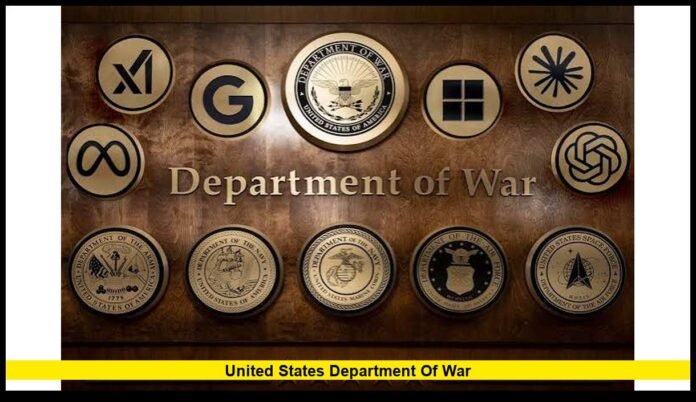

The united states department of war has become a major topic of discussion across the United States after recent federal actions and congressional debate renewed attention on the historic department’s name. Although the original agency was replaced decades ago, the issue has returned to the spotlight because of ongoing efforts to revive the historic title in certain parts of the federal government. At the same time, the department’s long history continues to shape the organization of America’s military today.
Many Americans recognize the Department of Defense as the agency responsible for overseeing the nation’s armed forces. However, before the modern defense structure existed, the United States Department of War served as the primary military department for more than 150 years. Its responsibilities covered nearly every aspect of military administration, from raising troops to managing wartime operations.
Understanding the department’s history helps explain why its name continues to generate discussion in Washington and why it remains one of the most significant institutions in American government history.
What Was the United States Department of War?
The United States Department of War was one of the first executive departments created by the federal government after the U.S. Constitution took effect.
Congress officially established the department on August 7, 1789, giving the young nation a central organization responsible for military affairs. At the time, the United States had only recently secured its independence, and lawmakers believed a permanent military department was necessary to protect the country’s borders and maintain national security.
The department became responsible for overseeing the Army, managing military personnel, supervising forts, purchasing equipment, and preparing the nation for conflict whenever necessary.
For many years, it also handled naval matters until Congress established a separate Department of the Navy in 1798.
The head of the department carried the title of Secretary of War and served as a member of the President’s Cabinet.
Primary Responsibilities
Throughout its history, the department managed a wide range of military functions.
Its responsibilities included:
- Administration of the U.S. Army
- Military planning and strategic operations
- Recruitment and training of soldiers
- Procurement of weapons and military supplies
- Construction and maintenance of forts
- Military engineering projects
- Management of military records
- Coordination of wartime logistics
- Support for military research and development
As the country expanded westward and later emerged as a global power, these responsibilities grew significantly.
Military Conflicts Overseen by the Department
The War Department directed or coordinated military operations during many of the nation’s most important conflicts.
Among them were:
- Northwest Indian War
- War of 1812
- Mexican-American War
- American Civil War
- Spanish-American War
- Philippine-American War
- World War I
- World War II
Each conflict required larger military forces, more advanced planning, and greater industrial support than the previous one.
By the time World War II ended, the department had become one of the largest organizations within the federal government.
The Civil War and the Department’s Growth
The American Civil War marked one of the department’s biggest challenges.
Between 1861 and 1865, the War Department managed the Union Army while overseeing recruitment, transportation, supply chains, communications, and battlefield operations across multiple fronts.
The department also coordinated military hospitals, engineering projects, rail transportation, and weapons production.
Its responsibilities expanded dramatically during those years, creating many administrative practices that influenced future military organization.
World War I Brings Modernization
When the United States entered World War I in 1917, the department again faced enormous logistical demands.
Millions of Americans entered military service.
Factories shifted toward wartime production.
Training facilities expanded nationwide.
The department worked with industry to increase production of rifles, artillery, ammunition, uniforms, trucks, aircraft, and other military equipment.
These efforts helped modernize America’s military infrastructure for future conflicts.
World War II Changed Everything
The attack on Pearl Harbor in December 1941 transformed the nation’s military responsibilities almost overnight.
The War Department supervised one of the largest military mobilizations in American history.
Its duties included:
- Recruiting millions of service members
- Managing overseas deployments
- Coordinating military production
- Expanding research programs
- Building airfields and military bases
- Supporting allied operations
As the war continued, military leaders recognized that modern warfare required closer coordination between ground, naval, and air forces.
That realization eventually led to major organizational reforms after the war ended.
The National Security Act of 1947
One of the most significant changes in American government occurred in 1947.
President Harry S. Truman signed the National Security Act on July 26, 1947.
The law completely reorganized the nation’s military leadership.
Key changes included:
- The War Department ended.
- The Department of the Army replaced it.
- The Department of the Air Force became an independent military department.
- The National Military Establishment was created.
- The National Security Council began operations.
- The Central Intelligence Agency became part of the new national security framework.
These reforms created a more unified defense structure for the postwar era.
Creation of the Department of Defense
The reorganization continued in 1949.
Congress renamed the National Military Establishment as the Department of Defense.
The new department unified military leadership under the Secretary of Defense while maintaining separate military departments for the Army, Navy, and Air Force.
This organizational model remains in place today.
Although the historic War Department no longer exists as a statutory federal department, many of its responsibilities continue through today’s military institutions.
Why the Name Was Changed
Several factors influenced the decision.
Military leaders wanted better coordination among different branches of the armed forces.
Lawmakers also believed that a unified command system would improve efficiency and reduce duplication.
The name “Department of Defense” reflected a broader national security strategy during the Cold War.
Instead of focusing solely on wartime administration, the new department emphasized deterrence, preparedness, intelligence, and long-term military planning.
Why the Department Is Back in the News
The historic name has returned to public attention because of recent developments within the federal government.
Beginning in 2025, President Donald Trump directed executive agencies to restore “Department of War” as an official secondary title for executive branch communications while encouraging broader adoption of the historic name.
As a result, some government communications and branding now include the Department of War designation.
At the same time, Congress has debated legislation that would formally recognize the historic title through federal law.
Those discussions have attracted widespread public interest because changing the department’s statutory name would require congressional approval.
Latest Congressional Developments
The issue became part of debate over the Fiscal Year 2027 National Defense Authorization Act.
The House of Representatives approved legislation that includes language supporting the Department of War name while authorizing military funding exceeding $1 trillion.
Supporters argue the historic title better reflects military readiness and national strength.
Critics believe the existing Department of Defense name remains more appropriate for the modern military.
The Senate has not completed final action on the legislation.
Until Congress passes a bill and the President signs it into law, the Department of Defense remains the official legal name established by federal statute.
Does the United States Department of War Exist Today?
The answer depends on whether someone is discussing history, executive policy, or federal law.
Historically, the department unquestionably existed from 1789 until 1947.
Today, federal statutes continue to establish the Department of Defense as the nation’s military department.
However, executive branch communications may also use the historic Department of War title under current administrative policy.
Because executive actions cannot change federal statutes on their own, both situations currently exist at the same time.
How Today’s Military Is Organized
America’s military structure has changed significantly since 1947.
The Secretary of Defense oversees:
- Department of the Army
- Department of the Navy
- Department of the Air Force
The U.S. Space Force operates within the Department of the Air Force.
Military operations are directed through unified combatant commands that coordinate forces from multiple service branches.
This joint approach allows the Army, Navy, Air Force, Marine Corps, Space Force, and Coast Guard to operate together during national defense missions.
Historic Records Still Carry the War Department Name
Although the department itself no longer operates as it once did, millions of official documents continue to bear its name.
These include:
- Civil War military reports
- World War I personnel records
- World War II operational files
- Engineering maps
- Military correspondence
- Historic battlefield records
- Procurement documents
- Veterans’ service files
Researchers, historians, and families continue to use these archives to learn about military service and American history.
Important Dates in Department History
1789: Congress establishes the Department of War.
1798: The Department of the Navy becomes an independent department.
1861–1865: The department directs Union military operations during the Civil War.
1917: The United States enters World War I.
1941: The War Department oversees nationwide mobilization following the attack on Pearl Harbor.
1947: The National Security Act replaces the War Department with the Department of the Army.
1949: Congress officially creates the Department of Defense.
2025: Executive action restores “Department of War” as a secondary title in certain executive branch communications.
2026: Congressional debate over the historic name continues as lawmakers consider broader legislative changes.
Why This Topic Matters
The discussion surrounding the historic department goes beyond a simple change in terminology.
It reflects broader questions about military tradition, federal law, executive authority, and the evolution of America’s national security institutions.
For historians, the War Department represents one of the nation’s oldest executive departments and an organization that guided the country through nearly every major military conflict before the Cold War.
For policymakers, the current debate centers on whether the historic title should play a larger role in modern government.
Regardless of future legislative action, the department’s influence remains deeply woven into the history of the United States military.
Frequently Asked Questions
When was the United States Department of War established?
Congress created the department on August 7, 1789.
When did it end?
The department was replaced under the National Security Act of 1947.
Who led the department?
The Secretary of War served as the Cabinet official responsible for overseeing the department.
Is it the same as today’s Department of Defense?
No. The War Department was the historic military department that existed until 1947. Today’s Department of Defense operates under a different organizational structure established after World War II.
Why has the name become popular again?
Recent executive actions and congressional debate have renewed public attention to the historic title, making it part of ongoing discussions about military organization and federal policy.
Conclusion
The United States Department of War played a defining role in shaping the nation’s military history from the earliest years of the republic through the end of World War II. It directed military operations during many of America’s most important conflicts and laid the administrative foundation for today’s armed forces.
Although Congress replaced the department nearly eight decades ago, its legacy continues through the Department of the Army and the Department of Defense. Recent executive actions and legislative debate have brought renewed attention to the historic name, making it one of the most closely watched topics involving military organization in 2026. As discussions continue in Washington, the department’s history remains an important part of understanding how the United States built its modern national defense system.
What are your thoughts on the renewed attention surrounding the United States Department of War? Share your perspective in the comments and check back for future updates.