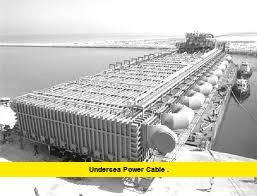

In a high-stakes legal battle that could reshape how insurers handle infrastructure loss claims, a major insurance company has asked a federal court in Washington state to rule that it owes no coverage after a contractor’s accidental damage to an undersea utility line. Undersea Power Cable damage near Puget Sound has triggered a legal fight between insurers, a marine contractor and an electric utility over who must bear the financial burden of what could be a $20 million payout. The insurer’s request for a ruling comes amid broader debate over insurance liability in construction and infrastructure disputes.
This case centers on how far commercial insurance policies extend when critical infrastructure is damaged during private work, a question that has piqued interest from industry watchers, legal experts and utility providers alike.
See how this evolving case could affect insurance for infrastructure projects across the U.S.
Act now to stay connected with updates as this case unfolds.
The Incident at Thompson Cove
In November 2022, marine construction firm Alpha Marine Installations LLC was contracted to set an anchoring system for a mooring buoy in Thompson Cove, near Anderson Island in Puget Sound, Washington. During that work, equipment struck and damaged a 25,000-volt submarine electric cable that served as a backup power link for nearby residents. According to court filings, the cable was critical backup infrastructure for the local utility’s distribution system.
The utility, Tanner Electric Cooperative, reported that the break resulted in temporary power outages for some customers. The utility further asserted that the cable was clearly marked and that marine crews had failed to take proper precautions before deploying their equipment. As a result, Tanner Electric pursued compensation for damages it estimated at between $20 million and $25 million, contending that the cable was effectively unsalvageable.
What the Insurance Company Argues
Great American Insurance Company, which provided a commercial liability policy to Alpha Marine, has filed a declaratory judgment action in the U.S. District Court for the Western District of Washington. The insurer wants the court to affirm that it has no obligation to defend or indemnify the marine contractor in the underlying lawsuit brought by Tanner Electric.
Great American’s position is grounded in policy language that excludes coverage for property damage arising from certain operational activities and underground infrastructure harm. The insurer argues that the damage was a direct result of Alpha Marine’s drilling and anchoring work, meaning the loss falls squarely within exclusions for operational errors and damage to subsurface facilities. In its filing, the insurer said the damage “arises directly out of Alpha Marine’s buoy installation operations,” which it claims is not covered under the policy.
While the insurer is providing a defense for Alpha Marine “under a reservation of rights,” it nevertheless seeks judicial confirmation that coverage does not apply so it will not be responsible for any eventual settlement or judgment owed to Tanner Electric.
Alpha Marine and Tanner Electric’s Legal Claims
Tanner Electric’s lawsuit against Alpha Marine alleges negligence. The utility asserts that Alpha Marine did not take adequate steps to verify the existence of buried infrastructure before beginning work, failed to comply with Washington’s excavation safety laws, and ignored posted warning signs indicating the presence of undersea cables.
These alleged oversights, Tanner argues, directly resulted in the cable damage, forcing utility customers to shoulder the burden of repairs and potentially massive replacement costs.
Alpha Marine has not publicly commented on the case, and its legal team has yet to respond to media inquiries.
Why This Case Matters to the Construction and Insurance Sectors
Legal analysts say this coverage dispute highlights an area of growing tension between insurers and policyholders engaged in marine construction, excavation and other work involving existing infrastructure.
Insurance policies often exclude coverage for certain types of property damage, particularly when losses are tied to a contractor’s operational mistakes or damage to underground utilities. However, utilities, contractors and project owners argue that such exclusions can leave responsible parties without meaningful protection even when damage is accidental and liability is clearly established.
An insurer’s ability to refuse coverage can have far-reaching implications, not only for the parties in this case but also for other infrastructure projects on coasts and inland waterways. The outcome could influence contract terms, risk assessments, and insurance pricing for contractors working near buried or submerged utilities nationwide.
Developments in Washington’s Insurance Regulatory Landscape
This legal conflict arrives at a time when Washington state lawmakers are grappling with broader issues related to insurance rights and consumer protections.
In January 2026, the Washington state Senate passed legislation granting the state insurance commissioner expanded authority to order insurers to pay restitution to policyholders harmed by improper claims handling. The measure aims to give regulators greater leverage to protect consumers—including businesses and individuals—against unfair coverage denials. If enacted into law, these reforms could change how disputes like the undersea power cable case are adjudicated and enforced at the state level.
Industry groups have welcomed the bill, saying it restores balance to situations where insurers attempt to narrow coverage despite clear policy terms supporting a claim.
National Context: Infrastructure Risk and Cable Damage Trends
Damage to undersea cables—whether power lines, telecommunications cables or other critical infrastructure—is not uncommon. Nationwide, such cables can be vulnerable to mechanical activities, natural events and vessel traffic. Studies show that most cable breaks stem from human activities like anchoring, dredging and fishing.
This broader context underscores why precise liability and clear coverage terms are essential in contracts involving subsea operations. If marine contractors cannot rely on coverage for accidental damage, they may face significant financial exposure on projects where even a single error can trigger multimillion-dollar claims.
What’s Next in the Legal Battle?
The case, filed under docket number 3:26-cv-5083 in the Western District of Washington, awaits further proceedings before Judge David G. Estudillo. Parties will likely engage in motion practice on the insurer’s declaratory judgment request, possibly including summary judgment motions and oral arguments on the interpretation of the insurance policy.
How the court rules on coverage could set a precedent in Washington and potentially influence similar cases in other jurisdictions.
As the matter develops, contractors, utilities and insurers will be watching closely to gauge the practical impact on infrastructure projects and risk allocation.
What are your thoughts on this legal showdown over infrastructure coverage? Share your views or check back for ongoing updates as the litigation progresses.