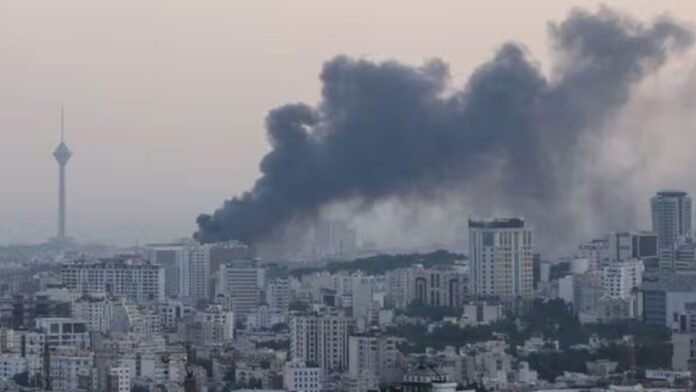

The United States and Israel have significantly expanded coordinated military strikes on Iran, intensifying one of the most serious confrontations in the Middle East in recent years. What began as targeted attacks near offices associated with Iran’s Supreme Leader, Ayatollah Ali Khamenei, in Tehran, has evolved into a broader campaign affecting multiple cities and military sites across the country.
Iranian state media reported explosions in several regions, with smoke rising over parts of the capital. While full casualty and damage assessments have not been officially released, emergency services were mobilized nationwide. The strikes appear to have focused on military infrastructure and facilities allegedly linked to Iran’s missile development and nuclear activities.
President Trump Announces “Major Combat Operations”
President Donald Trump confirmed the escalation in a video statement posted to social media, declaring that the United States had launched “major combat operations in Iran.” He stated that the action was taken due to concerns that Iran continues advancing its nuclear enrichment efforts and developing long-range missile capabilities that could potentially threaten U.S. interests.
According to U.S. officials, the strikes were intended to degrade strategic assets rather than target civilian areas. However, the Pentagon has not disclosed the full scope of the operation, including whether additional waves of strikes are planned or whether this represents a limited campaign designed to send a strategic message.
In the weeks leading up to the strikes, the United States significantly increased its military presence in the Middle East. Additional naval carrier strike groups, advanced fighter aircraft, missile defense systems, and support forces were deployed to the region. Analysts described the buildup as one of the most substantial U.S. force concentrations in the Middle East in decades.
Israel’s Position and Strategic Goals
Israeli Prime Minister Benjamin Netanyahu publicly supported the operation, describing it as a necessary measure to address what Israel considers an existential threat. Israel has consistently opposed Iran’s nuclear program, arguing that Tehran’s enrichment activities and missile testing pose direct dangers to Israeli security.
Israel’s air defense systems were activated shortly after Iran began retaliatory measures. Military officials indicated that preparedness levels were raised nationwide, and emergency protocols were implemented, including reinforced protection for key infrastructure and government facilities.
Iran’s Retaliation
Iran responded swiftly to the joint strikes. The Islamic Revolutionary Guard Corps launched missile and drone attacks toward Israel, prompting widespread air raid sirens and the activation of missile interception systems.
Iranian officials condemned the strikes as acts of aggression and vowed to defend national sovereignty. While the scale of damage from Iran’s retaliatory strikes has not been fully disclosed, the exchange marks a direct military confrontation between state actors rather than proxy engagements.
The potential for further retaliation remains high. Iran maintains influence and allied armed groups across several countries in the region, including Lebanon, Syria, Iraq, and Yemen. Security experts warn that escalation could extend beyond direct strikes into cyber operations or attacks on regional military bases.
Regional Security Measures
As tensions escalated, several Middle Eastern governments implemented emergency measures. Portions of regional airspace were temporarily closed, disrupting commercial flights and international travel routes. U.S. diplomatic facilities in certain Gulf states issued precautionary advisories for personnel.
Hospitals and emergency response units in Israel activated wartime protocols, including relocating critical services to reinforced or underground facilities. Governments across the region heightened security at energy facilities, ports, and strategic infrastructure.
The Strait of Hormuz — a key global oil transit route — is being closely monitored due to concerns that prolonged hostilities could threaten maritime shipping and global energy supplies.
Global Economic Impact
Financial markets responded quickly to the outbreak of hostilities. Oil prices experienced volatility amid fears of supply disruptions. Investors reacted cautiously, with defense sector stocks seeing gains while airlines and travel-related industries faced pressure due to airspace restrictions.
Economic analysts note that sustained instability in the Persian Gulf region could affect global energy markets and broader supply chains. Even limited disruptions to shipping routes or infrastructure could ripple through international markets.
Nuclear Program at the Core of the Conflict
At the center of the confrontation remains Iran’s nuclear program. Tehran maintains that its nuclear activities are intended for peaceful energy production. However, U.S. and Israeli officials argue that enrichment levels and missile development raise serious proliferation concerns.
Previous diplomatic efforts sought to limit Iran’s enrichment capacity and establish monitoring frameworks. The recent military action signals a shift from diplomatic containment toward direct military intervention aimed at halting or degrading capabilities perceived as threatening.
Whether the strikes will achieve long-term strategic objectives remains uncertain. Military analysts emphasize that infrastructure damage does not necessarily eliminate technical expertise or long-term program capabilities.
Diplomatic Efforts and Uncertain Outlook
International leaders have called for restraint, urging both sides to avoid further escalation. Diplomatic channels are reportedly active, though public statements from both Washington and Tehran suggest hardened positions.
Key questions remain unanswered:
- Will additional U.S. or Israeli strikes follow?
- How extensive will Iran’s retaliatory campaign become?
- Could regional allies or proxy forces enter the conflict directly?
- Is there still space for diplomatic de-escalation?
The answers will likely shape the stability of the Middle East in the coming weeks and months.
A Defining Moment
The coordinated strikes by the United States and Israel against Iran mark a pivotal moment in long-standing tensions over nuclear ambitions, missile development, and regional influence. With military exchanges underway and heightened alert levels across the region, the risk of broader conflict remains significant.
As the situation continues to evolve, governments, markets, and citizens worldwide are watching closely. Further updates are expected as official sources release additional verified information.
Disclaimer
This article is based on publicly available official statements and initial reports at the time of publication. The situation is rapidly evolving, and new verified information — including casualty figures, operational details, and diplomatic developments — may emerge. Readers are encouraged to follow credible news sources and official government communications for the most up-to-date information.