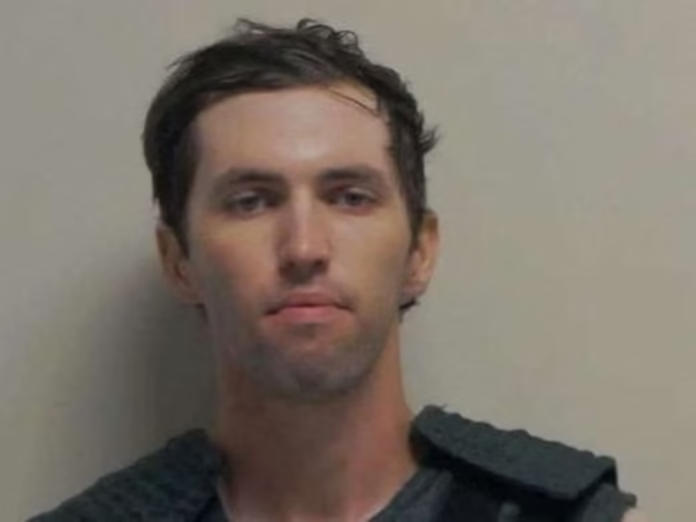

The tragic killing of conservative activist Charlie Kirk at Utah Valley University has sparked nationwide debate, and at the center of the investigation is Tyler Robinson ideology. The 22-year-old suspect was arrested following an intense manhunt, and since then, the public and authorities have been trying to understand what drove him to commit such a violent act.
Background on Tyler Robinson
Tyler Robinson is a 22-year-old Utah resident who became the prime suspect after Charlie Kirk was fatally shot on September 10, 2025. After evading authorities for more than a day, Robinson was eventually taken into custody. Investigators immediately turned their focus toward his background, his political leanings, and any signs of an ideological motivation.
Robinson has no prior criminal record. He briefly studied at Utah State University in 2021 before shifting into an electrical apprenticeship program at Dixie Technical College. While his family has a conservative political background, Robinson himself is listed as unaffiliated and had not voted in recent elections.
Shifts in Political Interest
Over the past few years, Robinson had reportedly shown greater interest in politics. Friends and acquaintances suggested that his views had become more outspoken. He was particularly critical of Charlie Kirk, describing him in conversations as a divisive figure. This growing hostility has led many to question whether Robinson’s developing political opinions shaped the decisions that culminated in the attack.
Clues About Tyler Robinson Ideology
Although Robinson has not left behind a manifesto or any clear statement of intent, pieces of evidence recovered by authorities point to the ideological themes he may have embraced.
- Anti-fascist references: Bullet casings found near the scene included inscriptions tied to anti-fascist slogans.
- Pop culture and meme culture: Some of the markings also referenced gaming codes, memes, and internet catchphrases, mixing political messaging with digital subcultures.
- Critical view of conservatism: In private conversations, Robinson expressed a belief that figures like Kirk promoted hate, reinforcing the idea that his actions were politically charged.
These details suggest his ideology was not rooted in a single political party or movement but was instead a blend of anti-fascist sentiment, internet culture, and personal grievances.
Ambiguity and Complexity
The challenge in understanding Tyler Robinson ideology is that it does not fit neatly into one category. On one hand, the anti-fascist inscriptions imply sympathies with far-left resistance movements. On the other hand, investigators have not uncovered clear links to organized groups or radical organizations.
Some analysts believe Robinson’s outlook reflects a broader modern pattern where political anger mixes with online subcultures, producing a worldview that is inconsistent but emotionally intense. This lack of clarity makes it difficult to assign Robinson to any single ideological camp.
What His Ideology Is Not
There are several points that help rule out certain assumptions:
- Robinson has not been tied to an extremist organization.
- He had no history of organized political activism or leadership roles.
- He did not actively participate in elections or campaigns, showing limited engagement in mainstream politics.
Instead, his political identity appears to have been shaped more by personal frustration, digital spaces, and a growing antagonism toward prominent conservative voices.
Current Status
Robinson remains in custody while formal charges are prepared. Prosecutors are expected to pursue aggravated murder along with additional counts related to firearms and public safety. Authorities continue to analyze his online activity, communications, and digital footprint to understand how deeply ideology factored into his actions.
The case has also reignited debates in the United States about the role of online communities, political polarization, and the thin line between rhetoric and violence.
Conclusion
Tyler Robinson ideology cannot be reduced to a single label, but the clues suggest a combination of anti-fascist ideas, hostility toward conservative figures, and influences from internet culture. His actions have raised pressing questions about how political anger and online discourse may intersect in ways that lead to real-world violence.
The full picture of his beliefs is still unfolding, but what is already clear is that this incident will have lasting effects on the national conversation about political polarization and public safety.
What do you think—does Who Was the Shooter of Charlie Kirk: Suspect Identified as Tyler Robinson
highlight a new, confusing era of ideology shaped by digital culture, or does it reflect an individual grievance that escalated into tragedy? Share your thoughts and stay engaged as this story develops.