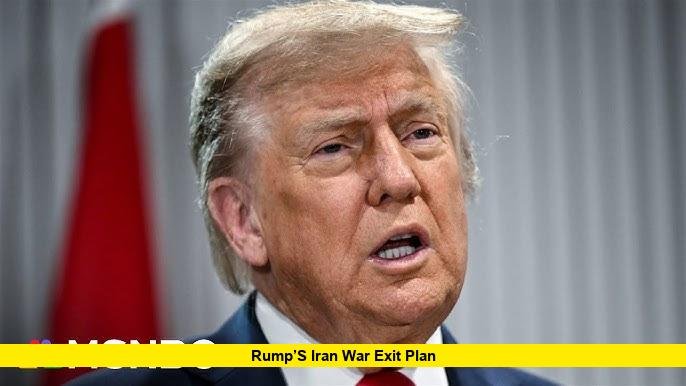

Rising tensions in the Middle East have reignited a global debate over energy security, military responsibility, and international cooperation. Recent remarks by Donald Trump—suggesting that countries dependent on Middle Eastern oil should take responsibility for securing it—have drawn both support and criticism.
At the center of the controversy is a crucial question:
If conflict involving the United States and Israel contributes to instability—particularly around key oil routes like the Strait of Hormuz—is it fair to expect other nations to handle the consequences?
This fully cited explainer examines the issue through supporting arguments, opposing views, and a neutral perspective, grounded in recent reporting and long-standing geopolitical analysis.
🟢 The Case Supporting Trump’s View: Burden-Sharing and Strategic Realism
Supporters of Trump’s position argue that his remarks reflect a pragmatic shift toward shared global responsibility.
Dependence should drive responsibility
According to reporting by The Guardian, Trump criticized European nations for not doing enough and suggested that countries relying heavily on Middle Eastern oil should take a more active role in securing supply routes.
The Strait of Hormuz is one of the world’s most critical oil chokepoints, with a significant share of global crude passing through it. Countries in Europe and Asia depend heavily on this route, reinforcing the argument that those who benefit most should contribute more.
The long-standing U.S. military burden
For decades, the United States has maintained a dominant naval presence in the Gulf region. As highlighted in coverage by Reuters, Trump has signaled a willingness to reduce U.S. involvement, suggesting that America may step back once its objectives are met.
This aligns with broader debates within NATO, where the U.S. has repeatedly urged allies to increase defense spending and share security responsibilities.
America’s reduced reliance on foreign oil
The U.S. has become one of the world’s leading energy producers, significantly lowering its dependence on Middle Eastern imports. Supporters argue this shift justifies a recalibration of responsibilities, with other nations stepping up to protect shared economic interests.
👉 From this perspective:
Trump’s stance reflects a logical redistribution of responsibility in a changing global energy landscape.
🔴 The Case Against Trump’s View: Accountability and Global Leadership
Critics argue that Trump’s position overlooks key issues of responsibility, causation, and global stability.
Responsibility follows involvement
If tensions with Iran escalate due to actions involving the U.S. and Israel, critics argue those actors cannot distance themselves from the consequences.
International relations experts often emphasize that countries contributing to instability share responsibility for managing its fallout—including disruptions to oil supply.
The U.S. role as a global stabilizer
For decades, the United States has acted as a key guarantor of global trade security. Reports from The Guardian highlight concerns among allies that a sudden U.S. withdrawal could undermine stability and strain international partnerships.
Critics warn that stepping back during a crisis could:
- Increase geopolitical tensions
- Encourage regional power struggles
- Weaken long-standing alliances
A globally interconnected oil market
Even with increased domestic production, the U.S. remains tied to global oil markets. Disruptions in the Strait of Hormuz can drive up prices worldwide, affecting inflation and economic stability across countries.
Coverage from New York Post and other outlets has highlighted how instability in the region quickly translates into global market volatility.
👉 From this perspective:
Responsibility cannot be separated from involvement, and global leadership carries ongoing obligations.
⚖️ A Neutral Perspective: Shared Responsibility in an Interconnected World
A balanced analysis suggests that both sides raise valid points, reflecting the complexity of modern geopolitics.
A shifting global order
The international system is evolving toward a more multipolar structure, where power—and responsibility—is distributed among multiple nations. Trump’s call for burden-sharing reflects this broader transition.
Interdependence complicates the issue
Energy markets, military alliances, and geopolitical strategies are deeply interconnected. No country can fully isolate itself from global disruptions, even if it produces its own energy.
At the same time, it is also true that many nations have relied heavily on U.S. security guarantees without proportionate contributions.
Toward cooperative solutions
Rather than framing the issue as a binary choice, many analysts advocate for:
- Greater international cooperation in securing trade routes
- Shared military and financial commitments
- Multilateral approaches involving both Western and non-Western powers
👉 This perspective emphasizes collective responsibility over unilateral action.
🧩 Conclusion: A Debate That Reflects a Changing World
The debate surrounding Donald Trump’s remarks highlights a deeper global dilemma:
👉 Should nations prioritize their own interests, or share responsibility for maintaining global stability?
Recent reporting from Reuters and The Guardian confirms that Trump is considering a reduced U.S. role in the conflict, while urging other nations to take greater responsibility—especially regarding oil security.
At the same time, critics warn that disengagement without accountability could have far-reaching consequences for global markets and alliances.
💬 What Do You Think?
- Is Trump right to push for burden-sharing in protecting global oil supplies?
- Or should countries involved in escalating tensions remain responsible for the consequences?
Share your thoughts in the comments—because in today’s interconnected world, public opinion plays a growing role in shaping global policy.