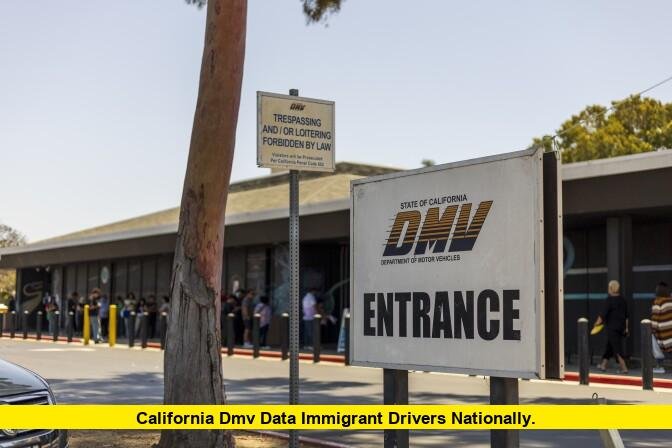

California is preparing to share detailed driver’s license information with a national organization, including data on more than 1 million immigrants who hold AB 60 licenses without legal authorization to live in the United States. This development, reported on April 28, 2026, has sparked significant debate over privacy, immigration enforcement, and compliance with federal REAL ID requirements.
The California Department of Motor Vehicles (DMV) plans to provide this data to the American Association of Motor Vehicle Administrators (AAMVA), a nonprofit whose board includes DMV officials from across the country. The information will feed into AAMVA’s State-to-State Verification system (S2S) and the SPEXS platform. These systems help verify whether individuals hold multiple driver’s licenses across states and support broader REAL ID compliance efforts.
Background: AB 60 Licenses and Privacy Protections
In 2013, California enacted Assembly Bill 60 (AB 60), allowing individuals unable to prove legal presence in the U.S. to obtain driver’s licenses if they meet other requirements, such as proof of identity and California residency. Over 1 million people have received these licenses, which are marked differently from standard ones and explicitly not intended for federal identification purposes.
AB 60 included strong privacy protections, prohibiting the use of application data for determining citizenship or immigration status. Advocates for immigrants and privacy groups viewed this as a key safeguard. However, the current push for data sharing with AAMVA is seen by many as breaking that decade-old promise. Critics, including organizations like Oakland Privacy and the American Friends Service Committee, have labeled the move a “betrayal” that could increase deportation risks for AB 60 holders by making their information more accessible through national verification systems.
The DMV and Governor Gavin Newsom’s office confirmed the plan following a recent briefing. Officials argue it is necessary to maintain compliance with the federal REAL ID Act of 2005, which sets standards for state-issued IDs to be accepted at airports, federal facilities, and for other purposes. Failure to participate could result in California licenses no longer being accepted nationally for such uses.
What Data Will Be Shared and Why Now?
The shared data will support verification to prevent duplicate licenses. According to reports, the system may include details like the last five digits of a Social Security number (or a placeholder like “99999” for those without one), which could indirectly flag undocumented status in some cases.
To implement this, the California DMV has requested approximately $55 million from the state Legislature for the “State-to-State Verification System (S2S) Project.” This funding would cover costs associated with uploading California driver license and ID data to the national REAL ID database via SPEXS. Related legislation, such as AB-2156, has been introduced to authorize necessary disclosures while navigating existing state privacy laws.
This move occurs amid heightened national scrutiny of state DMV data. Other states have faced similar pressures regarding information sharing with federal agencies, and networks like Nlets have raised concerns about indirect access by immigration authorities.
Related California DMV Developments in 2026
- REAL ID Software Glitch: Earlier in 2026, a legacy DMV system error from 2006 forced approximately 325,000 legal immigrants (about 1.5% of REAL ID holders) to replace their REAL IDs because expiration dates did not align with their authorization to remain in the U.S. The DMV is proactively notifying affected individuals.
- Commercial Driver’s Licenses (CDLs) for Immigrants: The state has dealt with federal pressure regarding non-domiciled CDLs for certain immigrants and asylum seekers. Thousands of licenses faced revocation or cancellation due to expiration mismatches and policy changes, leading to lawsuits and temporary court interventions. These issues highlight ongoing tensions between state practices and federal trucking regulations.
Implications for Drivers and Residents
For standard and AB 60 license holders, this data-sharing initiative could mean:
- Enhanced cross-state verification to reduce fraud.
- Potential privacy and safety concerns for unauthorized immigrants, as advocates worry about increased visibility to federal systems.
- Continued access to REAL ID-compliant travel if California aligns with federal standards.
Immigration and privacy advocates urge the Legislature to carefully review the proposal and consider stronger protections. Supporters of full REAL ID compliance emphasize the need for secure, interoperable identification systems in a post-9/11 security environment.
The situation remains fluid as it requires legislative approval for funding and any statutory changes. Drivers with questions about their license status should check the official California DMV website or contact their local office for personalized guidance.
What This Means Going Forward California’s decision balances the desire to protect resident privacy—especially for vulnerable immigrant communities—with the practical necessity of maintaining federally accepted identification. As debates continue, the outcome could influence how other states with similar immigrant licensing programs handle data sharing in the REAL ID era.