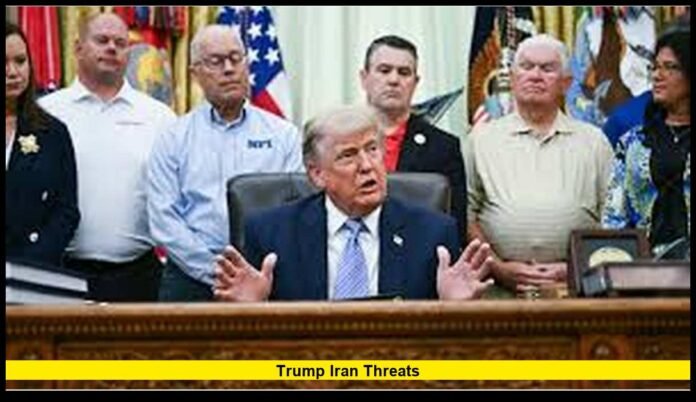

Trump Iran threats continue to dominate international headlines as diplomatic tensions between Washington and Tehran remain a major focus of U.S. foreign policy. Recent developments have placed renewed attention on negotiations, regional security concerns, military preparedness, and the future of relations between the United States and Iran. The situation has become one of the most closely watched geopolitical stories of the year, drawing attention from policymakers, financial markets, and citizens across the United States.
The relationship between the United States and Iran has experienced periods of confrontation and negotiation for decades. In 2026, that relationship entered another critical phase as both governments attempted to balance diplomacy with national security priorities. Public statements from President Donald Trump, combined with ongoing diplomatic discussions, have increased scrutiny of every move made by both countries.
As talks continue to face obstacles, many Americans are asking what these developments mean for U.S. security interests, global stability, and energy markets. Understanding the latest events requires examining the broader context behind the current tensions and the challenges that remain ahead.
Why the Current Situation Matters
The United States and Iran occupy important positions in Middle Eastern affairs. Decisions made by either country can affect regional alliances, international trade routes, energy supplies, and global diplomatic efforts.
When tensions rise between Washington and Tehran, the effects often extend beyond the two countries involved. Markets react, governments reassess their strategies, and security agencies increase their monitoring of potential risks.
The latest disagreements have emerged during a period when both sides were exploring opportunities for diplomatic engagement. That combination of negotiation and confrontation has created a complicated environment where progress and setbacks can occur simultaneously.
For American policymakers, the challenge involves protecting national interests while avoiding unnecessary escalation. For Iran, maintaining its strategic objectives while navigating international pressure remains a central concern.
President Trump’s Position on Iran
President Donald Trump has consistently taken a firm approach toward Iran throughout his political career. His administration has repeatedly emphasized that the United States will respond decisively to actions that threaten American interests, military personnel, allies, or international commerce.
Recent statements from Trump reinforced that position. The administration has maintained that diplomacy remains available, but officials have also made clear that the United States is prepared to protect its interests if negotiations fail to produce acceptable results.
Supporters of the administration argue that a strong stance increases leverage during negotiations. They believe clear warnings help deter actions that could destabilize the region or threaten American security.
Critics, however, contend that aggressive rhetoric can complicate diplomatic efforts and increase tensions at sensitive moments.
Regardless of differing opinions, Trump’s statements have become a major factor influencing discussions about the future of U.S.-Iran relations.
Iran’s Reaction to Recent Warnings
Iranian leaders have responded forcefully to the latest comments from Washington. Officials in Tehran have criticized the tone of recent statements and argued that such remarks make diplomatic progress more difficult.
The response reflects broader concerns within Iran regarding pressure from the United States and its allies. Iranian officials continue to emphasize sovereignty, national security, and economic stability as key priorities.
At the same time, communication channels between the two countries remain active. Although disagreements have created new obstacles, both sides still recognize the importance of maintaining some level of diplomatic contact.
The continuation of those channels is significant because it preserves opportunities for future discussions even during periods of heightened tension.
The Importance of Ongoing Negotiations
Diplomatic negotiations remain one of the most important aspects of the current situation.
Recent efforts to establish a framework for continued discussions represented a notable step toward reducing tensions. Those talks focused on several issues that have shaped relations between the two countries for years.
Among the most important topics are:
- Regional security concerns
- Maritime navigation and shipping routes
- Economic restrictions and sanctions
- Military activities in the Middle East
- Nuclear-related issues
- Long-term stability in the region
Each of these subjects presents unique challenges. Progress in one area does not necessarily guarantee progress in another.
Negotiators must balance domestic political pressures with international expectations, making every stage of the process highly complex.
Regional Security Remains a Major Concern
Security concerns continue to drive much of the tension between Washington and Tehran.
The Middle East remains one of the world’s most strategically important regions. Military activities, regional partnerships, and security agreements all influence how countries respond to developments involving Iran.
The United States maintains longstanding relationships with several regional partners and continues to prioritize the protection of those alliances.
Iran, meanwhile, views regional security through its own strategic lens and often emphasizes the need to safeguard its interests against external pressure.
These differing perspectives help explain why reaching lasting agreements can be difficult.
Even when both sides express support for diplomacy, disagreements over security issues frequently remain unresolved.
The Strategic Importance of the Strait of Hormuz
One of the most critical issues connected to current tensions is the Strait of Hormuz.
This narrow waterway serves as a vital route for global energy shipments. A substantial share of the world’s oil exports moves through this corridor each day.
Any concerns about disruptions in the strait immediately attract worldwide attention.
For the United States, ensuring freedom of navigation remains a key objective. For Iran, the strait holds significant strategic importance because of its geographic location and economic impact.
The waterway has repeatedly become a focal point during periods of tension between Washington and Tehran.
As a result, discussions involving maritime security often play a central role in broader diplomatic efforts.
Read More – Kristen Welker Trump Interview Sparks National Debate After Heated Meet the Press Exchange
Impact on Energy Markets
Energy markets closely monitor developments involving the United States and Iran.
Oil prices often respond to geopolitical uncertainty, particularly when events involve important shipping routes or major energy-producing regions.
When tensions increase, investors frequently evaluate potential risks to supply chains and transportation networks.
The possibility of disruptions can influence pricing decisions across global markets.
For American consumers, fluctuations in energy prices can affect transportation costs, household expenses, and broader economic conditions.
Because of these connections, developments involving Trump Iran threats receive attention far beyond foreign policy circles.
Business leaders, investors, and consumers all have an interest in how the situation evolves.
How 2026 Became a Turning Point
The year 2026 has already produced several significant moments in U.S.-Iran relations.
Military activity earlier in the year heightened concerns about the possibility of broader regional instability. Those events increased pressure on leaders to find pathways toward reducing tensions.
Subsequent diplomatic efforts created cautious optimism that progress might be possible.
The establishment of a framework for continued talks represented an important development because it provided a structured process for addressing long-standing disagreements.
However, recent disputes demonstrate how fragile diplomatic momentum can be.
Even small setbacks can have substantial consequences when dealing with complex international issues.
That reality continues to shape expectations regarding future negotiations.
The Role of U.S. Leadership
Leadership decisions play a critical role during periods of international tension.
President Trump and senior administration officials remain responsible for shaping America’s approach to Iran.
Their decisions affect diplomatic strategy, military planning, economic policy, and relationships with allies.
At the same time, leaders must consider domestic political factors and public opinion.
Many Americans support a strong national security posture while also favoring efforts to avoid prolonged conflict.
Balancing those priorities requires careful decision-making and constant evaluation of changing circumstances.
The administration’s approach reflects an effort to combine pressure with diplomatic engagement.
Whether that strategy succeeds remains one of the key questions facing policymakers.
What Americans Are Watching Closely
Several developments continue to attract public attention across the United States.
These include:
- Future statements from President Trump
- Progress or setbacks in negotiations
- Changes in regional security conditions
- Developments involving international shipping routes
- Energy market reactions
- Diplomatic initiatives from other nations
- Economic consequences linked to geopolitical tensions
Each of these factors can influence the broader direction of U.S.-Iran relations.
As a result, Americans are likely to continue following developments closely in the weeks and months ahead.
International Attention on the Crisis
Governments around the world are paying close attention to the current situation.
Many countries view stability in the Middle East as essential for economic growth and international security.
Diplomatic officials across multiple regions have emphasized the importance of dialogue and communication.
Maintaining diplomatic contact remains particularly important during periods when tensions are elevated.
History has shown that communication channels can help prevent misunderstandings and reduce the risk of unintended escalation.
For that reason, many observers continue to encourage efforts that keep negotiations moving forward.
Challenges Facing Future Talks
Although diplomacy remains possible, significant challenges remain.
The United States and Iran continue to hold different positions on several key issues.
Bridging those differences will require substantial effort from negotiators on both sides.
Trust also remains a major obstacle.
Years of disagreements have created deep skepticism, making it difficult to build confidence quickly.
Even so, international diplomacy often progresses through gradual steps rather than dramatic breakthroughs.
Future discussions will likely require patience, persistence, and flexibility.
What Comes Next
The coming weeks could prove decisive for the future of U.S.-Iran relations.
Both countries face important decisions regarding negotiations, security policies, and diplomatic engagement.
The direction chosen by leaders in Washington and Tehran will influence not only bilateral relations but also broader regional dynamics.
Financial markets, international governments, and security analysts will continue monitoring developments closely.
Any progress toward cooperation could reduce uncertainty and improve stability.
Additional setbacks, however, could increase tensions and complicate future discussions.
Conclusion
Trump Iran threats remain one of the most significant international stories of 2026 as diplomatic negotiations, security concerns, and regional stability continue to intersect. President Trump has maintained a firm stance toward Iran while officials on both sides work through complex disagreements that have shaped relations for years. The outcome of these efforts will influence not only the future of U.S.-Iran relations but also broader developments across the Middle East and global markets.
What are your thoughts on the latest developments involving the United States and Iran? Share your perspective in the comments and stay updated on this evolving story.