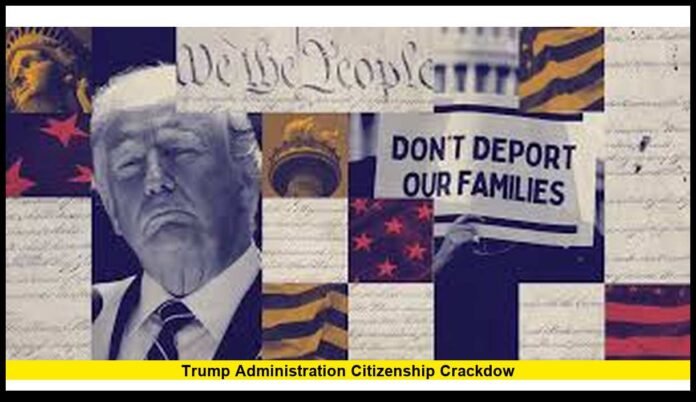

The debate around the trump administration citizenship crackdown has intensified as sweeping immigration measures continue to reshape how citizenship is granted, reviewed, and challenged in the United States. Under Donald Trump, the federal government has expanded enforcement efforts that go far beyond border security, placing new focus on citizenship itself and the legal standards tied to it.
These developments are not isolated actions. They form part of a broader policy direction that touches courts, federal agencies, and millions of individuals navigating the immigration system. From denaturalization proceedings to stricter application reviews and constitutional disputes, the changes are already having nationwide impact.
Follow along as we break down what is happening, why it matters, and how it could affect the future of citizenship in the United States.
Stay informed as these major policy shifts continue to unfold across the country.
A Fundamental Shift in Immigration Policy
Immigration enforcement in the United States has entered a new phase. Instead of focusing solely on border crossings and deportations, federal authorities are increasingly examining the validity of citizenship itself.
This shift centers on the idea that citizenship is not just a final step in the immigration process but a status that can be reviewed and, in certain cases, revoked. Officials have emphasized that individuals who obtained citizenship through false statements or hidden information may face legal consequences.
This approach represents a significant expansion of how immigration law is applied. It signals a move toward deeper scrutiny at every stage of the process—from visa applications to long-standing citizenship status.
Denaturalization Returns to the Forefront
One of the most notable developments is the rise in denaturalization efforts. Denaturalization is a legal process that allows the government to strip citizenship from individuals who are found to have obtained it unlawfully.
Historically, such cases were rare and often limited to extreme circumstances. Now, federal authorities are reviewing a growing number of cases involving alleged misrepresentation or undisclosed criminal history.
These cases typically involve:
- Incomplete or false information on immigration forms
- Failure to disclose past criminal activity
- Identity-related discrepancies
- Violations discovered after citizenship was granted
Legal teams across multiple jurisdictions are handling these cases, indicating a coordinated national effort. This renewed focus has raised awareness among naturalized citizens about the long-term importance of accuracy in immigration records.
Birthright Citizenship Under Legal Scrutiny
Another major aspect of the crackdown involves the interpretation of birthright citizenship, a principle rooted in the 14th Amendment of the U.S. Constitution.
Efforts to limit automatic citizenship for children born in the United States to non-citizen parents have sparked intense legal debate. Courts have intervened to block attempts to alter long-standing interpretations, setting the stage for ongoing judicial review.
The issue centers on how the phrase “subject to the jurisdiction thereof” should be applied. While traditional interpretations have broadly granted citizenship to those born on U.S. soil, recent policy efforts seek to narrow that definition.
This legal battle has far-reaching implications. Any change to birthright citizenship would fundamentally alter how citizenship is determined in the United States.
Enhanced Screening and Application Reviews
Immigration applications are now subject to more extensive review processes. Authorities have expanded the criteria used to evaluate applicants, incorporating a wider range of personal and public information.
This includes:
- Social media activity
- Public statements
- Affiliations and participation in demonstrations
- Travel history and associations
Officials argue that these measures strengthen national security and ensure that applicants align with U.S. laws and values. Critics, however, raise concerns about the potential impact on free expression and personal privacy.
The result is a more complex and rigorous application process that requires applicants to be increasingly transparent.
Funding and Resource Expansion
To support these initiatives, lawmakers have proposed substantial funding increases for immigration enforcement agencies. These funds are intended to enhance operations across multiple areas, including investigations, legal proceedings, and data analysis.
Expanded resources allow agencies to process more cases, conduct deeper reviews, and coordinate across departments. This investment reflects the administration’s commitment to enforcing immigration laws at a broader scale.
At the same time, the funding debate highlights divisions over priorities, with differing views on how resources should be allocated within the immigration system.
Impact on Legal Immigration
The crackdown is not limited to undocumented immigration. Legal immigration pathways have also been affected by new policies and administrative changes.
Applicants are experiencing:
- Longer processing times
- Additional documentation requirements
- Increased scrutiny during interviews
- Delays in approvals
These changes have contributed to a slowdown in legal immigration flows. Families, workers, and students navigating the system face new challenges as procedures become more detailed and time-consuming.
The evolving landscape is reshaping expectations for those seeking to live and work in the United States legally.
Court Challenges and Judicial Oversight
Federal courts continue to play a central role in determining the limits of immigration policy. Several enforcement measures have faced legal challenges, leading to rulings that either block or modify their implementation.
Judicial review ensures that policies align with constitutional principles and existing laws. This process creates a dynamic environment where enforcement actions and legal decisions influence each other.
Some policies move forward while others are paused or revised, reflecting the ongoing balance between executive authority and judicial oversight.
Data Integration and Enforcement Technology
Technology has become an increasingly important tool in immigration enforcement. Agencies are working to integrate data from multiple sources to improve identification and tracking.
This includes collaboration between:
- Immigration databases
- Financial systems
- Public records
- Other federal and state agencies
The goal is to create a more efficient and comprehensive enforcement framework. However, these efforts have also raised questions about data privacy and the scope of government access to personal information.
As technology continues to evolve, its role in immigration enforcement is likely to expand further.
Community-Level Effects
The effects of these policies extend beyond individual cases. Communities across the United States are experiencing broader impacts as enforcement measures increase.
Key areas affected include:
- Workforce participation in certain industries
- Family stability and reunification
- Access to legal assistance
- Trust in public institutions
In some regions, advocacy organizations report increased demand for legal guidance as individuals seek to understand their rights and responsibilities.
These community-level changes are shaping public conversations about immigration policy and its long-term consequences.
Supporters Emphasize Law and Order
Supporters of the crackdown argue that the measures are necessary to uphold the integrity of the immigration system. They believe stricter enforcement ensures that citizenship is granted only to those who meet all legal requirements.
Key arguments include:
- Strengthening national security
- Preventing fraud and misuse of the system
- Reinforcing the rule of law
- Creating a more structured immigration process
From this perspective, the policies are seen as corrective actions aimed at restoring accountability.
Critics Raise Concerns About Scope and Impact
Opponents of the crackdown point to potential risks associated with expanded enforcement.
Concerns include:
- Uncertainty for naturalized citizens
- Potential limitations on free expression
- Increased complexity in legal immigration pathways
- Broader social and economic effects
Legal experts also note that aggressive enforcement could lead to unintended outcomes, particularly if policies are applied inconsistently.
The debate reflects deeper questions about the balance between security, fairness, and opportunity in U.S. immigration policy.
Where the Policy Stands Now
At this stage, the trump administration citizenship crackdown continues to evolve through a combination of enforcement actions, court rulings, and legislative developments.
Key factors shaping its direction include:
- Ongoing legal challenges in federal courts
- Congressional decisions on funding and oversight
- Implementation strategies at the agency level
The situation remains fluid, with new developments emerging as policies are tested and refined.
A Defining Moment for Citizenship Policy
This period represents a critical moment in the history of U.S. immigration law. The focus on citizenship itself marks a shift that could influence policy for years to come.
The combination of stricter enforcement, legal challenges, and administrative changes is redefining how citizenship is viewed—not just as a right, but as a status subject to continuous scrutiny under certain conditions.
Understanding these changes is essential for anyone following national policy, legal trends, or the future of immigration in the United States.
As this story continues to develop, staying informed is key to understanding how these policies may shape the country moving forward.
What are your thoughts on these sweeping changes to citizenship and immigration? Share your perspective and keep following for the latest updates.