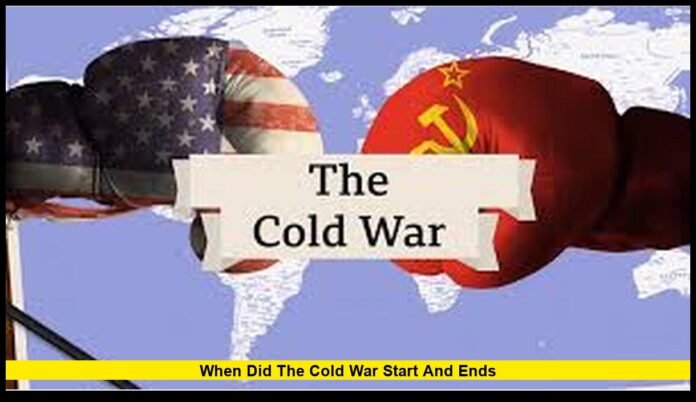

The question when did the cold war start and end remains one of the most searched topics in modern history, especially as global tensions and alliances continue to echo patterns first established during that era. Spanning more than four decades, the Cold War was not a traditional war fought on battlefields between the two main rivals. Instead, it was a prolonged struggle for global influence, driven by ideological differences, political competition, and military posturing between the United States and the Soviet Union.
This period shaped the modern world in profound ways, influencing everything from foreign policy and military strategy to technology, economics, and culture. To fully understand its impact, it is essential to explore how it began, how it evolved, and ultimately how it came to an end.
If you want a clear and complete breakdown of this defining era, keep reading—this comprehensive guide walks through every major phase and turning point.
Understanding the Cold War: More Than Just a Conflict
- The United States promoted democracy, free markets, and individual freedoms
- The Soviet Union supported a communist system with centralized control and state ownership
Although both nations had fought together during World War II, their alliance quickly unraveled once the war ended. Mutual distrust, competing goals, and opposing ideologies turned former allies into rivals almost overnight.
Unlike traditional wars, the Cold War avoided direct military confrontation between these two powers. Instead, it played out through indirect conflicts, political influence, intelligence operations, and a massive buildup of nuclear weapons.
The Beginning: Why 1947 Marks the Start
Most historians agree that the Cold War officially began in 1947, when tensions hardened into a clear and sustained rivalry.
Key Developments That Triggered the Conflict
In 1947, several major policy decisions signaled a shift in global relations:
- The United States adopted a strategy to limit the spread of communism worldwide
- Economic aid programs were launched to rebuild Western Europe and strengthen democratic governments
- Eastern Europe fell increasingly under Soviet influence, creating a clear division across the continent
These events marked the end of cooperation and the beginning of a long-term geopolitical struggle.
The Early Years: Escalation and Division (Late 1940s–Early 1950s)
The first years of the Cold War saw rapid escalation.
Europe Becomes Divided
Germany, once unified, was split into separate regions controlled by Western powers and the Soviet Union. This division symbolized the broader split between democratic and communist systems.
The Berlin Blockade, one of the earliest crises, demonstrated how quickly tensions could rise. In response, Western nations organized a massive airlift to supply West Berlin, avoiding direct conflict but reinforcing divisions.
Military Alliances Take Shape
The United States and its allies formed a military alliance to ensure collective defense. In response, the Soviet Union strengthened its control over Eastern Europe.
The Korean War
The Korean War marked the first major armed conflict linked to Cold War tensions. It demonstrated how the rivalry could erupt into real fighting in other parts of the world, even if the superpowers themselves avoided direct confrontation.
The Nuclear Arms Race: Living Under Constant Threat
One of the defining features of the Cold War was the race to develop and stockpile nuclear weapons.
Both sides invested heavily in building powerful arsenals capable of devastating entire nations. This led to the concept of deterrence, where neither side launched an attack because it would guarantee total destruction for both.
Impact on Everyday Life
- Governments built bomb shelters and conducted emergency drills
- Citizens lived with the fear of sudden nuclear conflict
- Defense spending reached unprecedented levels
This constant tension shaped public consciousness and influenced political decisions for decades.
The Most Dangerous Moments: Heightened Tensions in the 1950s and 1960s
The Cold War reached some of its most intense moments during this period.
The Cuban Missile Crisis
In 1962, the discovery of nuclear missiles in Cuba brought the world to the brink of war. For several days, global leaders faced the real possibility of nuclear conflict.
Through negotiations, both sides stepped back, marking a turning point that highlighted the need for communication and restraint.
The Space Race
Competition extended beyond Earth. Both nations sought to demonstrate technological superiority through space exploration.
Achievements in space became symbols of national pride and ideological success, pushing advancements in science and engineering that continue to benefit society today.
Proxy Wars: Global Conflicts Fueled by Rivalry
While the United States and Soviet Union avoided direct war, they supported opposing sides in conflicts around the world.
Major Regions Affected
- Southeast Asia experienced prolonged warfare and political instability
- The Middle East became a strategic battleground for influence
- Africa and Latin America saw conflicts shaped by external support
These wars often had devastating consequences for local populations, with long-lasting political and economic effects.
A Shift in Strategy: The Era of Détente
In the 1970s, both sides recognized the risks of constant confrontation and began to ease tensions.
What Changed
- Diplomatic talks increased
- Agreements were reached to limit certain types of weapons
- Cultural and scientific exchanges improved relations
Although rivalry continued, this period showed that cooperation was possible, even amid deep ideological differences.
Renewed Tensions in the Late Cold War
The relative calm did not last.
By the late 1970s and early 1980s, tensions escalated again due to geopolitical conflicts and renewed military buildup. Both sides returned to a more aggressive stance, raising fears of another major crisis.
The End: How the Cold War Concluded in 1991
The Cold War ended in 1991, marking the collapse of one of the two superpowers involved.
Events That Led to the Conclusion
- Political movements in Eastern Europe pushed for independence and reform
- The Berlin Wall, a powerful symbol of division, was dismantled
- Economic challenges weakened the Soviet system
- Internal reforms reduced centralized control
By the end of 1991, the Soviet Union dissolved, bringing the Cold War to a close.
Why the Cold War Ended
Several key factors contributed to its conclusion:
Economic Pressure
Sustaining a global rivalry and military buildup placed enormous strain on resources. The Soviet economy struggled to keep pace with the demands of competition.
Political Change
Reforms aimed at increasing openness and restructuring weakened the existing system, leading to greater public demands for change.
Public Movements
Citizens across multiple countries demanded greater freedoms, accelerating the collapse of established power structures.
Long-Term Impact on the United States
The Cold War left a lasting mark on American society.
Defense and Security
The United States developed a strong military infrastructure that continues to influence policy today.
Technological Advancement
Competition drove innovation in fields such as aerospace, computing, and communications.
Global Leadership
The U.S. emerged as a dominant global power, shaping international institutions and alliances.
Why Understanding This Timeline Still Matters
Knowing when did the cold war start and end provides more than historical knowledge—it offers insight into today’s global dynamics.
Many modern conflicts, alliances, and policy decisions can be traced back to Cold War strategies and outcomes. Understanding this era helps explain:
- Current tensions between global powers
- The structure of international alliances
- Ongoing discussions about nuclear weapons and security
A Clear Timeline of Key Events
- 1947: Cold War begins as tensions solidify
- Late 1940s: Europe divides politically and economically
- 1950–1953: Korean War demonstrates global reach of conflict
- 1962: Cuban Missile Crisis brings world close to nuclear war
- 1970s: Détente reduces tensions temporarily
- 1989: Berlin Wall falls, signaling major change
- 1991: Soviet Union dissolves, ending the Cold War
Conclusion
The Cold War lasted from 1947 to 1991, shaping over four decades of global history without direct large-scale war between its primary rivals. Its influence extended into politics, economics, technology, and culture, leaving a legacy that continues to affect the world today.
From nuclear strategy to international diplomacy, the impact of this era remains deeply embedded in how nations interact and compete on the global stage.
What lessons from the Cold War do you think still apply today? Share your thoughts and keep exploring the stories that shaped our world.