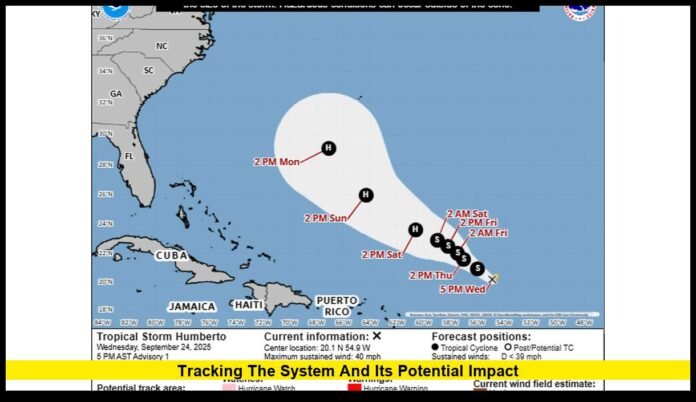

The tropical storm humberto forecast is being closely watched as the system gains strength in the Atlantic. As of September 25, 2025, Humberto remains a tropical storm but is expected to intensify into a hurricane within the next few days. While the current forecast keeps the storm offshore, the risk of heavy swells, rip currents, and shifting conditions means U.S. coastal residents must stay alert.
Current Strength and Position
At present, Tropical Storm Humberto is situated far east-northeast of the Leeward Islands. Sustained winds are near 45 mph, with stronger gusts radiating outward. The storm’s circulation is expanding, already generating a wide field of tropical-storm-force winds over the Atlantic.
The storm is traveling west-northwest at a steady pace, powered by warm waters and supported by favorable atmospheric conditions. These elements suggest Humberto will continue strengthening as it moves toward open waters.
The Forecast for Humberto
The forecast indicates Humberto will strengthen gradually over the next 48 hours. By this weekend, it could become a hurricane. If conditions remain favorable, rapid intensification is possible, with the storm potentially reaching major hurricane status (Category 3 or higher).
Key forecast details include:
- Short-term: Steady strengthening with winds increasing beyond 60 mph.
- Weekend outlook: Likely hurricane, possibly nearing Category 2.
- Early next week: Could reach Category 3 or higher as it turns northward.
- Long-term path: A curve northeast into the open Atlantic, avoiding direct U.S. landfall.
The main takeaway—Humberto is expected to become a powerful storm, even if its center stays offshore.
Why Humberto Is Strengthening
The tropical storm humberto forecast is so concerning because the environment around the storm is primed for development.
- Sea surface temperatures in the Atlantic are well above average, supplying extra heat energy.
- Low wind shear means the storm’s structure remains organized.
- High humidity in the mid-level atmosphere supports sustained thunderstorms.
These three factors are the recipe for rapid strengthening. If they hold, Humberto could intensify faster than current models predict.
Impacts Along the U.S. Coast
Even if Humberto never makes landfall, U.S. coastal regions are not free from danger. Powerful storms that remain offshore still create hazards.
Potential effects include:
- Dangerous surf: Large waves generated by Humberto will push toward the East Coast.
- Rip currents: Strong rip currents will likely become life-threatening, especially along beaches from Florida to the Carolinas.
- Coastal flooding: High tides combined with swells may cause minor flooding in vulnerable low-lying areas.
- Marine risks: Shipping lanes and offshore boating routes will be directly impacted.
This means beachgoers, boaters, and coastal residents should remain cautious throughout the storm’s progression.
Regions Most at Risk
While the storm’s core is not expected to strike the United States, certain regions could still feel Humberto’s indirect impacts.
- Florida’s East Coast: Earliest arrival of swells and rip currents, beginning this weekend.
- The Carolinas: Elevated rip current risks and possible minor flooding early next week.
- Mid-Atlantic States: Swell activity expected to reach Virginia and Maryland beaches by next week.
- Bermuda: Currently the closest landmass in Humberto’s potential path, facing a higher risk of direct impacts.
The farther north Humberto tracks, the more widespread its ocean effects will be.
Interaction With Other Systems
Adding complexity to the tropical storm humberto forecast is the presence of a developing disturbance in the Atlantic, currently near the Bahamas. If this disturbance strengthens into another tropical storm, there’s potential for interaction between the two systems.
This type of interaction can:
- Alter Humberto’s exact track.
- Pull Humberto farther out to sea or closer to the coast.
- Create uncertainty in model projections.
While the most likely outcome remains an offshore track, storm interactions are notoriously hard to predict, meaning U.S. residents should keep paying attention to updates.
Key Timeline for Humberto
Here’s how the storm is expected to evolve in the days ahead:
| Date | Forecast Development |
|---|---|
| Sept. 25 | Tropical Storm with winds of 45 mph |
| Sept. 26–27 | Strengthens to near hurricane intensity |
| Sept. 28 | Likely Category 1 or 2 hurricane; swells reach Florida coast |
| Sept. 29–30 | Potential major hurricane, approaching Bermuda region |
| Oct. 1 onward | Turns northeast into open Atlantic; gradual weakening |
This forecast may shift, but the pattern points toward a powerful storm curving away from the mainland.
Preparing for Humberto’s Effects
Even if the storm doesn’t hit the U.S. directly, preparedness remains important. Coastal communities should keep the following in mind:
- Check beach advisories before swimming—rip currents will be the primary risk.
- Avoid boating in rough seas once Humberto’s swells reach coastal waters.
- Stay updated through local weather alerts for any shifts in track.
- Review storm supplies if you live in a hurricane-prone zone, since the season remains active.
Preparedness now reduces risk later, especially with weeks of hurricane season still ahead.
The Bigger Picture of Hurricane Season
Humberto is not just a standalone storm—it’s part of a very active 2025 Atlantic hurricane season. Warmer waters and favorable atmospheric conditions have fueled multiple systems, with several storms forming back-to-back in September.
For the United States, this means that even if Humberto stays offshore, new storms could form behind it. Coastal residents must remain vigilant throughout October.
Lessons From Past Humberto Storms
The name Humberto has been used in previous seasons, with varying impacts on the U.S. In past years, some Humberto storms have curved harmlessly out to sea, while others brushed close to the Gulf Coast or Atlantic seaboard.
This history shows that while forecasts give guidance, no storm should be taken lightly. Conditions can change, and each Humberto is different from the last.
Why Humberto Matters Now
The focus on the tropical storm humberto forecast reflects the heightened awareness that comes every hurricane season. Even offshore systems affect millions of people. Beachgoers, boaters, and businesses along the East Coast are especially impacted when swells and rip currents surge.
Beyond immediate effects, Humberto is also a reminder of how quickly storms can escalate. What begins as a tropical storm today can become a major hurricane within days, underscoring the importance of staying informed.
Final Thoughts
The tropical storm humberto forecast points to a strengthening system likely to reach hurricane or even major hurricane strength by the weekend. While the storm’s track keeps it offshore from the U.S., dangerous surf and rip currents will still affect beaches from Florida to the Carolinas and possibly farther north.
Preparedness and awareness are key. Even without a direct strike, Humberto shows how storms in the Atlantic can shape daily life along America’s coastline. As the season continues, this storm is another reminder of the need to respect the ocean’s power and stay alert for rapid changes.
How are you preparing for the effects of Humberto and the rest of this hurricane season? Share your thoughts and stay connected as forecasts evolve.