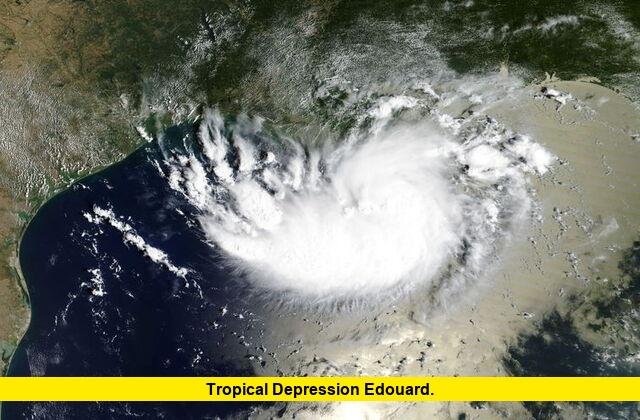

Tropical Depression Edouard continues to bring heavy rainfall and flooding concerns across parts of the Gulf Coast after weakening from a tropical storm following landfall. The system moved inland after affecting areas near the Texas-Louisiana border, and while its winds have decreased, the threat from excessive rainfall, flash flooding, and hazardous travel conditions remains.
The latest updates indicate that tropical depression Edouard is no longer producing tropical-storm-force winds, but moisture associated with the system is continuing to spread across southeastern Texas. Officials are warning residents that weakening winds do not mean the danger has completely ended, as flooding can continue even after a storm loses strength.
Tropical Depression Edouard Brings Continued Flooding Concerns
Edouard became a named tropical storm before moving toward the Gulf Coast and making landfall near Johnson Bayou, Louisiana. The storm reached the coast with strong winds and heavy rain before gradually weakening as it moved farther inland.
After landfall, the system was downgraded to a tropical depression as its wind circulation weakened. However, forecasters continued to monitor the storm because tropical systems can still produce dangerous rainfall even after losing tropical storm status.
The primary concern with tropical depression Edouard has shifted from strong winds to water-related hazards. Heavy rainfall bands have affected parts of southeastern Texas, with some locations facing the possibility of flash flooding, especially in areas with poor drainage or already saturated ground.
Officials have encouraged residents to remain cautious, avoid flooded roadways, and continue monitoring weather alerts until the system fully moves away and conditions improve.
Storm Path and Landfall Details
Before weakening, Edouard traveled across the western Gulf of Mexico and approached the northern Gulf Coast. The storm made landfall near Johnson Bayou in Cameron Parish, Louisiana, before moving inland toward southeastern Texas.
At landfall, Edouard produced tropical-storm conditions, including heavy rainfall and gusty winds. Weather observations recorded strong wind gusts along coastal areas, while rainbands spread inland after the center crossed the coast.
The National Hurricane Center later reported that Edouard had weakened into a tropical depression while continuing to move inland. At that stage, the system had maximum sustained winds of about 35 mph and was located northwest of Beaumont, Texas.
Although the storm’s intensity decreased, forecasters emphasized that tropical depressions can still create serious impacts. Slow-moving or moisture-rich systems often contribute to prolonged rainfall, increasing the possibility of flash flooding.
Heavy Rainfall and Flash Flood Threat Remain
The biggest threat from tropical depression Edouard is continued rainfall. Areas across southeastern Texas have experienced periods of intense rain, and some locations may receive several inches of precipitation from the storm’s moisture.
Flood risks remain highest in:
- Low-lying neighborhoods
- Areas near rivers and waterways
- Urban locations with drainage problems
- Roads that collect standing water quickly
- Communities near the storm’s rainfall path
Weather officials have warned that rainfall rates can quickly overwhelm drainage systems, creating dangerous conditions even away from the storm center.
Drivers are being advised to avoid attempting to cross flooded roads. Water depth can be difficult to judge, and even shallow floodwaters may create dangerous conditions for vehicles.
Power Outages and Storm Damage Across Southeast Texas
The storm also caused widespread power disruptions across parts of Southeast Texas. Entergy Texas reported that approximately 70,000 customers were without power as crews worked to assess damage and restore service after the storm.
High winds, flooding, debris, and unsafe conditions created challenges for restoration teams. Utility crews were deployed across affected areas to repair damaged equipment and restore electricity as safely as possible.
Storm-related impacts included:
- Downed trees and debris
- Flooded roads
- Damaged electrical equipment
- Temporary service interruptions
- Hazardous travel conditions
Officials have reminded residents to stay away from downed power lines and treat all fallen electrical wires as dangerous.
Public Safety Response and Preparedness Efforts
Emergency officials across Texas and Louisiana prepared for Edouard’s arrival by monitoring rainfall forecasts, issuing warnings, and encouraging residents to take precautions.
Even after the storm weakened, emergency agencies continued responding because flooding impacts can last beyond the period of strongest winds. Rescue teams, utility workers, and local authorities remained focused on helping affected communities recover.
Residents in impacted areas have been advised to:
- Follow local weather alerts
- Avoid flooded streets
- Keep emergency supplies available
- Check on vulnerable neighbors when safe
- Report hazards to local authorities
The storm serves as another reminder that tropical systems do not need to become major hurricanes to create dangerous conditions.
Latest Updates on Tropical Depression Edouard
The latest information shows that tropical depression Edouard continues weakening while moving farther inland. The storm’s strongest winds have diminished, but heavy rain and flooding threats remain the main concerns across parts of Texas.
Meteorologists expect the system to gradually lose its tropical characteristics as it moves away from the Gulf Coast. However, rainfall impacts may continue until the remaining moisture moves out of affected regions.
Current concerns include:
- Continued heavy rainfall
- Localized flash flooding
- Water-covered roads
- Additional power restoration work
- Cleanup efforts after storm damage
Authorities continue to stress that residents should not underestimate the storm simply because it has been downgraded. A tropical depression can still produce dangerous weather, particularly through flooding.
Impact on Gulf Coast Communities
Communities along the Texas-Louisiana coastline experienced the first effects of Edouard, including strong winds and heavy rain. Inland communities then faced rainfall-related problems as the system moved northwest.
For many residents, the main challenge has shifted from preparing for landfall to dealing with cleanup, power restoration, and possible flooding.
Local officials have continued evaluating damage while crews work to reopen roads and restore essential services. The full extent of storm impacts may become clearer as assessment teams reach more affected areas.
Final Thoughts on Tropical Depression Edouard
Tropical Depression Edouard highlights the importance of monitoring tropical weather even after a storm loses strength. While the system has weakened, flooding risks remain a serious concern across parts of the Gulf Coast.
Residents should continue following official weather updates, remain cautious around flooded areas, and prioritize safety while recovery efforts continue. Storm impacts often continue after the strongest winds disappear, making awareness and preparation essential.
Share your thoughts about Tropical Depression Edouard in the comments and stay updated for the latest weather developments and storm coverage.