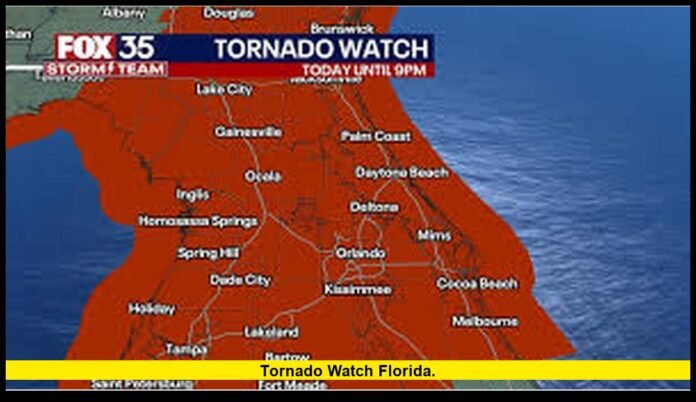

Tornado watch Florida remains in effect today as a strong line of storms moves across Central and West Florida, bringing dangerous weather conditions that include damaging winds, intense lightning, heavy rainfall, and the possibility of isolated tornadoes. The alert covers multiple counties during a volatile weather pattern that has already begun impacting major population centers and travel corridors.
Current Situation Across Florida
A tornado watch is active across a broad section of the state this Saturday, with the greatest impact centered along the Interstate 4 corridor and surrounding communities. Storm activity continues to intensify as a fast-moving cold front interacts with warm, moisture-rich air over the peninsula.
The watch extends through the late afternoon and early evening hours. Weather conditions are favorable for rotating storms, which can quickly develop into tornado-producing systems under the right conditions.
Residents across Central Florida and the Tampa Bay region are experiencing rapidly changing weather, with skies shifting from partly cloudy to severe thunderstorms in a short time span.
Counties and Cities Under the Tornado Watch
The current alert includes a wide geographic area, affecting both inland and coastal communities.
Central Florida Counties
- Orange
- Osceola
- Seminole
- Lake
- Volusia
West-Central Florida Counties
- Hillsborough
- Pinellas
- Pasco
- Hernando
- Citrus
Additional Impacted Areas
- Polk
- Sumter
- Levy
Major cities within the watch zone include Orlando, Tampa, St. Petersburg, Clearwater, and Lakeland. These regions are densely populated, increasing the importance of early warnings and preparedness.
What Is Driving This Severe Weather Event
A powerful cold front is sweeping across the southeastern United States and moving through Florida. Ahead of this front, the atmosphere is unstable due to high humidity and warm surface temperatures.
When these ingredients combine, they create the perfect environment for severe thunderstorms. Wind speeds at different levels of the atmosphere are also shifting direction and increasing in strength, a condition known as wind shear. This factor plays a key role in storm rotation.
Storm cells forming within this environment can organize into lines or clusters. Some may begin rotating, which raises the potential for tornado development.
Primary Threats From the Storm System
The tornado risk is one of several hazards associated with this system. Residents should prepare for multiple impacts throughout the day.
Main Threats Include
- Strong Wind Gusts: Winds may reach up to 60 or 65 miles per hour, capable of damaging roofs and knocking down trees
- Heavy Rain: Sudden downpours can create hazardous driving conditions and minor flooding in low-lying areas
- Frequent Lightning: Lightning strikes increase the danger for those outdoors
- Isolated Tornadoes: Brief tornadoes may form quickly within stronger storm cells
Even storms that do not produce tornadoes can still cause significant damage due to high winds and lightning.
Timing and Storm Progression
The storm system is moving from north to south across the state. Northern areas saw the earliest activity, with Central Florida now experiencing peak conditions.
Detailed Timeline
| Time Period | Expected Conditions |
|---|---|
| Late Morning | Storms begin developing, skies darken |
| Early Afternoon | Storm intensity increases, wind gusts strengthen |
| Mid to Late Afternoon | Highest tornado potential, strongest storms |
| Early Evening | Storms begin moving south, gradual weakening |
| Late Evening | Conditions improve, storms exit the region |
Timing may vary slightly depending on location, but the most intense activity is expected during the afternoon hours.
Impact on Travel and Daily Life
Severe weather is already affecting transportation and daily routines across affected regions.
Air travel disruptions have been reported at major airports in Central Florida due to lightning and strong winds. Ground stops and delays are possible when storms pass directly over airport facilities.
Road travel is also becoming more dangerous as heavy rain reduces visibility and wind gusts push vehicles, especially on bridges and open highways.
Common Travel Issues
- Sudden slowdowns on major highways
- Water accumulation on roads
- Reduced visibility during downpours
- Debris from wind damage
Residents are being urged to delay non-essential travel until conditions improve.
Understanding Tornado Watches and Warnings
A tornado watch indicates that conditions are favorable for tornadoes to form. It does not mean a tornado is currently happening, but it signals the need for awareness.
A tornado warning is more urgent. It means a tornado has been detected or is imminent.
Knowing the difference can help residents respond quickly and appropriately.
Safety Measures Residents Should Take
Preparedness can make a critical difference during severe weather events.
Essential Safety Steps
- Stay updated through weather alerts and local notifications
- Keep mobile devices charged in case of power outages
- Identify a safe indoor shelter location ahead of time
- Avoid outdoor activities during storms
- Secure loose objects outside the home
During a Tornado Warning
- Move to the lowest level of your home
- Choose an interior room without windows
- Cover your head and neck for protection
Taking these precautions can reduce the risk of injury during sudden severe weather.
Regions Facing the Highest Risk
The greatest tornado threat is concentrated in areas where atmospheric conditions are most unstable.
High-Risk Zones
- Orlando metropolitan area
- Tampa Bay region
- Communities along the I-4 corridor
These locations are directly in the path of the advancing cold front, where storms are expected to be strongest.
Effects on Tourism and Attractions
Central Florida’s tourism industry is also feeling the impact of the severe weather.
Theme parks, outdoor attractions, and recreational areas are adjusting operations as storms move through. Temporary ride closures and indoor safety protocols are common during lightning and high winds.
Visitors are encouraged to follow guidance from staff and remain indoors when severe weather approaches.
How This Event Compares to Typical Florida Weather
Florida is known for frequent thunderstorms, especially during warmer months. However, this system stands out due to its organization and strength.
Instead of scattered afternoon storms, this event features a well-defined line of storms moving across the state. Strong wind shear and widespread instability increase the potential for severe weather.
These factors make today’s conditions more dangerous than a typical Florida thunderstorm day.
Emergency Preparedness and Response
Local emergency management agencies are actively monitoring conditions and preparing for possible storm damage.
Response teams are ready to address issues such as:
- Downed trees and power lines
- Flooded intersections
- Structural damage from strong winds
Utility crews are also on standby to restore power outages quickly if they occur.
What Residents Can Expect After the Storms
Once the cold front passes, the weather is expected to stabilize.
Post-Storm Conditions
- Cooler temperatures across the region
- Lower humidity levels
- Reduced chance of thunderstorms
Clearer skies are expected later tonight and into the following day, offering a break from severe weather.
Why Tornado Watches Occur in Florida
Although Florida is not traditionally associated with large tornado outbreaks, the state does experience tornado watches several times each year.
Warm ocean waters, high humidity, and frequent cold fronts create an environment where severe storms can develop.
When these elements align with strong wind patterns in the atmosphere, the risk of tornadoes increases significantly.
Key Takeaways From Today’s Tornado Watch
- Tornado watch active across Central and West Florida
- Storm system driven by a fast-moving cold front
- Main threats include wind, rain, lightning, and isolated tornadoes
- Travel disruptions are ongoing in several regions
- Conditions expected to improve later tonight
Residents should remain alert until the watch expires and storms fully clear the area.
Staying Alert as Conditions Evolve
Weather patterns can shift quickly, especially during severe storm events. Even if conditions appear calm for a short time, storms can redevelop or intensify with little warning.
Monitoring updates throughout the day remains essential. Acting early when warnings are issued can help prevent injuries and property damage.
Stay prepared and keep watching updates as the tornado watch Florida situation continues to unfold across the state. Share your local conditions or safety tips in the comments to help others stay informed.