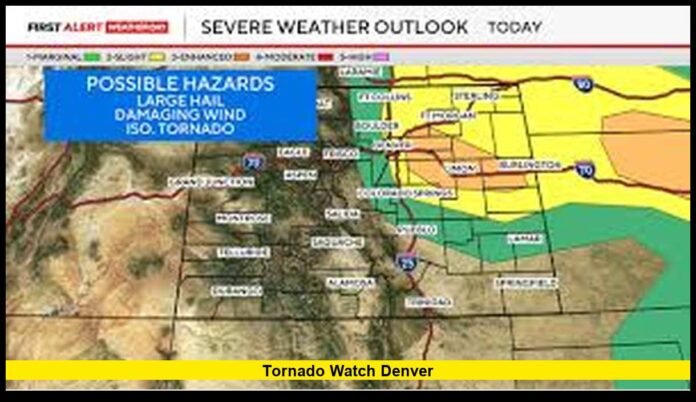

Tornado watch Denver remains a major weather concern as severe thunderstorms move across parts of Colorado, bringing the potential for tornadoes, damaging winds, large hail, intense lightning, and periods of heavy rain. Residents throughout the Denver metropolitan area and surrounding counties have been urged to stay weather-aware as conditions support the development of dangerous storms capable of producing rapidly changing weather.
The latest severe weather situation developed as warm temperatures, increasing atmospheric moisture, and strong upper-level winds combined over northeastern Colorado. These ingredients created an environment favorable for severe thunderstorms, prompting weather officials to issue a tornado watch covering Denver and numerous neighboring counties.
Although a tornado watch does not mean a tornado has already formed, it indicates that atmospheric conditions are capable of supporting tornado development. The alert serves as an important reminder for residents, businesses, travelers, and emergency officials to prepare for the possibility of severe weather throughout the day and evening.
Denver Area Under Severe Weather Threat
The Denver metro region frequently experiences thunderstorms during late spring and early summer, but certain weather patterns raise the risk level significantly.
This latest weather event emerged as a powerful storm system interacted with unstable air across eastern Colorado. Forecasters observed conditions becoming increasingly favorable for organized thunderstorms capable of producing multiple severe weather hazards.
Areas included within the watch zone stretched across the Front Range and extended into portions of eastern Colorado. Communities throughout the region monitored weather updates as storms developed and intensified.
The primary concerns included:
- Tornadoes
- Large hail
- Destructive straight-line winds
- Frequent cloud-to-ground lightning
- Localized flooding from heavy rainfall
Meteorologists noted that severe storms could strengthen quickly, making it important for residents to remain alert throughout the duration of the watch.
Understanding a Tornado Watch
Many people hear weather alerts and immediately wonder whether they are in danger. Understanding the difference between a tornado watch and a tornado warning can help residents respond appropriately.
A tornado watch means atmospheric conditions support the formation of tornadoes. It covers a broad area and often remains active for several hours.
A tornado warning is issued when a tornado has been detected or strongly indicated by radar. Warnings require immediate protective action because the threat is occurring or imminent.
During a tornado watch, officials encourage residents to:
- Monitor weather updates regularly
- Review emergency plans
- Identify shelter locations
- Prepare emergency supplies
- Stay aware of changing conditions
The purpose of a watch is to provide advance notice before severe weather develops.
Why Colorado Experiences Tornadoes
Colorado is often associated with mountains, skiing, and outdoor recreation. However, the state also experiences significant severe weather during the warmer months.
The eastern half of Colorado lies within a region that frequently supports thunderstorm development. Weather systems moving across the Rocky Mountains often encounter warm, moist air over the plains, creating favorable conditions for severe storms.
Several atmospheric ingredients contribute to tornado formation.
Warm Surface Temperatures
Strong daytime heating helps create instability in the atmosphere. Warm air near the ground rises rapidly, fueling thunderstorm growth.
Available Moisture
Moisture transported into Colorado increases the amount of energy available to storms.
Wind Shear
Changes in wind speed and direction with height allow thunderstorms to rotate. Rotating storms are more likely to produce tornadoes.
Lift in the Atmosphere
Weather fronts, terrain influences, and other lifting mechanisms help initiate thunderstorm development.
When all of these ingredients combine, severe thunderstorms known as supercells can develop. Supercells are responsible for many of the strongest tornadoes across the United States.
Weather Conditions Leading to the Current Watch
The severe weather setup across Colorado began developing during the morning hours.
As temperatures climbed through the day, atmospheric instability increased across the region. Forecasters observed favorable wind patterns that could support rotating thunderstorms.
By afternoon, thunderstorms began forming over parts of northeastern Colorado.
Several factors contributed to concern among weather experts:
- Increasing instability
- Strong wind shear
- Adequate low-level moisture
- Favorable upper-level dynamics
These conditions created an environment capable of supporting severe thunderstorms throughout the afternoon and evening.
Storms moving away from the mountains and onto the plains often gain strength as they interact with unstable air masses.
This pattern played an important role in the development of the current severe weather threat.
Large Hail Emerges as a Significant Risk
While tornadoes receive substantial attention, hail often causes more widespread damage during Colorado severe weather events.
The storms associated with the tornado watch carried the potential to produce exceptionally large hail.
Large hail can cause:
- Vehicle damage
- Roof damage
- Broken windows
- Damage to solar panels
- Crop destruction
- Injuries to people caught outdoors
Colorado ranks among the most hail-prone states in the country.
The Denver metropolitan area has experienced several costly hailstorms over the years, resulting in extensive property damage and major insurance losses.
Even storms that fail to produce tornadoes can create substantial impacts through hail alone.
Residents were encouraged to move vehicles into garages or covered areas whenever possible.
Damaging Winds Add Another Layer of Concern
Strong thunderstorm winds can be just as destructive as weaker tornadoes.
The storms associated with the tornado watch were capable of generating wind gusts strong enough to damage structures and knock down trees.
Potential impacts included:
- Downed power lines
- Fallen tree limbs
- Roof damage
- Travel disruptions
- Temporary power outages
- Flying debris
Straight-line winds frequently accompany severe thunderstorms.
Unlike tornadoes, which usually affect a narrow path, damaging thunderstorm winds can impact much larger areas.
Emergency officials advised residents to secure outdoor furniture, trash bins, umbrellas, and other loose items before storms arrived.
The Role of Supercell Thunderstorms
Many severe weather events begin with the formation of supercell thunderstorms.
Supercells are powerful rotating storms that can persist for several hours under favorable conditions.
Characteristics of supercells include:
- Persistent rotation
- Strong updrafts
- Large hail production
- Tornado potential
- Intense lightning
Meteorologists monitored several storms for signs of rotation as they moved across northeastern Colorado.
Not every supercell produces a tornado, but nearly all strong tornadoes originate from supercell thunderstorms.
Because of their ability to generate multiple hazards simultaneously, supercells receive close attention from weather forecasters.
Denver’s History With Severe Weather
Although Colorado records fewer tornadoes than some Plains states, severe weather remains a regular part of life during spring and summer.
The Denver region has experienced numerous notable weather events involving:
- Tornadoes
- Hailstorms
- Flash flooding
- Windstorms
- Lightning outbreaks
Rapid population growth along the Front Range has increased awareness of severe weather preparedness.
Millions of residents now live in areas vulnerable to severe thunderstorms.
As development expands into suburban and rural communities, understanding weather risks becomes increasingly important.
Read More – News Channel 13 Weather: Trusted Forecasts and Real-Time Updates for December 2025
Emergency Preparedness During a Tornado Watch
Preparedness can make a significant difference when severe weather strikes.
Emergency management officials encourage residents to have a plan before storms arrive.
Important preparedness steps include:
Identify a Safe Shelter
The safest locations include:
- Basements
- Storm shelters
- Interior rooms
- Windowless hallways
- Lowest floors of sturdy buildings
Mobile homes provide limited protection during severe storms and tornadoes.
Residents in manufactured housing should identify alternative shelter locations in advance.
Keep Emergency Supplies Ready
Basic emergency supplies should include:
- Flashlights
- Batteries
- Water
- Nonperishable food
- Medications
- Portable chargers
- First-aid supplies
Power outages can occur during severe weather events, making preparation essential.
Stay Connected
Weather conditions can change quickly.
Residents should maintain multiple methods of receiving alerts, including:
- Wireless emergency notifications
- Weather radios
- Television broadcasts
- Mobile weather applications
Relying on a single information source may increase the risk of missing important warnings.
Travel Impacts Across the Denver Region
Severe weather can create significant challenges for travelers.
Thunderstorms often produce sudden changes in visibility and road conditions.
Drivers may encounter:
- Heavy rainfall
- Hail-covered roads
- Strong crosswinds
- Water-covered streets
- Reduced visibility
Motorists should avoid attempting to drive through flooded roadways.
Even a small amount of moving water can create dangerous driving conditions.
Travel plans may also be affected by delays caused by severe thunderstorms.
Allowing extra travel time during active weather periods can help reduce risks.
Potential Impact on Air Travel
Denver serves as one of the nation’s busiest aviation hubs.
Thunderstorms near airport facilities can affect both arriving and departing flights.
Severe weather may lead to:
- Ground stops
- Departure delays
- Arrival delays
- Air traffic rerouting
- Temporary operational restrictions
Lightning and strong winds often require additional safety precautions for airport personnel.
Travelers should check flight information regularly when severe weather threatens the region.
Lightning Dangers During Severe Storms
Lightning remains one of the most underestimated weather hazards.
Every thunderstorm produces lightning.
A severe thunderstorm can generate thousands of strikes within a relatively short period.
Lightning dangers include:
- Serious injury
- Fatalities
- Structure fires
- Power disruptions
- Damage to electrical systems
When thunder is heard, individuals should move indoors immediately.
Substantial buildings provide the best protection from lightning.
Open fields, golf courses, parks, and bodies of water become particularly dangerous during thunderstorms.
Heavy Rain and Localized Flooding Risks
Some storms within the watch area also produced heavy rainfall.
Urban areas can experience flooding when rain falls faster than drainage systems can handle it.
Potential flooding impacts include:
- Water-covered roads
- Poor visibility
- Temporary road closures
- Property damage
- Travel disruptions
Flash flooding can occur quickly, especially in low-lying locations.
Residents should remain cautious near creeks, drainage channels, and flood-prone roadways.
Colorado’s Peak Tornado Season
The current weather event falls within Colorado’s most active severe weather period.
Late spring and early summer traditionally bring the highest tornado risk.
May, June, and July frequently produce:
- Severe thunderstorms
- Large hail events
- Tornadoes
- Damaging wind outbreaks
Weather conditions during these months often create ideal environments for storm development.
As a result, emergency officials encourage residents to remain prepared throughout the season.
Community Response Across the Denver Metro
Residents throughout the Denver metropolitan area closely monitored weather conditions as storms developed.
Schools, businesses, transportation agencies, and local governments reviewed weather information throughout the day.
Community awareness plays a major role in reducing injuries during severe weather events.
Quick access to accurate information allows people to make informed decisions about travel, outdoor activities, and sheltering.
The widespread attention surrounding the tornado watch highlights the importance of weather preparedness across Colorado.
Looking Ahead
Severe weather remains a recurring challenge throughout Colorado’s warm season.
The tornado watch issued for Denver serves as a reminder that thunderstorms can produce multiple hazards at the same time, including tornadoes, giant hail, damaging winds, lightning, and flooding rain.
Residents across the region continue monitoring forecasts and alerts as meteorologists track storm development. Staying informed, preparing ahead of time, and knowing where to seek shelter remain the most effective ways to stay safe during severe weather events.
Have severe storms affected your area of Colorado today? Share your experience in the comments and stay tuned for the latest weather updates.