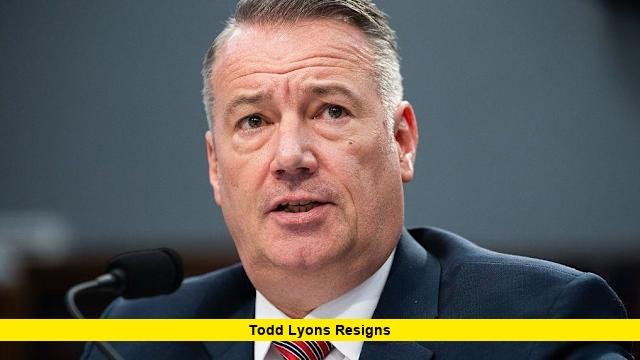

The development that todd lyons resigns from his role as acting director of U.S. Immigration and Customs Enforcement marks a pivotal leadership change at a time when immigration enforcement remains at the center of national debate.
Leadership Departure Confirmed
Todd Lyons has formally submitted his resignation as acting director of ICE and will leave the position at the end of May 2026. Officials confirmed he will continue serving in his current role until May 31 to support a smooth leadership transition.
His decision concludes a tenure defined by rapid operational growth, intense public scrutiny, and heightened political attention. Lyons communicated his intent to step away in coordination with Department of Homeland Security leadership, emphasizing a planned and orderly exit rather than an abrupt departure.
A Personal Decision Amid Professional Demands
Lyons’ resignation has been described as a personal choice, with officials noting his intention to spend more time with his family after years in demanding federal roles.
Still, the timing of his departure aligns with one of the most challenging periods for ICE leadership in recent years. The agency has been under constant national focus, balancing enforcement responsibilities with ongoing legal and political pressure.
Lyons has spent more than two decades in public service, including time in the military and senior positions within ICE. His experience placed him at the forefront of immigration enforcement policy during a critical period.
An Era of Expanded Enforcement
During his leadership, ICE underwent a significant expansion in both scope and scale.
Key developments under Lyons included:
- A substantial increase in hiring to bolster enforcement capabilities
- Expanded detention infrastructure to handle increased operational volume
- Broader enforcement actions across multiple U.S. regions
- A noticeable rise in deportation activity compared to prior periods
These measures reflected a strategy focused on strengthening enforcement capacity and accelerating operational output.
Supporters of the approach argued it restored ICE’s effectiveness and presence nationwide. Critics, however, questioned whether the pace of expansion created challenges in oversight and accountability.
National Attention and Policy Tensions
Lyons’ tenure coincided with a period of intense national conversation surrounding immigration policy. Enforcement operations carried out under his leadership frequently drew widespread attention.
In several cities, ICE activity prompted public demonstrations and renewed debate over enforcement practices. Advocacy groups and community organizations voiced concerns about the broader impact on families and local communities.
At the same time, federal officials defended the agency’s mission, stating that enforcement efforts were consistent with existing laws and aimed at maintaining public safety.
The result was a deeply divided public response, reflecting the broader political landscape surrounding immigration in the United States.
Congressional Oversight and Legal Scrutiny
In early 2026, Lyons appeared before congressional committees where lawmakers questioned ICE operations, resource allocation, and policy execution.
Issues raised during these sessions included:
- The transparency of enforcement procedures
- Training standards amid rapid hiring increases
- Coordination between ICE and other federal agencies
- Compliance with judicial rulings in specific cases
Legal scrutiny also intensified during this period, with court proceedings examining aspects of enforcement practices. In at least one case, judicial concern was expressed regarding how certain operations were carried out.
Lyons consistently defended the agency’s actions, stating that ICE remained committed to enforcing immigration laws within established legal frameworks.
Operational Growth and Internal Changes
One of the most defining aspects of Lyons’ leadership was the rapid growth of ICE’s workforce and operational footprint.
The agency implemented accelerated hiring initiatives, bringing in thousands of new officers within a relatively short timeframe. This expansion aimed to meet increasing enforcement demands and improve response capabilities.
Additional changes included:
- Expanded field operations across multiple jurisdictions
- Increased coordination with federal and local law enforcement partners
- Enhanced logistical capacity to support enforcement actions
While these developments strengthened operational reach, they also prompted questions about how quickly new personnel could be fully trained and integrated into complex enforcement environments.
Public Reaction Remains Divided
Public response to Lyons’ leadership has been sharply divided.
Supporters praised his focus on strengthening enforcement and increasing ICE’s effectiveness. Some officials credited his leadership with improving operational efficiency and delivering measurable results.
Meanwhile, critics pointed to concerns about the broader consequences of aggressive enforcement strategies. Public demonstrations in several cities reflected ongoing tensions over immigration policy and its implementation.
This division highlights the broader national debate, where immigration continues to be one of the most polarizing issues in American politics.
Transition Raises Key Questions
With Lyons preparing to step down, attention is now shifting to the future leadership of ICE.
As of now, no permanent successor has been announced. The transition period through the end of May is expected to allow time for planning and continuity.
Key questions emerging from this development include:
- Who will take over leadership of ICE
- Whether current enforcement strategies will continue or evolve
- How ongoing legal and political dynamics will influence future decisions
Leadership transitions at this level often signal potential shifts in priorities, making the coming weeks particularly important for the agency’s direction.
Career Overview and Lasting Impact
Todd Lyons’ career in federal service spans more than 20 years, including military service and senior roles within ICE.
Before becoming acting director, he held leadership positions focused on enforcement and removal operations. His promotion to the agency’s top role placed him in charge during a period of significant change.
During his tenure:
- ICE expanded its workforce and operational capacity
- Enforcement actions increased in scale and frequency
- The agency became a focal point of national discussion
His departure marks the conclusion of a leadership period that will likely influence future policy decisions and agency strategies.
Broader Implications for Immigration Policy
The announcement that todd lyons resigns comes at a time when immigration enforcement remains a central issue in U.S. policy discussions.
Changes in leadership can have a direct impact on how agencies interpret and implement policy. In this case, the transition could affect enforcement priorities, operational strategies, and internal management approaches.
Potential implications include:
- Adjustments to enforcement tactics
- Increased oversight from lawmakers and courts
- Continued public engagement and debate
- Strategic reassessment within the Department of Homeland Security
These factors will shape how ICE operates in the months ahead and how immigration policy continues to evolve at the national level.
What Happens Next
As the end of May approaches, the focus will remain on leadership decisions and operational continuity.
Federal officials are expected to provide updates on succession plans and any immediate policy changes. In the meantime, ICE operations will continue under existing leadership structures.
Observers across political, legal, and public spheres will be closely watching for signals about the agency’s future direction.
A Defining Moment for ICE
The resignation of a high-ranking official such as Lyons represents more than a routine personnel change. It reflects a moment of transition for an agency that plays a key role in national policy.
The coming weeks will determine how leadership decisions influence ICE’s path forward, particularly as immigration continues to shape political discourse across the country.