
The Yellow Canary is receiving renewed attention in the United States following a major restoration of the 1963 film and a new wave of theatrical screenings planned for fall 2026. The crime thriller, directed by Buzz Kulik and starring Pat Boone and Barbara Eden, has recently returned to the spotlight through preservation work and repertory cinema events. The restoration gives modern audiences another opportunity to see a film that has spent decades outside the center of mainstream movie culture.
The film originally premiered in the United States in 1963. It combines kidnapping, murder, celebrity culture and psychological suspense into a tightly structured thriller. Its cast also includes Steve Forrest, Jack Klugman, Jesse White, Steve Harris, Milton Selzer, Jeff Corey and Harold Gould.
A 1963 Thriller Returns to U.S. Screens
The biggest current development is the film’s preservation and restoration.
The Cinema Preservation Alliance and Film Noir Foundation worked together on a new digital restoration. The restoration received attention during the 2026 Noir City: Hollywood program at the Egyptian Theatre in Los Angeles. That event featured a world premiere of the new digital restoration.
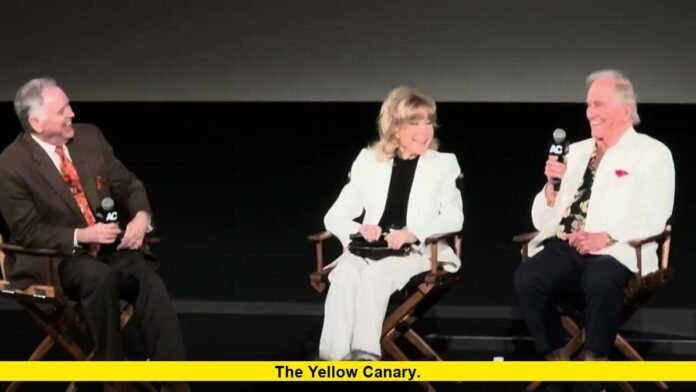
The April 2026 event also brought two of the movie’s stars back into the conversation. Pat Boone and Barbara Eden participated in a question-and-answer session following the screening. Film historian and Noir City host Eddie Muller moderated the discussion.
That appearance provided a notable connection between the original production and its modern restoration. The event was not simply a routine repertory screening. It presented the restored film as part of a larger effort to preserve and revisit classic American film noir.
What the Film Is About
The story follows Andy Paxton, a successful pop singer whose personal life becomes increasingly dangerous after his infant son is kidnapped.
Andy is preparing for an engagement at the Huntington Hartford Theater in Los Angeles. His private life is already under pressure because his wife, Lissa, plans to divorce him.
The situation changes dramatically when Andy and his bodyguard, Hub Wiley, return home. They discover that Andy’s infant son has been kidnapped and that the child’s nurse has been murdered.
A ransom demand follows.
The kidnappers use the word “canary” as a code. Andy initially keeps that detail from the police because he fears that revealing too much could put his child in greater danger.
The ransom is eventually set at $200,000. Andy manages to obtain the money, but the exchange does not proceed as expected.
The investigation then becomes increasingly complicated. Suspicion begins to move closer to Andy’s own circle of acquaintances and employees.
The film builds its mystery around the question of who can be trusted. Andy’s celebrity status does not protect him. Instead, it makes his private crisis even more complicated.
Pat Boone Leads the Cast
Pat Boone plays Andy Paxton, the central character whose family becomes the target of the kidnapping plot.
The role came during Boone’s highly visible period as a recording artist and entertainer. His presence gives the story an unusual dimension because the protagonist is himself a recognizable public figure within the movie’s world.
Barbara Eden plays Lissa Paxton, Andy’s wife.
Eden’s role places her directly inside the family’s crisis. Her character is not simply part of the background to the investigation. The relationship between Lissa and Andy becomes an important element of the story as the kidnapping continues.
Steve Forrest portrays Hub Wiley, Andy’s former police officer bodyguard. Jack Klugman appears as Lieutenant Bonner, one of the law-enforcement figures involved in the case.
The supporting cast includes Jesse White as Ed Thornburg, Steve Harris as Bake, Milton Selzer as Vecchio, Jeff Corey as Joe Pyle and Harold Gould as Ponelli.
Buzz Kulik Directed the Film
Buzz Kulik directed the movie. His work on the project helped shape its tense crime-thriller style.
The screenplay was adapted by Rod Serling from a novel by Whit Masterson. Serling was already one of the most recognized television writers of his generation, making his involvement an important part of the film’s history.
Kulik’s direction keeps the story focused on suspense rather than presenting the kidnapping simply as a police procedural.
The movie uses Andy’s personal relationships to create uncertainty. Several characters have reasons to appear suspicious, while the protagonist struggles to determine who may be responsible for the crime.
The result is a thriller built around shifting suspicion and escalating danger.
The Film’s Runtime and Format
The restored film has a reported runtime of 93 minutes.
The American Film Institute’s current listing identifies the movie as a 1963 U.S. black-and-white film and classifies it as film noir.
Its black-and-white presentation is particularly relevant to the restoration because image quality and preservation can significantly affect how older films appear in modern theaters.
Restoration work allows contemporary audiences to experience the movie with renewed picture and sound quality while retaining the visual character of the original production.
Why the 2026 Restoration Matters
Classic films can become difficult for new audiences to discover when prints deteriorate or when titles receive limited theatrical exposure.
The restoration of the 1963 movie addresses part of that problem.
The Film Noir Foundation and Cinema Preservation Alliance were involved in the restoration effort. Their work has helped place the film back into specialized theatrical programming.
The April 2026 Los Angeles presentation was particularly significant because it introduced the new digital restoration to an audience interested in film noir.
The event also paired the movie with The Crimson Canary. That programming gave the restoration additional context within a broader celebration of crime and noir cinema.
Upcoming U.S. Screening Activity
The restoration is continuing to reach audiences beyond the original Los Angeles event.
The American Film Institute’s Silver Theatre and Cultural Center in Silver Spring, Maryland, currently lists the film for screenings beginning October 17, 2026. Additional showtimes are listed for October 19 and October 20.
The AFI listing describes the presentation as the restored 1963 film and gives its running time as 93 minutes.
The scheduled screenings demonstrate that the restoration is moving into another phase of public exhibition. Rather than remaining limited to a single festival presentation, the film is appearing on the calendars of established American repertory institutions.
For moviegoers interested in classic crime cinema, these screenings provide a chance to see the restored version on a theater screen.
How the Film Fits Into Film Noir
The movie has several characteristics associated with classic noir and crime thrillers.
Its central character faces an increasingly dangerous situation while attempting to protect his family. The story also places suspicion on people within his immediate circle.
The narrative includes kidnapping, murder, ransom demands and deception. Those elements create the type of escalating uncertainty that has long been associated with crime-oriented cinema.
The film’s black-and-white photography further contributes to its period identity.
However, it also differs from many traditional noir stories because its central character is a successful entertainer rather than a private detective, criminal or police investigator.
That distinction gives the story a different perspective.
Andy is accustomed to public attention, but the kidnapping forces him into a private crisis where publicity offers little protection.
The Role of Barbara Eden in the Film
Barbara Eden remains one of the recognizable names connected to the film’s current revival.
Her performance as Lissa Paxton places her character at the center of the family drama. The relationship between Lissa and Andy becomes increasingly important as the investigation develops.
Eden’s later television career made her one of the best-known performers associated with American popular culture. Her appearance in the restored movie gives audiences another opportunity to see her work in a serious 1960s thriller.
Her participation in the 2026 Q&A alongside Pat Boone also added historical value to the restoration event.
The Difference Between the 1963 and 1943 Films
One important point for viewers searching for the title is that there are two different films with very similar names.
A separate British film, Yellow Canary, was released during World War II. Directed by Herbert Wilcox, it stars Anna Neagle and Richard Greene and was produced as a wartime espionage drama.
That 1943 production is not the same movie as the American 1963 thriller.
The distinction matters because online searches can easily combine information about the two productions.
The 1943 film centers on espionage and a British agent operating against a Nazi plot. The 1963 movie instead follows a celebrity family caught in a kidnapping and murder case.
For current U.S. theatrical news, the relevant title is the 1963 Buzz Kulik production.
Where the Film Stands Now
The latest confirmed developments show that the 1963 film has entered a new stage of visibility.
Its restoration has already received a major public presentation, and additional U.S. theatrical dates are scheduled for October 2026.
There is no need to treat the film as a newly produced project. It remains a historical 1963 thriller whose renewed attention comes from preservation and repertory exhibition.
The restoration is important because it gives the movie a stronger opportunity to reach audiences who may never have encountered it during its original release period.
For collectors, classic-film enthusiasts and viewers interested in American noir, the current screenings offer a timely reason to revisit the production.
The film also provides a snapshot of early-1960s entertainment culture. Its central character is a famous singer, while the story surrounds him with managers, employees, family members and law enforcement.
That combination makes the movie distinct from many conventional crime films of its period.
What Viewers Can Expect
Audiences approaching the movie today can expect a compact black-and-white thriller rather than a modern action film.
The story emphasizes suspense, investigation and character relationships.
The kidnapping provides the central mystery, while the murder and ransom plot steadily increase the pressure on Andy and Lissa.
The film’s restored presentation should also make its visual design more accessible to modern viewers. The restoration preserves the period appearance while improving the presentation for contemporary theatrical audiences.
With screenings scheduled in Maryland and the restoration already presented in Los Angeles, the movie has a confirmed place in the 2026 U.S. classic-film calendar.
Final Takeaway
The current revival of the 1963 film is being driven by preservation rather than a new remake or sequel. Its digital restoration, festival presentation and upcoming AFI Silver screenings have brought Pat Boone, Barbara Eden and Buzz Kulik’s thriller back into the conversation.
For U.S. audiences interested in classic mysteries and film noir, the restoration offers a fresh opportunity to discover a movie that has been largely overshadowed by better-known titles from the same era.
With its restored presentation now reaching new audiences, this classic thriller is worth watching closely as its 2026 screenings continue.