
Walk into almost any Target on a random weekday and you’ll likely find the same scene: an empty peg wall where Pokemon cards should be, a hand-written sign apologizing for low stock, or a locked case guarded by a store associate. Target pokemon cards have become one of the most chased retail items in the country, and the chase shows no sign of slowing down heading into the back half of 2026. Between a packed release calendar, aggressive resale demand, and inconsistent store-level policies, figuring out how to actually buy these cards at sticker price has turned into its own small industry of trackers, alert apps, and online communities.
This piece takes a closer look at why availability is so unpredictable, what Target is actually doing to manage demand, and what collectors and parents alike can realistically expect walking into a store or logging onto the website this season.
Why Pokemon Cards Are Still So Hard to Find
The shortage dynamic isn’t new, but it hasn’t meaningfully eased since it first became a national talking point back in 2020 and 2021. A few forces are still driving it in 2026:
- Collector demand has outpaced print runs. Even with the Pokemon Company increasing production, popular sets routinely sell through their initial allocation within days.
- Resale margins remain attractive. Sealed Elite Trainer Boxes and premium collections often resell for well above their original sticker price shortly after release, which keeps professional resellers motivated to buy in bulk.
- Retail allocation is limited and uneven. Big-box stores like Target don’t receive unlimited quantities of any single product; instead, they get a set allocation per store, per shipment, which can be gone within hours of hitting the shelf.
- New product lines keep launching. Between mainline Scarlet & Violet-era sets, Mega Evolution releases, and now a milestone anniversary launch, there’s rarely a quiet stretch on the calendar for demand to cool down.
Put together, these factors mean that even a well-timed store visit doesn’t guarantee success, and online shopping carries its own set of obstacles.
How Target Actually Restocks Its Card Aisle
Target has never released an official, published restock calendar for trading cards, and that’s unlikely to change. Instead, what’s known comes from patterns observed by shoppers, employees, and third-party monitoring services that track inventory changes across thousands of stores.
In physical stores, replenishment is handled differently depending on the location. Many Target stores rely on outside merchandising vendors who visit on a rotating basis to restock the trading card section, most often located in electronics or near the front registers. A large number of shoppers report Friday as the most common delivery day, but that’s far from universal — some stores see cards arrive multiple times a week, while others go stretches with nothing new at all. The most dependable strategy isn’t memorizing a schedule; it’s building a relationship with a specific store and asking a team member directly when their vendor typically comes through.
Online, the pattern looks different. Target.com tends to push new Pokemon inventory in short bursts, frequently in the very early morning hours Eastern time. These digital restocks can be gone within minutes for anything considered highly desirable, since the entire country is competing for the same pool of units rather than just people who happen to walk into one physical location. Because Target’s website and in-store systems track inventory independently, a product showing as sold out online says nothing about what might be sitting on a shelf across town, and the reverse is just as true.
New set launches are the one predictable exception. Major releases typically go live on their official street date, which is almost always a Friday, with product often available starting when doors open in the morning.
Purchase Limits, Scalper Pushback, and Store-Level Chaos
Anyone who has stood in a Target checkout line during a hot release has probably witnessed the tension firsthand. In response to repeated incidents of overcrowding, arguments, and even physical altercations in years past, Target has leaned on purchase limits as its primary defense against bulk buyers.
For special promotional collaborations, the company has been explicit: shoppers are capped at one unit per item, per person, both in-store and through the website. That rule is designed less for everyday booster packs and more for headline crossover releases, but its spirit has bled into general card sales too. Numerous shoppers report individual stores capping trading card purchases at one or two items per customer even outside of official collaboration events, though this isn’t a formal, nationwide mandate — it’s a judgment call left largely to store management.
That inconsistency creates real friction. A shopper who successfully buys three booster boxes at one location might be turned away entirely at another just a few miles down the road, simply because that store’s team has adopted stricter internal rules. Enforcement also varies wildly depending on which associate happens to be working the register that day. For anyone hoping to buy in any real quantity, calling ahead or asking about a store’s current policy before making the trip can save a wasted drive.
What’s On Shelves Heading Into Fall 2026
Right now, Target’s card selection leans heavily on the current Scarlet & Violet and Mega Evolution product lines. Shoppers can typically find Elite Trainer Boxes and booster bundles tied to recent mainline sets, along with premium single-Pokemon collection boxes built around specific fan-favorite characters. Ultra-Premium Collections featuring high-profile Pokemon like Charizard continue to be among the fastest sellers whenever they appear, frequently vanishing from both the app and the shelf within the same day they’re restocked.
Alongside the core lineup, Target regularly carries accessory products, including card sleeves, portfolio binders, and themed collector tins, which tend to stick around longer since they don’t carry the same resale appeal as sealed booster product.
The Anniversary Release Changing Everything This Fall
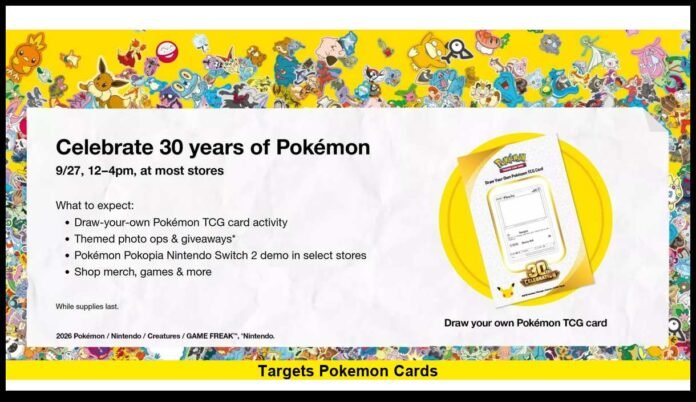
The single biggest event on the horizon is the Pokemon Trading Card Game’s 30th anniversary expansion, which launched globally in mid-September 2026 as part of the first-ever simultaneous worldwide rollout for the franchise. Rather than staggering the release by region as has historically been the case, this set arrived in English and Japanese markets on the very same day, a first in the game’s three-decade history.
Target confirmed it would carry the anniversary set from launch day, with online pre-orders and same-day releases rolling out gradually rather than all at once, item by item, to help spread demand across the morning instead of creating a single overwhelming rush. Entry-level products like a themed booster box and smaller collector items have been priced closer to standard retail expectations, while a higher-end Ultra-Premium Collection sits at a noticeably steeper price point reflecting its expanded pack count and exclusive promo cards.
Given the milestone nature of the release, expect additional waves of anniversary-themed product to continue rolling out at Target and other major retailers through the remainder of the year, with each new wave likely to trigger the same overnight scramble that’s become standard for any high-profile Pokemon release.
Making the Most of Target Circle
One underrated way to soften the sting of high demand is Target’s loyalty program, Target Circle. The retailer periodically runs limited-time promotions offering a percentage discount on select trading card products, and these offers can occasionally stack with additional savings for Target Circle Card holders. These deals tend to surface around new set launches or general seasonal sales pushes, but they rarely last more than a day or two and aren’t guaranteed to include every card product in the store.
Checking the Target Circle app regularly, rather than waiting for a specific card release, is generally the more effective habit, since these discounts can appear with very little advance notice.
Practical Advice for Collectors and Parents
For anyone determined to buy at retail price rather than pay a resale markup, a few habits consistently improve the odds:
- Visit stores early in the morning, ideally right around opening, when overnight shipments are most likely to have already hit the shelf.
- Set up alerts through a reputable stock-tracking tool so you’re notified the moment an online listing changes status rather than manually refreshing a page.
- Build familiarity with a specific store’s staff and delivery rhythm instead of chasing generalized advice found online.
- Keep receipts for sealed purchases, since standard return windows typically apply if a product arrives damaged or you simply change your mind.
- Stay realistic about high-profile releases; even perfect timing doesn’t guarantee success when national demand for a single item vastly outweighs available inventory.
None of these strategies eliminate the shortage, but together they meaningfully improve the chances of walking away with product at face value instead of paying a reseller’s premium.
╔════════════════════════════════════════════════════════════════════╗
║ – Ongoing print shortages and resale demand keep card shelves       ║
║   emptying quickly nationwide.                                      ║
║ – Target has no official restock calendar; Friday deliveries are    ║
║   common in-store, while online drops often land overnight.         ║
║ – One-per-guest limits apply to special collaborations and are      ║
║   sometimes applied informally to general card sales by individual  ║
║   stores.                                                            ║
║ – The Pokemon TCG's 30th anniversary set launched globally in       ║
║   mid-September 2026, with Target rolling out product in waves.     ║
║ – Target Circle promotions occasionally discount select card        ║
║   products, but offers are short-lived and unpredictable.           ║
╚═══════════════════════════════════════════════════════════