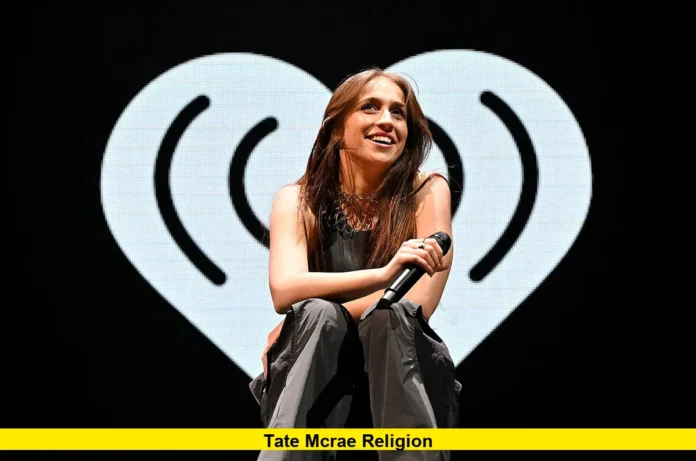

The topic of tate mcrae religion has attracted interest from fans who want to learn more about the Canadian singer’s background, upbringing, and life beyond her music career. Known for her emotional pop songs, expressive performances, and international success, Tate McRae has built a public image centered largely on music, dance, creativity, and personal experiences. However, questions about a celebrity’s religion require careful consideration because personal beliefs are not always publicly discussed.
For fans, understanding an artist means more than knowing their biggest songs or watching their performances. It can also mean learning about their family background, cultural influences, and the experiences that have shaped their identity. The important distinction is between information an artist has shared publicly and assumptions made by audiences.
If you enjoy learning about the people behind today’s biggest pop hits, explore the details below to understand what is publicly known about McRae’s background and why her religious beliefs should be approached thoughtfully.
What Is Tate McRae Religion? Her Spiritual Beliefs, Prayer, and Personal Approach to Faith
Does Tate McRae Follow a Specific Religion?
The question of tate mcrae religion has a more nuanced answer than a simple label such as Christian, Catholic, or another religious affiliation. McRae has publicly discussed spirituality, prayer, meditation, and her connection with a higher power, offering insight into how these practices fit into her life. However, those statements do not establish that she belongs to a particular organized religion.
Her comments suggest that spirituality is a meaningful part of her personal life, particularly when she faces the pressures associated with fame. In conversations about navigating the entertainment industry, she has described practices that help her feel grounded and maintain perspective. These include prayer, journaling, meditation, and manifesting.
Readers interested in McRae’s personal beliefs should distinguish between what she has actually said and what people might infer from her music, clothing, or public appearances. Religious identity is personal, and spiritual practices do not automatically establish membership in a particular faith.
Follow McRae’s interviews and public statements to learn more about her evolving perspective, rather than relying on social media assumptions about her religion.
Tate McRae’s Spirituality: What She Has Shared Publicly
McRae has discussed spirituality in an interview conversation with fellow performer Iris Apatow. When asked about the role of faith and therapy in her life, she described connecting with a higher power as one of the things that helps her get through everyday life.
Her comments provide an important starting point for understanding her perspective. Rather than identifying herself through a specific religious denomination in that discussion, she spoke about spirituality as a personal source of support.
She also described using meditation, prayer, journaling, and manifesting while adjusting to the demands of the music business. These practices helped her manage the uncertainty she experienced after moving to Los Angeles at 17.
That period represented a significant transition. McRae was entering an unfamiliar professional environment in which she had to make decisions about her career while learning how the entertainment industry operated.
Her remarks indicate that spirituality can serve a practical role in her daily life. For her, these activities have been associated with feeling more normal, maintaining hope, and navigating situations that can otherwise seem overwhelming.
It is important, however, not to interpret these statements as a declaration of a particular religion. People from different religious traditions, as well as those who do not identify with an organized faith, may pray, meditate, or believe in a higher power.
McRae’s public comments establish that spirituality matters to her. They do not, by themselves, establish a formal religious affiliation.
Why Tate McRae’s Beliefs Are Difficult to Categorize
Public figures often face pressure to explain their identities in simple terms. Fans may want to know whether a singer is Christian, Jewish, Muslim, Hindu, atheist, or affiliated with another religious tradition.
But personal belief does not always fit neatly into one category.
Someone might believe in God without belonging to a church. Another person might practice meditation while maintaining a religious identity. Others may explore spiritual ideas without adopting a formal doctrine.
McRae’s publicly discussed practices illustrate why these distinctions matter.
Her references to a higher power and prayer indicate an interest in spirituality. Her comments about manifesting and meditation also show that her approach includes practices commonly associated with personal reflection and intention-setting.
Nevertheless, these details should not be combined into an unsupported claim about her religion.
A person’s spiritual life can also change over time. An interview offers a view of what someone was comfortable sharing at that moment, not necessarily a permanent description of every belief they hold.
For that reason, the most responsible answer to the question of McRae’s religion is that she has spoken openly about spirituality and connecting with a higher power, but her public comments do not establish a specific religious denomination.
That answer may be less definitive than some readers expect, but it reflects the distinction between publicly available information and assumptions about private beliefs.
The Role of Prayer in Tate McRae’s Life
Prayer is one of the practices McRae has mentioned when discussing the ways she manages the challenges of everyday life.
For many people, prayer offers an opportunity to reflect, express gratitude, seek comfort, or think through difficult decisions. Its meaning varies considerably depending on an individual’s beliefs and background.
In McRae’s case, prayer appears in the context of finding a sense of stability while navigating a demanding career.
The music industry can involve unpredictable schedules, public criticism, travel, professional competition, and constant attention from audiences. Artists may also struggle to separate their private identities from the public personalities that develop around their work.
McRae has described feeling confused by the entertainment industry when she first moved to Los Angeles as a teenager. Her discussion of prayer and other reflective practices provides insight into how she approached that uncertainty.
However, there is a difference between saying that prayer has helped someone and claiming that the person follows a particular religion.
Prayer is practiced across many faiths, and its meaning can differ even among people who share the same religious background. Some use it as part of an established tradition, while others approach it as a personal expression of spirituality.
McRae’s comments reveal that prayer is part of the set of practices she has found helpful. They do not establish which religious tradition, if any, guides that practice.
This distinction allows readers to understand her statements without assigning her a label she has not publicly established.
How Meditation and Journaling Help Her Stay Grounded
Prayer is not the only practice McRae has discussed. She has also mentioned meditation and journaling as ways of dealing with the demands of her life and career.
Meditation can involve focusing attention, observing thoughts, or creating a quiet space away from everyday distractions. Journaling, meanwhile, gives people an opportunity to put feelings into words and examine their experiences.
Neither practice requires a person to belong to a specific religion.
For someone working in entertainment, these activities may offer a way to step back from external expectations. A performer can spend much of the day responding to other people’s demands, preparing for appearances, rehearsing, or making professional decisions. Personal reflection provides a different kind of space.
Consider the experience of a young artist preparing for an important performance while dealing with uncertainty about career decisions. Meditation might provide a moment to settle the mind, while journaling could help organize concerns into manageable thoughts. Prayer might offer comfort or a sense of connection with something beyond the immediate situation.
This example illustrates how the practices McRae has discussed can serve different purposes without necessarily pointing toward one religious identity.
Her comments about using these tools during her transition into the music industry suggest that personal well-being is an important part of how she navigates professional pressure.
Still, it would be inaccurate to assume that every practice she mentions forms part of a formal spiritual routine or that she follows a particular method every day. Her public remarks provide insight into what she has found helpful, not a complete account of her private habits.
What Does Tate McRae Mean by Manifesting?
Manifesting is another concept McRae has discussed when talking about her personal outlook.
The term generally refers to focusing on desired outcomes, intentions, or goals. People use it in different ways, ranging from visualization and positive thinking to spiritual interpretations involving energy, belief, or the idea that events happen for a reason.
Manifesting is not a single religious doctrine. It is used by people with different backgrounds and belief systems.
In a career such as McRae’s, the concept can be understood in relation to ambition and uncertainty. Singers and performers often work toward goals that depend on numerous factors, including preparation, creative decisions, professional opportunities, and audience response.
Visualizing success may help an individual clarify what they want to achieve. However, visualization alone cannot guarantee a particular result.
McRae’s comments about manifesting should therefore be understood as part of her personal perspective rather than evidence of membership in a particular religious movement.
Her interest in this practice also fits with her broader comments about spirituality, meditation, and prayer. Together, these statements indicate that she has explored several approaches to personal reflection and maintaining a positive outlook.
They do not establish that she follows a single, formally defined spiritual system.
For fans, the key point is that McRae has discussed these ideas in her own words. There is no need to turn each individual practice into proof of a specific religious affiliation.
Is Tate McRae Christian?
One of the most common questions surrounding the subject is whether McRae identifies as Christian.
Her public comments about prayer and a higher power may lead some readers to associate her with Christianity. Prayer is central to many Christian traditions, and belief in God is an important part of Christian faith.
However, these practices are not exclusive to Christianity.
A person can believe in a higher power or pray without identifying as Christian. Likewise, a person who practices meditation or manifesting may have religious beliefs that are not evident from those activities.
McRae’s publicly discussed spirituality does not provide enough information to establish that she identifies as Christian or belongs to a Christian denomination.
It would therefore be misleading to present Christianity as her religion without a clear public statement establishing that affiliation.
The same principle applies to claims that she follows another faith. A religious identity should not be assigned simply because a person uses language associated with a particular tradition.
For readers seeking a straightforward answer, the available information supports describing McRae as someone who has discussed spirituality, prayer, and a connection with a higher power. It does not support a definitive claim that she is Christian.
If she chooses to discuss her religious identity more explicitly in the future, her own words would provide the most reliable basis for updating that understanding.
Does Tate McRae Believe in God?
McRae has publicly spoken about connecting with a higher power, which provides a clearer indication of her perspective than speculation about a particular denomination.
Her comments suggest that this connection has personal significance, especially when she is dealing with uncertainty and the pressures of her career.
However, belief in a higher power can mean different things to different people. Some understand it through the teachings of an established religion. Others describe it in more personal or spiritual terms.
Without a more specific statement defining her beliefs, it would be inappropriate to assume exactly how McRae understands the concept.
Her comments also should not be treated as evidence that she accepts every teaching associated with any particular religion.
Belief, religious affiliation, and spiritual practice are related but distinct subjects. Someone may believe in God without participating in organized religion, while another person may combine religious observance with meditation or other personal practices.
McRae’s public remarks offer evidence of an interest in spirituality, but they do not answer every question about her theological beliefs.
The most accurate interpretation is to take her statements at face value without extending them beyond what she has shared.
Tate McRae’s Interest in Spirituality and Intuition
McRae has also discussed ideas involving intuition, energy, and personal spirituality in interviews about her life and creative outlook.
In more recent interview coverage, she has described herself in spiritual terms and discussed an interest in intuitive experiences and practices associated with energy and manifesting.
These remarks add context to the broader picture of her beliefs. They suggest that her interest in spirituality is not limited to references to prayer or a higher power.
At the same time, spiritual interests should not automatically be equated with a particular religion.
Concepts such as intuition, energy, and manifesting appear in a wide range of personal philosophies and spiritual communities. People interpret them differently, and they do not form one universally accepted religious system.
It is also important to distinguish between a person’s description of a personal experience and a factual claim about how the world works. An artist can discuss an experience that feels meaningful to them without that experience establishing a religious identity.
McRae’s comments are best understood as insight into her individual outlook. They do not provide a basis for labeling her as a member of a specific spiritual movement.
This distinction matters because celebrity coverage can sometimes turn a brief comment into a much broader claim. A single reference to intuition or energy may be repeated online until it appears to establish something that the original statement did not establish.
Readers can avoid that confusion by considering the full context of her remarks rather than relying on isolated phrases.
How Her Personal Beliefs Relate to Her Music
McRae is widely recognized for songs that explore relationships, vulnerability, attraction, heartbreak, confidence, and personal growth.
These subjects frequently invite listeners to connect an artist’s lyrics with their own experiences. They can also encourage fans to search for clues about the singer’s private beliefs.
However, songwriting is not necessarily a direct statement of religious identity.
Artists use storytelling, metaphor, imagery, and emotional language to communicate ideas. A lyric may describe longing, uncertainty, hope, or a sense of destiny without expressing a specific theological position.
Similarly, a song that mentions God or uses religious imagery would not, on its own, prove that the songwriter follows a particular religion.
The distinction is particularly important for pop music, where lyrics often combine personal experiences with fictional situations, creative exaggeration, and themes designed to resonate with a broad audience.
McRae’s music can be interpreted through its emotional themes without treating every line as a literal description of her private life.
Her public discussions of spirituality provide a separate source of information about her outlook. Those comments are more useful for understanding what she has chosen to share about faith than attempts to infer her religion from a song title, lyric, costume, or music video.
For fans, this approach also leaves room to appreciate her artistic work without assuming that every creative choice reveals a personal belief.
What Her Background Tells Us About Her Personal Life
Tate McRae was born in Calgary, Alberta, Canada, in 2003. She grew up in a family that supported her interest in performance, and she began dance training when she was young.
Her early experiences in dance helped establish the foundation for her career as a singer, songwriter, and performer. She later gained wider attention through competitive dance before developing her music career.
Her background provides context for understanding the discipline and dedication associated with her professional life. It does not, however, establish her religion.
Nationality, family heritage, and upbringing are sometimes used online to suggest that a celebrity must follow a particular faith. Such assumptions are unreliable because people from the same country or family background can hold very different religious and philosophical beliefs.
Even when information about a person’s parents or extended family is publicly available, it does not automatically reveal the person’s own religious identity.
McRae’s experiences growing up, training in dance, and entering the music industry help explain her artistic development. Her comments about spirituality offer an additional perspective on how she approaches personal challenges.
Neither part of her background should be used to invent a religious affiliation that she has not clearly identified.
Why Fans Should Be Careful With Online Claims About Her Religion
Search results and social media discussions can make it difficult to separate a celebrity’s own statements from interpretations created by fans.
A photograph, an accessory, a lyric, or a brief interview excerpt may be presented as proof of a religious identity. Yet those details can have multiple explanations and may not reflect the person’s actual beliefs.
For example, wearing a particular symbol does not necessarily establish religious membership. The symbol might have personal, cultural, artistic, or fashion-related significance.
Likewise, discussing prayer does not automatically mean that someone attends a particular church or follows a formal religious tradition.
The same caution applies when a celebrity talks about spirituality. Interest in meditation, manifesting, intuition, or a higher power does not necessarily fit within one established faith.
The best approach is to prioritize direct statements and consider the context in which they were made.
This is especially important when a question concerns personal beliefs rather than a public career achievement. Religious identity can be deeply meaningful, and inaccurate labels can misrepresent the person being discussed.
McRae has shared meaningful details about her spiritual outlook, but those details should not be stretched into claims that go beyond her public statements.
Respecting that distinction makes it possible to answer fans’ questions while recognizing the limits of what is publicly known.
Will Tate McRae Reveal More About Her Religious Beliefs?
McRae may choose to discuss her spiritual life more extensively in future interviews, but there is no reason to assume that she will provide a detailed explanation of her religious identity.
Public figures decide which aspects of their lives they want to share. Some openly discuss religion, while others focus on their work, relationships, or creative interests.
An artist can also discuss spirituality without wanting to define it through a formal label.
McRae’s existing comments already provide some insight into her perspective. She has described prayer, meditation, journaling, manifesting, and connecting with a higher power as meaningful parts of how she navigates life.
Those statements help explain why fans associate her with spirituality. They do not mean that she must provide additional personal details to satisfy public curiosity.
If she makes a clear statement about belonging to a specific religion, that information could help answer the question more definitively. Until then, the responsible approach is to avoid treating assumptions as established facts.
Her music career can continue to develop independently of whether she chooses to share more about her private beliefs.
Final Answer: What Is Tate McRae Religion?
The most accurate answer is that McRae has publicly discussed spirituality and her connection with a higher power, along with practices such as prayer, meditation, journaling, and manifesting.
These comments suggest that personal spirituality has played a meaningful role in how she approaches uncertainty and the pressures of her career. However, they do not establish that she follows Christianity or another specific organized religion.
The distinction between spirituality and religious affiliation is central to understanding her public statements. Her experiences and beliefs may be personal, evolving, or more complex than a single label can convey.
For fans searching for tate mcrae religion, the available public information supports an interest in spirituality rather than a definitive religious classification.
As with any public figure, her own future statements would be the best guide to any more specific understanding of her beliefs.
If you want to learn more about McRae, her interviews and reflections on life beyond music offer a useful way to understand the person behind the performances.
What do you think about Tate McRae’s approach to spirituality? Share your thoughts respectfully in the comments, and stay tuned for further updates on her life and career.