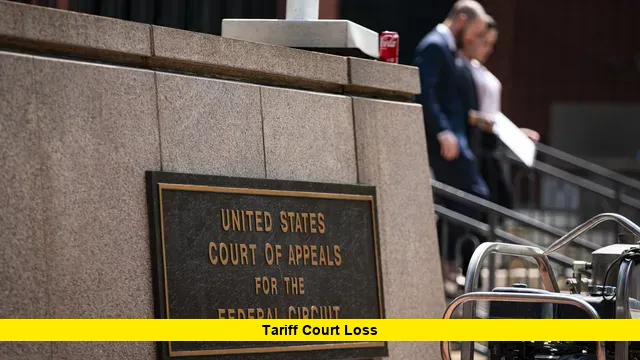

A Tariff Court Loss has sent shockwaves through global markets and political circles, leaving U.S. trading partners scrambling to understand what comes next. The ruling, handed down by the U.S. Court of Appeals, declared that many of the tariffs imposed under emergency trade powers were unlawful. While the decision does not take immediate effect, it has triggered a storm of uncertainty in Washington and across international trade hubs.
The Ruling That Changed the Trade Debate
The court’s majority decision, delivered in a 7–4 vote, struck down broad tariffs enacted in recent years, ruling that the emergency powers used by the administration did not provide legal authority for imposing sweeping duties on imported goods.
What makes this ruling historic is its scale. The tariffs in question covered billions of dollars in imports and had been justified under the banner of national security and emergency response. Judges, however, concluded that while the president has broad authority in foreign policy, imposing taxes and tariffs lies primarily within the domain of Congress.
The court has delayed enforcement of the ruling until October 14, 2025, giving the government time to seek further review at the Supreme Court. Until then, the tariffs remain in effect, leaving businesses and trading partners in limbo.
Key Points Summary
✨ For readers who want the highlights in under a minute:
- Appeals court delivers 7–4 decision against presidential tariff powers.
- Tariffs remain active until October 14, 2025, pending appeal.
- Government faces potential refund liabilities in the hundreds of billions.
- U.S. trading partners express frustration and confusion.
- Supreme Court is expected to take up the case in the coming months.
Global Reaction: Allies Caught Off Guard
The immediate response from U.S. trading partners has been described as one of shock, with many governments feeling “dazed and confused.” For countries that faced sudden tariff hikes over the past several years, this ruling seemed to offer vindication—only to leave them uncertain about whether relief is truly on the horizon.
Some nations are preparing for tariff refunds if the ruling stands, while others are hesitant to make trade commitments until the legal process concludes. International businesses, already adjusting to fluctuating duties, are now struggling to forecast costs and supply chain strategies.
Economic and Political Fallout
The financial implications of the Tariff Court Loss are massive. Analysts estimate that if refunds are ordered, the government could be liable for well over $150 billion in duties already collected. This could strain federal finances and ignite a new debate in Congress over trade law, fiscal responsibility, and executive authority.
Politically, the ruling challenges one of the most visible trade strategies of recent years. While some hailed tariffs as a tool to protect U.S. industries, critics argued they increased costs for American consumers and sparked retaliatory measures abroad. The decision now reframes the conversation, shifting focus to the limits of presidential power.
What Happens Next
The government has already signaled plans to appeal the ruling to the Supreme Court. This sets up a high-stakes legal battle that could define the scope of presidential authority in trade for decades to come.
In the meantime, businesses are in a holding pattern. Importers who have been paying steep duties are waiting to see whether they might eventually be entitled to refunds. Exporters from partner countries are left weighing whether to resume normal shipments or remain cautious until the dust settles.
Why the Ruling Matters Globally
The Tariff Court Loss matters not only for the U.S. but also for the global trading system. Here’s why:
- Legal Precedent: It signals that emergency declarations cannot be stretched indefinitely to justify broad economic measures.
- Trade Stability: The back-and-forth nature of U.S. tariffs undermines the predictability that international trade depends on.
- Investor Confidence: Businesses rely on legal clarity; uncertainty makes them hesitant to invest in supply chains tied to the U.S.
- Diplomatic Trust: Allies that faced sudden tariff hikes are questioning the reliability of U.S. trade policy.
Impact on Markets and Businesses
Markets often react quickly to trade decisions, and this ruling has created waves of speculation. While tariffs remain in place for now, the possibility of refunds or cancellations has left importers and exporters revising their forecasts.
- Importers: U.S. businesses that paid tariffs on goods such as steel, aluminum, and electronics may eventually see costs lowered—if the ruling holds.
- Consumers: Price relief could follow if tariffs are lifted, but it is too early to expect immediate changes.
- Exporters Abroad: Companies in countries hit with tariffs are cautious about increasing shipments until clarity emerges.
- Government Budget: Potential refund obligations could become one of the largest trade-related liabilities in U.S. history.
Voices from Washington
Inside Washington, the ruling has intensified debate over trade policy. Supporters of tariffs argue that the measures were necessary to level the playing field and protect U.S. industries. Critics counter that they were both economically damaging and legally overreaching.
Lawmakers are now considering whether new legislation is needed to clarify executive powers in trade. Some want to rein in presidential authority, while others argue for giving presidents more flexibility to act in emergencies. The Supreme Court’s eventual ruling will heavily influence this debate.
The Road Ahead
Looking forward, the situation could play out in three broad ways:
- Supreme Court Reversal: If the high court sides with the administration, tariffs remain in place, and presidential power is reinforced.
- Supreme Court Upholds Appeals Court: Tariffs would be struck down, and refunds may follow, drastically reshaping U.S. trade law.
- Congressional Action: Lawmakers could move to redefine trade powers, limiting or expanding executive authority depending on political dynamics.
Closing Thoughts
The Tariff Court Loss represents more than just a courtroom setback—it is a turning point in the ongoing struggle over trade authority, economic policy, and global diplomacy. With the countdown to October 14 underway and the Supreme Court appeal looming, both allies and rivals of the United States are watching closely.
As the world waits for clarity, one thing is certain: the outcome will reshape not just U.S. trade policy, but also the balance of power between the executive branch, Congress, and global partners.
What do you think—should presidents have broad power to impose tariffs, or should Congress reclaim control? Share your thoughts below.