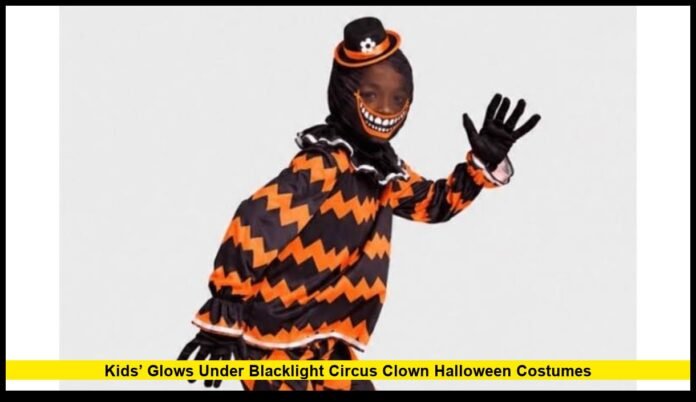

The kids’ glows under blacklight circus clown halloween costume has become one of the most talked-about Halloween products of 2026 after Target removed the children’s costume from sale and apologized following criticism over imagery that consumers said resembled racist Blackface and minstrel-show caricatures.
The controversy erupted online shortly before the peak of the Halloween shopping season. Images of the costume circulated across social media, prompting shoppers and commentators to question how the product had made it through the retailer’s design, merchandising and marketing processes. Target ultimately acknowledged that it had made a serious mistake, pulled the item and said it was reviewing what went wrong.
The episode has now become a wider discussion about retail accountability, cultural sensitivity and the responsibility of companies selling products designed for children.
What Happened With Target’s Controversial Halloween Costume?
Target’s Halloween collection included a product marketed as the “Kids’ Glows Under Blacklight Circus Clown Halloween Costume Bodysuit.” The outfit was sold under Hyde and EEK! Boutique, Target’s seasonal Halloween brand, and carried a price of about $25.
The costume was designed around a circus-clown concept, with bright orange and black elements intended to create a striking appearance under blacklight conditions. However, the product’s overall styling quickly attracted criticism after images appeared online.
Critics focused particularly on the dark gloves, hood or face covering and the exaggerated toothy smile displayed on the costume. The product photograph also showed a Black child wearing the outfit.
For many people who saw the images, the combination of those visual elements raised comparisons with racist caricatures historically associated with Blackface and minstrel performances.
The controversy grew rapidly as social media users shared screenshots and questioned the retailer’s product approval process. The issue eventually became large enough that Target responded publicly.
Target Apologizes and Removes the Product
Target issued an apology on August 24, 2026, acknowledging that the company had made a mistake.
The retailer said the costume was offensive and should never have been included in its assortment. Target also confirmed that the item was no longer available for sale.
The company acknowledged that the situation was particularly hurtful to Black customers, employees and business partners.
Target also indicated that removing the product was only an initial step. The retailer said it was examining how the costume reached its assortment and what changes might be necessary to prevent a similar incident from happening again.
That response became an important part of the story because it went beyond simply describing the controversy. Target accepted responsibility for the presence of the product and publicly committed to examining its internal processes.
Why the Costume Became Controversial
The criticism centered on the historical meaning associated with some of the costume’s visual characteristics.
Blackface has a long and deeply harmful history in the United States. During the era of minstrel entertainment, performers frequently used exaggerated makeup and facial features to portray Black people through racist stereotypes. Those images continued to influence popular culture long after formal minstrel performances declined.
Because of that history, visual elements that resemble those caricatures can trigger serious concerns even when they appear in an unrelated context.
In the Target controversy, critics argued that the costume’s broad painted smile, dark accessories and overall presentation created an appearance that went beyond a conventional circus-clown design.
The company did not publicly argue that the costume was intended to make a racial statement. Instead, Target’s apology recognized the impact of the product and described it as offensive.
That distinction is significant. A company can create a product without intending to invoke a historical stereotype, while consumers can still reasonably object to the imagery they see.
The Product’s Marketing Image Added to the Reaction
The product itself was only part of the controversy. The photograph used to market it also became a major focus.
The image showed a young Black child wearing the costume, which led some observers to question how the product and promotional material had been reviewed before appearing online.
Retail product photography is often treated as a routine part of the merchandising process, but in a sensitive situation it can substantially affect how an item is perceived.
A design that might appear relatively ordinary when viewed as an isolated illustration can take on a different meaning when worn by a person and photographed in a particular pose.
That appears to have contributed to the intensity of the reaction in this case.
Social media users were able to circulate the product image quickly, allowing criticism to spread beyond Target’s own website and into broader online discussions.
Who Made the Costume?
The costume was associated with Hyde and EEK! Boutique, a Target-owned seasonal brand.
Target has not publicly identified the individual designer or detailed the complete chain of approvals that allowed the product to reach the company’s Halloween assortment.
The retailer said it was reviewing how the situation occurred and what needed to change.
That leaves important questions unanswered about the product development process.
Large retailers typically involve numerous stages when bringing seasonal merchandise to market. Design teams, buyers, sourcing personnel, merchandising groups, legal teams, marketing departments and photography teams can all play roles in preparing products for consumers.
The controversy has therefore raised a broader question: At what point should a design containing potentially sensitive imagery have been flagged?
Target has not publicly provided a detailed answer.
What Target’s Review Could Mean
Target’s statement suggests that the company intends to look beyond the simple decision to remove the product.
A review could examine the original design, the product’s naming, its visual presentation, the marketing photograph and the approval process used before the costume was made available.
It could also lead to greater scrutiny of products that contain imagery connected to race, ethnicity, religion, disability or other culturally sensitive subjects.
For retailers, Halloween can be particularly challenging because costume designers often draw from historical characters, folklore, horror, fantasy and pop culture.
The goal is to create something entertaining and recognizable, but those themes can sometimes overlap with imagery that has a painful historical meaning.
A stronger review process can help identify those problems before products reach consumers.
Is the Costume Still Available?
The specific Target costume at the center of the controversy is no longer available for sale.
Target confirmed that it had been removed from its assortment following the backlash.
Consumers may still find references to the product through search-engine results, social media posts, screenshots or archived discussions. Those references do not necessarily mean the item is still being sold.
The distinction is important because the product became a viral topic very quickly, meaning copies of its original listing can continue circulating even after the retailer removes the item.
Parents searching online should therefore pay attention to whether a listing is current and whether it is actually connected to an active retailer.
What About Other Clown Costumes?
The controversy does not mean clown costumes themselves are being removed from Halloween collections.
Clown costumes remain a popular Halloween category, with options ranging from colorful circus performers to spooky clowns, vintage-inspired designs and blacklight-reactive outfits.
The issue surrounding the Target product is specific to that particular design and its presentation.
Parents looking for a clown-themed costume can still choose alternatives that use conventional circus colors, exaggerated hats, colorful patterns, face paint and other traditional clown elements without reproducing imagery that could be interpreted as racially offensive.
This is also a reminder that parents should examine costume photographs carefully before making a purchase, particularly when buying products for younger children.
What Parents Should Consider When Choosing Halloween Costumes
The controversy offers an opportunity for families to think about more than just price and appearance when selecting Halloween outfits.
Safety should remain the first consideration. Parents can check the recommended age range, sizing information and materials before purchasing a costume.
Masks and face coverings deserve particular attention. Children should be able to see clearly and breathe comfortably, and parents should make sure accessories do not create unnecessary risks.
Costumes should also allow children to walk, sit and move comfortably.
Beyond physical safety, cultural sensitivity can also be part of the decision.
Parents may want to look at the complete costume rather than relying solely on the product title. Sometimes accessories, makeup, masks or other details can substantially change the appearance of an outfit.
Checking the full product image and reading descriptions carefully can help families avoid surprises.
Why the Controversy Matters for Target
The incident arrives during an important period for Target.
The retailer has been working to strengthen its business performance and improve its relationship with shoppers after several years of controversy and competitive pressure.
The company previously faced significant criticism over its handling of Pride merchandise and later drew criticism after reducing or changing aspects of its diversity, equity and inclusion initiatives.
The latest costume controversy has consequently been viewed by some critics through the lens of those earlier disputes.
Target’s response is therefore important not only because of the individual Halloween product but also because of the company’s broader reputation among consumers.
The retailer’s decision to apologize quickly and remove the product may help limit the controversy, but the longer-term impact will depend partly on whether customers believe the company’s internal review leads to meaningful changes.
Social Media Played a Major Role
The speed of the controversy demonstrates how dramatically social media has changed retail accountability.
In previous decades, an offensive product might have generated complaints through customer-service departments, newspapers or television coverage before reaching a national audience.
Today, one product photograph can be shared thousands of times within hours.
That is what happened with the Target costume.
Consumers who noticed the product were able to post screenshots and explain their concerns directly to large audiences. Other users then amplified those posts, increasing pressure on the retailer.
By the time Target responded publicly, the costume had already become a national conversation.
For major retailers, this means product review cannot stop at technical compliance or traditional merchandising standards. Companies must also consider how products may be perceived by diverse audiences once they enter the public sphere.
What Target Has Said About Preventing Another Incident
Target has not released a detailed list of new procedures resulting from the controversy.
The company’s public position is that it is looking closely at how the costume was approved and what needs to change.
That wording leaves room for additional action in the future.
Potential changes could include more extensive reviews of sensitive imagery, broader involvement from employees with different perspectives, additional scrutiny of product photography or enhanced escalation procedures for questionable designs.
However, those possibilities should not be treated as confirmed Target policies unless the company announces them.
For now, the confirmed position is that Target recognizes the costume was a mistake, has removed it and is examining the circumstances surrounding its approval.
The Broader Lesson for Retailers
The incident highlights a fundamental challenge for retailers that sell seasonal products.
A costume can be designed to look humorous, frightening or theatrical while still containing visual elements that carry a very different meaning for some customers.
That makes context essential.
Companies need to consider not just what a designer intended but how an item could reasonably be understood by the public.
This becomes especially important when children are involved.
Parents expect major retailers to exercise judgment when selecting products for young consumers. When a controversial item appears in a mainstream children’s collection, questions naturally arise about who reviewed it and whether concerns were raised before it reached shoppers.
The Target controversy demonstrates how costly that oversight can become once a product goes viral.
Latest Update on the Target Halloween Costume
As of August 25, 2026, Target has removed the controversial children’s clown costume from sale and issued an apology.
The company has acknowledged that the costume was offensive and should not have been part of its Halloween assortment. Target has also said it is examining how the product reached the marketplace and what changes may be needed.
No detailed public explanation has yet been provided about the costume’s designer or the precise approval process.
The controversy remains significant because it combines questions about product design, racial sensitivity, corporate accountability and the role of diverse perspectives in retail decision-making.
For families shopping for Halloween, the practical takeaway is simple: the specific product is no longer an option at Target, while numerous other clown and Halloween costumes remain available.
Key Points Summary
╔════════════════════════════════════════════════════════════════════╗
║ – Target removed a children’s circus clown Halloween costume after widespread online criticism. ║
║ – Critics said the costume’s imagery resembled racist Blackface and minstrel-show caricatures. ║
║ – The costume was sold under Target’s Hyde and EEK! Boutique seasonal Halloween brand for about $25. ║
║ – Target apologized and said the product was offensive and should never have been part of its assortment. ║
║ – The retailer is reviewing how the costume was approved and what changes could prevent similar incidents. ║
╚════════════════════════════════════════════════════════════════════╝
The controversy is likely to remain part of the Halloween retail conversation as the 2026 shopping season moves closer to its peak. Target’s apology and removal of the product represent the immediate response, while consumers will be watching to see whether the company’s internal review produces additional changes.
What do you think about Target’s response to the controversy? Share your thoughts and keep following the latest Halloween retail news for future updates.