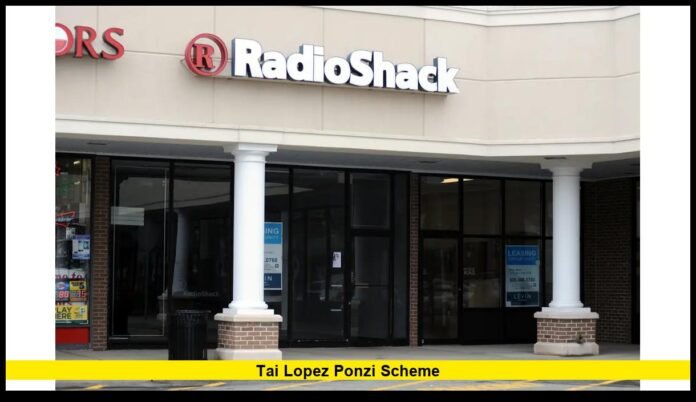

The news of the tai lopez ponzi scheme has rocked both the business world and the online influencer community. Tai Lopez, once known for his flashy “Here in my garage” video featuring a Lamborghini and a library of books, built an empire around selling self-help courses, motivational content, and business advice. Over the past decade, he grew into a household name in the digital entrepreneur space.
Now, Lopez is under scrutiny after the U.S. Securities and Exchange Commission (SEC) accused him and his partner Alex Mehr of operating what regulators describe as a large-scale fraudulent scheme. Through their company, Retail Ecommerce Ventures (REV), the pair allegedly misled investors, misused funds, and engaged in practices that resembled a Ponzi structure.
This case is significant not only because of the money involved—over $112 million—but also because of what it reveals about the risks of influencer-backed investment opportunities in today’s digital economy.
How Tai Lopez Built His Brand
Before the allegations of the tai lopez ponzi scheme, Lopez had crafted a strong online persona. His viral ads promising the “secrets” to wealth and success attracted millions of followers. He positioned himself as a mentor for aspiring entrepreneurs, offering courses on marketing, investing, and personal development.
By 2019, Lopez pivoted to acquiring failing retail brands. With his partner Alex Mehr, he launched Retail Ecommerce Ventures, buying up distressed but well-known names like:
- RadioShack
- Pier 1 Imports
- Modell’s Sporting Goods
- Linens ’n Things
- Dress Barn
The pitch was simple but powerful: take nostalgic retail brands and breathe new life into them by moving their business online. This story appealed to both investors looking for returns and consumers hoping to see familiar names revived.
The SEC’s Allegations Against Lopez and REV
According to federal regulators, the promises behind REV did not match reality. The SEC alleges that Lopez and Mehr raised approximately $112 million from investors between 2020 and 2022 by offering unsecured notes and equity stakes. Investors were told they could earn up to 25% annually or 2% monthly in dividends—returns that would supposedly come from REV’s retail operations.
Instead, investigators claim:
- The businesses failed to generate consistent profits.
- Investor funds were shuffled between companies to cover obligations.
- Early “returns” were paid using new investor money rather than actual revenue.
- Lopez and Mehr allegedly misappropriated at least $16 million for personal use.
If true, these practices fall directly into the pattern of a Ponzi scheme, where new investments are used to pay earlier investors while concealing underlying losses.
The Structure of the Alleged Ponzi Scheme
To understand why the tai lopez ponzi scheme allegations are serious, it’s important to break down how it reportedly worked.
- Investor Attraction – Using his influencer fame, Lopez pitched high returns and attached credibility by pointing to familiar brand names.
- Fundraising – REV collected millions through unsecured notes and equity deals, assuring investors that money would revive retailers.
- Cash Flow Problems – Instead of generating profits, REV faced mounting expenses and underperforming brands.
- Cover-Up Tactics – Lopez and Mehr allegedly moved money between entities, took loans, and used new investor funds to pay earlier commitments.
- Misrepresentation – Investors were led to believe they were backing profitable turnarounds when in reality, the brands struggled to stay afloat.
The SEC claims this cycle eventually collapsed as revenues failed to keep up with promised returns, leaving investors at risk of major losses.
Impact on Retail Brands
The tai lopez ponzi scheme allegations are especially striking because they involve nostalgic American retail brands. Investors thought they were helping iconic names transition into the e-commerce era.
In practice, the revival efforts were limited:
- RadioShack became an online storefront with minimal market impact.
- Pier 1 Imports saw only a partial relaunch without strong customer traction.
- Modell’s Sporting Goods and Linens ’n Things struggled to compete in already saturated online markets.
The SEC suggests that instead of fueling growth, much of the investor money never reached the operational needs of these companies.
Investor Fallout and Financial Losses
For investors, the fallout from the alleged tai lopez ponzi scheme has been devastating. Many put in large sums believing they were part of a revolutionary turnaround strategy. The promise of double-digit annual returns created excitement and urgency.
Now, many face the possibility of losing most or all of their investment. The SEC is seeking restitution through disgorgement, but the recovery process could take years, and it remains unclear how much, if any, of the $112 million will be returned to those who trusted Lopez and Mehr.
Lopez’s Public Image and Online Influence
The allegations cut directly into the public image Lopez carefully built. For years, he presented himself as a guide to financial freedom, often displaying luxury cars, large homes, and stacks of books to emphasize his knowledge and wealth.
The tai lopez ponzi scheme case raises serious questions:
- Was the luxury lifestyle funded by genuine success, or by investor money?
- How much responsibility do influencers carry when their branding drives financial investments?
- Can Lopez recover his credibility, or has this case permanently damaged his reputation?
Legal Proceedings and Potential Consequences
The SEC’s lawsuit against Lopez, Mehr, and their company is civil, not criminal—at least for now. The regulators are pursuing:
- Repayment of investor losses (disgorgement).
- Civil penalties.
- Lifetime bans from serving as officers or directors of public companies.
If evidence of criminal intent emerges, further charges could follow from the Department of Justice. For now, Lopez’s future in both business and influencer culture hangs in the balance.
Lessons From the Tai Lopez Ponzi Scheme Case
The allegations against Lopez are a wake-up call for investors and consumers alike. Here are key lessons:
- Skepticism is healthy – High returns with little risk are almost always too good to be true.
- Do your own research – Popularity on social media is not a substitute for financial transparency.
- Check for regulation – Investments promising dividends or annualized returns should be registered with proper agencies.
- Beware of personality-driven pitches – Charisma can disguise weak or failing business models.
The Bigger Picture: Influencers and Investments
The case also has broader implications. As more influencers cross into finance, fitness, crypto, and real estate, regulatory scrutiny is intensifying. The tai lopez ponzi scheme could serve as a turning point where federal agencies begin monitoring influencer-led ventures more aggressively.
This may lead to:
- Stricter disclosure requirements.
- Limits on unregistered investment offerings.
- Greater public education around influencer-driven scams.
The Future for Lopez and REV
Looking forward, the future of Lopez, Mehr, and Retail Ecommerce Ventures is uncertain. Investors will likely push for restitution, while regulators pursue legal consequences. The brands REV acquired may face further instability or bankruptcy if funding dries up.
For Lopez personally, the case could represent the end of his credibility as an online entrepreneur. While some influencers survive scandals, a Ponzi scheme allegation carries financial, legal, and reputational consequences that are difficult to overcome.
Conclusion
The tai lopez ponzi scheme allegations are more than a headline—they represent a pivotal moment in the intersection of influencer culture and finance. Tai Lopez, once a symbol of entrepreneurial ambition, now faces accusations that threaten to erase years of branding and business ventures.
Do you think Tai Lopez will recover from these allegations, or is this the final chapter of his influencer-entrepreneur career? Share your opinion in the comments below!