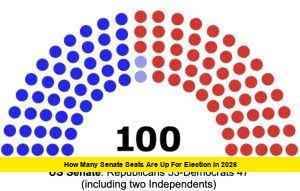

As of the latest update, how many senate seats are up for election in 2026 has a clear answer: 35 of the 100 seats in the U.S. Senate are scheduled to appear on the November 3, 2026, ballot. This total includes 33 regularly scheduled elections and two special elections in Florida and Ohio. The contests will help determine the balance of power in Congress and influence the federal government’s legislative priorities for the next several years.
The 2026 elections are part of the U.S. midterm election cycle, which takes place halfway through a president’s four-year term. Voters will elect senators in states across the country, with Republicans defending more seats than Democrats. The results could change the Senate’s party composition and affect which proposals receive consideration in the chamber.
How Many Senate Seats Are Up for Election in 2026?
A total of 35 Senate seats are scheduled for election on November 3, 2026. The number includes the regularly scheduled contests for senators whose six-year terms expire in January 2027, along with two special elections to fill the remainder of unexpired terms.
Here is the breakdown:
- Total Senate seats on the ballot: 35
- Regular Senate elections: 33
- Special Senate elections: 2
- Regular seats currently held by Republicans: 20
- Regular seats currently held by Democrats: 13
- Special-election seats: Florida and Ohio
- Election Day: Tuesday, November 3, 2026
The distinction between regular and special elections matters because the two types of contests serve different purposes. Regular elections determine who will serve a new six-year Senate term, while special elections fill the remaining portion of an existing term.
The Senate has 100 members, with two senators representing each state. Because senators serve staggered six-year terms, the entire chamber does not face reelection in the same year.
Why Are Only 35 Senate Seats Up for Election?
The U.S. Senate uses a staggered election system to maintain continuity in the federal government. Senators belong to one of three groups, known as Class I, Class II and Class III.
Each class has a different election schedule. Approximately one-third of the Senate faces voters every two years, rather than all 100 senators running for reelection simultaneously.
The 2026 regular elections involve the 33 Class II seats. Their current six-year terms are scheduled to end in January 2027.
The other Senate classes are not part of the regular 2026 election cycle. Their terms continue beyond January 2027, although an unexpected vacancy can create a special election under applicable state law.
This system allows the Senate to retain experienced members while voters periodically decide who should represent their states. It also means that a party’s overall Senate majority can change even though most seats are not on the ballot in a particular election year.
Which States Have Senate Elections in 2026?
The 33 regularly scheduled Senate races span states across different regions of the United States. In addition, Florida and Ohio have special Senate elections.
The states holding regular Senate elections in 2026 are:
- Alabama
- Alaska
- Arkansas
- Colorado
- Delaware
- Georgia
- Idaho
- Illinois
- Iowa
- Kansas
- Kentucky
- Louisiana
- Maine
- Massachusetts
- Michigan
- Minnesota
- Mississippi
- Montana
- Nebraska
- New Hampshire
- New Jersey
- New Mexico
- North Carolina
- Oklahoma
- Oregon
- Rhode Island
- South Carolina
- South Dakota
- Tennessee
- Texas
- Virginia
- West Virginia
- Wyoming
Florida and Ohio bring the total number of Senate contests to 35.
Not every state will have a Senate race in 2026. Voters should check their state and local election information to determine which federal, state and local offices appear on their individual ballots.
Which Party Has More Senate Seats to Defend?
Republicans have more Senate seats on the 2026 election map than Democrats. Of the 33 regularly scheduled seats, 20 are Republican-held and 13 are Democratic-held.
The two special-election seats in Florida and Ohio are also held by Republican-appointed senators. Including those contests, the full 2026 Senate map consists of 22 Republican-held seats and 13 Democratic-held seats.
This distribution is important because the party that controls the Senate has substantial influence over legislative priorities, committee leadership and the consideration of presidential nominations.
However, the number of seats each party must defend does not determine the election outcome. Candidates, state political conditions, turnout, campaign issues and the performance of individual campaigns can all influence the results.
Republicans will seek to retain their seats, while Democrats will try to win Republican-held contests and protect their own incumbents. The final balance will depend on the results across all 35 races.
Why Are Florida and Ohio Holding Special Senate Elections?
Florida and Ohio are included in the 2026 Senate count because both states must elect senators to complete terms that began before the regular expiration date.
In Florida, Republican Marco Rubio left his Senate seat in January 2025 after becoming U.S. secretary of state. Ashley Moody was appointed to serve in the seat until the special election.
In Ohio, Republican J.D. Vance left his Senate seat after becoming vice president in January 2025. Jon Husted was appointed to fill the vacancy.
The 2026 special elections will determine who serves the remainder of these existing Senate terms. They are separate from the 33 regular elections, which concern seats whose six-year terms expire in January 2027.
These special contests count toward the overall number of Senate races on the ballot, but they do not represent two additional regular six-year election cycles.
When Is the 2026 Senate Election?
The 2026 federal general election is scheduled for Tuesday, November 3, 2026.
Senate races will take place alongside elections for the U.S. House of Representatives and numerous state and local offices. The election is part of the midterm cycle, which occurs between presidential elections.
The exact voting process depends on the state. Voters may have access to early in-person voting, absentee voting or voting by mail, depending on the applicable state rules and eligibility requirements.
Primary elections determine which candidates represent political parties in the general election. Their dates and procedures vary by state, and some states use different nomination processes.
Anyone planning to vote should confirm registration requirements, deadlines, early-voting availability and polling locations through the appropriate state or local election office.
What Is at Stake in the 2026 Senate Elections?
The 2026 Senate races could have a significant effect on the direction of federal policymaking. The Senate shares legislative responsibilities with the House of Representatives and has distinct constitutional duties, including confirming many presidential nominees and considering treaties.
The party that controls the chamber generally determines its leadership structure and influences which bills and nominations receive floor consideration. Committee assignments and leadership decisions also affect how legislation advances.
A change in party control could alter the priorities receiving attention in the Senate. If the current majority retains its seats, it will seek to preserve its influence over the chamber’s agenda. If the opposing party wins enough races, it could gain control and reshape legislative priorities.
The number of seats up for election also creates different challenges for each party. Republicans have more seats to defend, while Democrats must protect their 13 regularly scheduled seats and compete for opportunities to gain seats elsewhere.
Nevertheless, the seat count alone cannot establish which party will win the majority. Each state has its own electorate, political environment and candidate field, making individual races important to the final outcome.
How Many Seats Does a Party Need to Control the Senate?
The Senate has 100 seats, so the standard majority threshold is 51 seats. The practical arithmetic can vary when the chamber is evenly divided because the vice president can cast a tie-breaking vote.
Republicans entered the 2026 election cycle with a Senate majority. Democrats are seeking to gain enough seats to take control, while Republicans are working to retain their majority.
The number of seats each party holds after the election will determine the chamber’s composition for the next Congress. Senators elected in regular 2026 contests will begin their new six-year terms on January 3, 2027.
Special-election winners in Florida and Ohio will serve the remaining portions of the terms associated with those seats. Their subsequent election schedules will therefore differ from those of the regularly elected Class II senators.
Are All 100 Senate Seats Being Contested in 2026?
No. Only 35 of the 100 Senate seats are scheduled for election in 2026, leaving 65 seats outside the regular and special election contests.
The 65 seats not on the ballot include senators whose terms continue beyond the 2026 election cycle. Those senators generally remain in office unless a vacancy or another legally relevant circumstance changes the status of a seat.
This is one reason midterm Senate elections can produce major political consequences without voters choosing every senator at once. A relatively small number of races can determine whether one party maintains its majority or the other gains control.
The House operates differently. All 435 voting seats in the U.S. House of Representatives are scheduled for election every two years because House members serve two-year terms.
As a result, the 2026 elections will provide voters with an opportunity to shape both chambers of Congress, but the number and timing of Senate contests follow the chamber’s separate six-year term structure.
How Can Voters Find Out Whether Their State Has a Senate Race?
Voters should first identify their state of residence and check whether it appears among the 33 states holding regular Senate elections or the two states holding special elections.
They should then review their state’s official election information for candidate lists, registration deadlines, primary results and voting options. Local election offices can provide information about polling locations and the procedures that apply to individual voters.
Because election rules differ across states, voters should not assume that registration deadlines or early-voting arrangements are identical nationwide.
Checking official election information ahead of November 3 can help voters confirm their eligibility and understand which candidates will appear on their ballots.
Frequently Asked Questions
1. How many Senate seats are up for election in 2026?
Thirty-five Senate seats are scheduled for election: 33 regular contests and two special elections in Florida and Ohio.
2. When is Election Day for the 2026 Senate races?
The general election is scheduled for Tuesday, November 3, 2026.
3. How many Republican Senate seats are up for election?
Republicans hold 22 of the 35 seats on the overall election map, including the two seats involved in special elections.
4. How many Democratic Senate seats are up for election?
Democrats hold 13 of the 35 seats on the 2026 Senate election map.
5. Why are there two special Senate elections in 2026?
Florida and Ohio are holding special elections to determine who will serve the remainder of Senate terms vacated when Marco Rubio and J.D. Vance left their seats in January 2025.
6. Will every state hold a Senate election in 2026?
No. The 33 regular elections occur in 33 states, and Florida and Ohio have special elections. The other states do not have regularly scheduled Senate contests in 2026.
7. When do senators elected in regular 2026 races take office?
The winners of the regular elections are scheduled to begin their six-year terms on January 3, 2027.
Conclusion
The 2026 Senate elections will put 35 seats in play, including 33 regular races and two special elections in Florida and Ohio. With Republicans defending 22 seats and Democrats defending 13, the results will help determine the Senate’s political balance and the legislative priorities that follow. Voters should confirm their state’s election rules and review the candidates before Election Day on November 3.
Which Senate races do you think will have the biggest impact on the balance of power in 2026? Share your thoughts and stay informed as Election Day approaches.