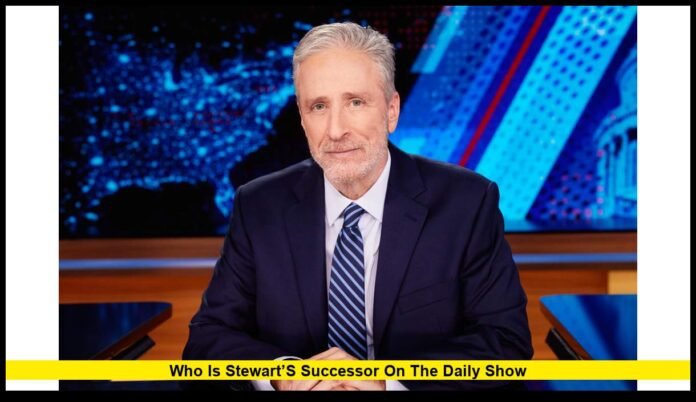

The question of stewart’s successor on the daily show has lingered ever since Trevor Noah exited in December 2022. Fans of late-night satire have long debated who could possibly take over the cultural institution that Jon Stewart built. But nearly three years later, the answer is more complicated than a single name.
Rather than a traditional handoff, Comedy Central has embraced a hybrid model: Jon Stewart himself returned in February 2024 to host weekly, while a roster of correspondents and guest hosts continue to rotate in on other nights. As of September 2025, the show is still in this transitional phase, leaving many to wonder if a permanent successor will ever be chosen—or if the shared system is here to stay.
From Stewart to Noah: The Passing of the Torch
When Jon Stewart stepped down in 2015, he left behind a late-night powerhouse that had redefined political comedy. His replacement, Trevor Noah, faced enormous pressure. Over his seven years, Noah carved out his own style—more global, less acerbic, but still pointed.
By the time Noah announced his departure in 2022, he had proven himself. Yet, with his exit, the familiar question re-emerged: who would be stewart’s successor on the daily show this time around?
Comedy Central did not rush. Instead, the network turned to a rotating lineup of guest hosts, giving correspondents, celebrities, and comedians a chance to take the desk. It kept the show in conversation but didn’t answer the question fans wanted resolved.
Jon Stewart’s Comeback: A Surprise Twist
In February 2024, Comedy Central pulled off a surprise: Jon Stewart returned. He didn’t reclaim the desk five nights a week, but he took on a Monday hosting slot and resumed his role as executive producer.
His episodes instantly became highlights of the week. Viewers flocked back to see Stewart’s biting commentary on politics, media, and culture. Critics praised his ability to connect current events to deeper truths, something few other late-night hosts can do.
Yet Stewart’s comeback raised a new question: if the original host has returned, does it even make sense to talk about a successor?
Why There Still Isn’t One Permanent Successor
Several factors explain why Comedy Central hasn’t chosen one definitive heir to the desk:
- Legacy pressure: Stewart’s long tenure set an almost impossible standard. Naming a permanent replacement means risking constant comparisons.
- Rotating hosts as experiment: The show uses guest hosts and correspondents to test audience response without locking into a single voice.
- Stewart as safety net: With Stewart present weekly, the network doesn’t feel the same urgency to crown one new leader.
- Changing media landscape: Audiences now consume clips online as much as they watch full episodes. The show’s reach depends less on one personality and more on standout segments.
The result: a fluid hosting model where Stewart is still central, but others keep the format diverse.
The Current Hosting Structure
As of fall 2025, The Daily Show is divided as follows:
- Mondays: Jon Stewart at the desk, setting the week’s tone.
- Tuesdays through Thursdays: Senior correspondents rotate as hosts.
- Fridays: Occasional guest hosts or special features.
The correspondents include names familiar to fans:
- Jordan Klepper – Known for field reporting and crowd interviews.
- Desi Lydic – Sharp, satirical takes and strong presence as a guest host.
- Ronny Chieng – Direct, global perspective with a biting edge.
- Michael Kosta – Blending dry humor with approachable commentary.
This rotation allows each correspondent to build their following while ensuring the show doesn’t rely solely on Stewart.
Audience Reactions
Reactions to this model have been diverse:
- Fans of Stewart are thrilled to see him back, even if only weekly. His episodes often trend online and bring in ratings boosts.
- Supporters of correspondents enjoy the variety, arguing that it keeps the show from going stale.
- Critics argue the lack of one permanent successor creates inconsistency. A different host every night can make the show feel disjointed.
Still, the hybrid format has held steady for more than a year, suggesting that Comedy Central values the flexibility more than the stability of one permanent figure.
The Successor Question: Who Could It Be?
Even though Stewart’s presence looms large, speculation about who could eventually take over hasn’t stopped. Potential successors include:
- Jordan Klepper: His field segments are viral hits, and his guest-hosting shows he can handle the desk.
- Desi Lydic: She has emerged as one of the most polished correspondents, with sharp monologues and strong audience rapport.
- Ronny Chieng: His international perspective adds a unique voice that could expand the show’s reach.
- An outside hire: The network could take a bold step by introducing a completely new comedian, much like it did when bringing in Trevor Noah.
Until then, Stewart’s weekly presence buys time for the network to consider its options.
Why Stewart Still Matters Most
Even though the debate around stewart’s successor on the daily show continues, Stewart himself has reshaped the conversation simply by returning. His significance is more than just nostalgia:
- Cultural credibility: Stewart remains one of the most trusted voices in political comedy.
- Production leadership: As executive producer, he influences the tone of the entire week, even when not on screen.
- Audience magnet: His episodes are consistently the most watched and shared.
- Editorial weight: Stewart knows how to frame stories in ways that resonate far beyond comedy.
In short, Stewart’s presence ensures the show remains relevant at a time when late-night viewership is fragmented.
Challenges Ahead
The current format is working, but it has challenges:
- Consistency: Viewers may find it difficult to connect emotionally with multiple hosts.
- Succession planning: Eventually, Stewart will step back again, leaving the question unresolved.
- Competition: With other late-night shows adjusting formats, The Daily Show must continue innovating to stand out.
- Audience habits: As more people watch clips on social media rather than full broadcasts, the successor may need to be someone who thrives in short-form content.
Looking to the Future
What does the future hold for stewart’s successor on the daily show? Several possibilities exist:
- Stewart extends his role beyond Mondays, taking on more nights.
- One correspondent rises as the clear favorite and eventually becomes the full-time host.
- The rotation model becomes permanent, redefining what late-night hosting looks like.
- A surprise new hire shakes up the format, much like Noah’s appointment once did.
Whatever the outcome, the path forward will continue to balance Stewart’s legacy with the need for new voices.
Why the Successor Debate Still Resonates
The ongoing focus on stewart’s successor on the daily show reflects more than just a television decision. It represents:
- A generational shift: From Stewart’s Gen X perspective to voices speaking more directly to Gen Z and Millennials.
- Cultural relevance: The show has long been a place where comedy meets current events. Who leads it shapes how audiences engage with politics.
- The future of satire: As political climates grow more polarized, the style and tone of the host matter more than ever.
Conclusion
So who is stewart’s successor on the daily show? The honest answer is: there isn’t one—not yet. Instead, Jon Stewart has stepped back into the spotlight once a week, while correspondents keep the show dynamic on other nights.
This hybrid model may not satisfy everyone, but it reflects the reality of late-night in 2025: no single voice can carry the weight alone. Stewart’s presence ensures continuity, while the rotation allows space for the next generation to prove themselves.
Whether a permanent successor emerges or the rotating system becomes the new norm, The Daily Show continues to evolve—anchored by Stewart’s influence, but open to new possibilities.
What do you think—should Stewart stay longer, or is it time to pass the torch for good? Share your thoughts below.