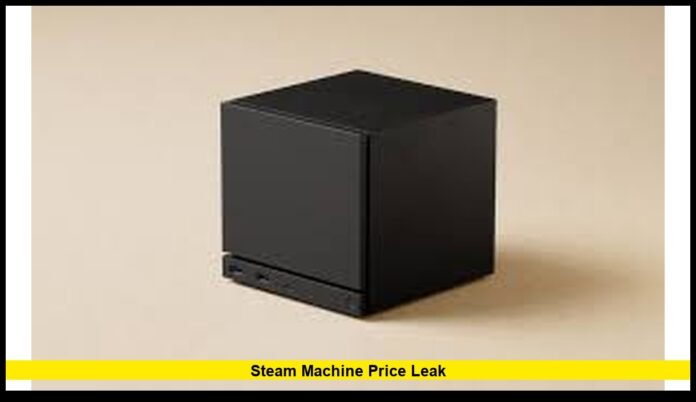

The steam machine price leak has become one of the most closely watched developments in gaming hardware this year, drawing attention from players, analysts, and industry insiders across the United States. Early pricing details circulating online suggest that Valve’s next major hardware release may enter the market at a higher tier than traditional consoles, reshaping expectations around affordability, performance, and long-term value.
The appearance of these price details has shifted the conversation away from whether a new Steam Machine is coming and toward how it will be positioned once it arrives. With Valve remaining silent on official pricing, the leaked figures have taken center stage, influencing public perception and sparking debate about what modern gamers expect from premium hardware.
What the Steam Machine Price Leak Indicates
The pricing information that surfaced points to multiple Steam Machine configurations, each carrying a cost that places the system closer to high-end gaming PCs than mainstream consoles. These figures appeared within retailer systems before being removed, yet their brief visibility was enough to generate widespread discussion.
The numbers themselves suggest that Valve is not pursuing an entry-level strategy. Instead, the Steam Machine appears positioned as a powerful, purpose-built system designed to deliver consistent performance over several years. This pricing approach aligns with hardware designed for sustained workloads rather than short upgrade cycles.
For many observers, the leak confirmed that Valve sees the Steam Machine as a premium product rather than a mass-market console replacement.
Why Pricing Has Become the Central Issue
Price often defines how hardware is received, especially in a market where consumers compare consoles, PCs, and hybrid systems side by side. The Steam Machine sits at the intersection of these categories, making its cost especially important.
Traditional consoles rely on competitive pricing to attract broad audiences. PCs, by contrast, justify higher prices through customization and performance. The Steam Machine blends both worlds, and its price reflects that dual identity.
Gamers evaluating the leaked figures are asking practical questions:
- Does the hardware justify the cost?
- How long will the system remain competitive?
- Is the convenience worth paying more upfront?
These questions are now shaping expectations well before launch.
Valve’s Hardware Philosophy Comes Into Focus
Valve’s approach to hardware has always differed from that of console manufacturers. Rather than prioritizing rapid adoption through low pricing, Valve has focused on building systems that integrate tightly with its software ecosystem.
The Steam Machine reflects that philosophy. By aligning pricing with PC-level components, Valve avoids compromising on performance, cooling, or build quality. This allows the system to deliver consistent results across a wide range of games without relying on aggressive cost-cutting measures.
This strategy suggests Valve is targeting users who value stability, efficiency, and long-term usability over the lowest possible entry price.
Performance Expectations Drive Perceived Value
One reason the leaked pricing has not been universally criticized is the performance expectations attached to the Steam Machine. The system is widely expected to deliver a smooth living-room experience capable of handling demanding modern titles without constant adjustment.
Key performance goals associated with the Steam Machine include:
- Stable high-resolution output
- Optimized frame rates for large displays
- Quiet operation under load
- Efficient power usage over long sessions
These factors play a major role in how gamers assess value. For users accustomed to tweaking PC settings or managing hardware upgrades, a system that delivers consistent results out of the box carries strong appeal.
SteamOS as a Core Advantage
The Steam Machine’s operating system is central to its identity. SteamOS provides a streamlined interface designed for controllers, large screens, and couch gaming while maintaining access to a massive PC game library.
This software foundation eliminates many of the friction points associated with traditional PCs. Automatic updates, unified settings, and consistent compatibility reduce the learning curve for users who want PC gaming without desktop complexity.
For many players, SteamOS transforms the Steam Machine from a simple device into a long-term platform.
How the Steam Machine Fits Into Today’s Market
The gaming hardware landscape has changed significantly in recent years. Consumers now choose between consoles, handheld PCs, custom desktops, and hybrid systems. Each option offers different trade-offs between cost, power, and flexibility.
The Steam Machine occupies a specific niche:
- More powerful and flexible than consoles
- Simpler and quieter than custom PCs
- Designed for long-term use without upgrades
This positioning helps explain the pricing reflected in the steam machine price leak. Rather than competing directly with consoles, the Steam Machine competes with premium compact PCs and high-end gaming devices.
Consumer Reactions Continue to Evolve
Initial reactions to the leaked prices ranged from surprise to cautious acceptance. Over time, the conversation has shifted toward evaluating what the system offers rather than focusing solely on cost.
Many gamers now frame the price discussion around longevity. A higher upfront cost can be justified if the system remains relevant for several years without requiring upgrades or replacements.
Others view the Steam Machine as a lifestyle device, similar to home entertainment systems that prioritize reliability and ease of use.
Regional Pricing Considerations
Pricing perceptions vary by region, and U.S. consumers often see different final prices than international markets. Factors such as taxes, import duties, and retailer margins can significantly influence early listings.
This has led many observers to treat leaked figures as provisional rather than definitive. While the Steam Machine is expected to remain a premium product, regional pricing adjustments may affect how the system is positioned domestically.
What remains clear is that Valve is not pursuing a race-to-the-bottom pricing strategy.
Hardware Design Priorities
Beyond raw performance, the Steam Machine emphasizes physical design and usability. Quiet cooling, compact form factors, and efficient airflow are essential for a living-room device.
Unlike traditional PCs that prioritize modularity, the Steam Machine appears engineered as a complete system. This allows Valve to optimize thermals, acoustics, and power delivery in ways that off-the-shelf components often cannot achieve.
These design choices directly impact manufacturing costs, further explaining the leaked pricing.
Long-Term Software Support Matters
Another factor influencing price acceptance is Valve’s track record with software support. SteamOS continues to receive updates that improve compatibility, performance, and user experience.
For buyers, this ongoing support adds value beyond the hardware itself. A system that improves over time through software updates offers a different cost-benefit equation than devices that remain static after launch.
This long-term perspective resonates with users who view gaming hardware as an investment rather than a short-term purchase.
The Role of the Steam Ecosystem
The Steam Machine benefits from immediate and seamless integration with an established ecosystem that millions of players already use daily. From the moment it is powered on, users gain access to their existing game libraries, friends lists, cloud saves, and account settings without needing to repurchase titles or learn a new storefront. This level of continuity significantly lowers the barrier to entry, especially for players who have invested years into building their Steam collections.
Recent discussion has highlighted how this ecosystem advantage extends beyond games alone. Features such as automatic updates, unified controller support, cross-device cloud syncing, and consistent account-level settings reinforce the Steam Machine’s appeal as a plug-and-play system. For many users, the ability to move effortlessly between a desktop PC, handheld device, and living-room setup using the same library and profile adds meaningful long-term value.
This deep ecosystem integration plays a major role in how the leaked pricing is being evaluated. Rather than viewing the cost in isolation, many gamers are weighing it against the convenience, flexibility, and continuity offered by the Steam platform. For longtime Steam users, the Steam Machine represents not just new hardware, but an extension of an existing gaming environment—one that minimizes friction while maximizing access and usability.
Market Expectations Going Forward
As the Steam Machine moves closer to launch, market expectations are becoming more defined and more demanding. Pricing will remain a central topic, but it is increasingly being evaluated alongside broader factors such as real-world performance consistency, system stability during long play sessions, and the overall refinement of the SteamOS experience. Gamers are no longer judging the device on cost alone; they are looking for clear proof that the hardware delivers a smooth, reliable experience that justifies its positioning.
Recent discussion within the gaming community shows growing emphasis on hands-on impressions and early demonstrations. Potential buyers want to see how the Steam Machine performs across different game libraries, how quickly it adapts to software updates, and whether it maintains efficiency without excessive noise or heat. Software polish, controller responsiveness, and ease of setup are also becoming key points of evaluation, especially for players transitioning from traditional consoles.
For many consumers, the final purchase decision will ultimately hinge on trust. Valve’s track record for long-term platform support, frequent software updates, and user-focused design continues to influence confidence in the product. The steam machine price leak has accelerated this evaluation process well ahead of official announcements, giving players more time to weigh expectations against value as the launch window approaches.
Final Thoughts on the Steam Machine Price Leak
The steam machine price leak has reshaped the conversation around Valve’s next hardware release, placing pricing strategy firmly at the center of public discussion. What began as a brief glimpse of early numbers has now evolved into a broader evaluation of how Valve plans to compete in a changing gaming hardware market. The leaked figures point to a premium positioning, but they also reflect a clear emphasis on performance consistency, efficient thermal design, and long-term system relevance rather than short-term affordability.
Recent community analysis has shifted from initial sticker shock toward deeper consideration of overall value. Many gamers are now focusing on what the Steam Machine could deliver over several years of use, including stable performance on large displays, streamlined SteamOS integration, and reduced need for hardware upgrades. This shift in perspective suggests that pricing alone will not define reception; execution, software support, and real-world performance will play equally important roles.
As more official details emerge, the Steam Machine’s place in the gaming landscape will become clearer. For now, the leak has offered an early window into Valve’s approach to balancing power, usability, and cost at a time when gamers increasingly demand flexibility alongside convenience. Readers are encouraged to share their perspectives, expectations, or concerns and remain engaged as this story continues to unfold.