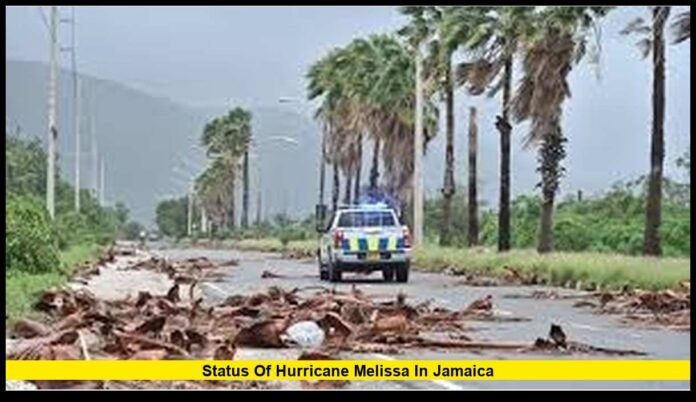

The status of Hurricane Melissa in Jamaica has evolved from imminent danger to full-scale recovery challenge, as this powerhouse storm made landfall and continues to impact the island with catastrophic effects. The storm hit Jamaica’s southwest coast early Tuesday, and its consequences—at least partially assessed—highlight the severity of what locals and international observers are calling one of the worst natural disasters in the nation’s recorded history.
Historic Landfall and Storm Profile
Hurricane Melissa intensified rapidly, becoming a Category 5 hurricane just before making landfall near New Hope in Westmoreland Parish on October 28, 2025. Its sustained winds reached approximately 185 mph (295 km/h), and the central pressure dropped to around 892 millibars—tied for the lowest on record for an Atlantic landfall.
It crossed Jamaica diagonally from southwest to north, cutting through parishes including Westmoreland, St. Elizabeth, Clarendon, Manchester, St. Ann and beyond. Because it moved slowly, the storm exposed the island to prolonged damage via wind, rain and storm surge.
Immediate Impacts and Damage Overview
Wind, Flooding and Storm Surge
- Storm surge along Jamaica’s southern coast exceeded 13 feet in places, while rainfall totals roared past 30–40 inches in highly affected areas, triggering massive floods and landslides in mountainous terrain.
- Structural damage is extensive: buildings, hospitals and schools report roofs lost, walls collapsed, and waterlogged interiors. One hospital in Black River had its roof ripped off during the storm.
- Power and communications systems are in disarray. Over half a million customers lost electricity by the time of landfall, and many cell towers and fibre-optic lines are down, isolating communities.
Affected Areas and Homes
Parish-by-parish updates indicate that:
- St. Elizabeth Parish has been described as “underwater” by local officials, with roads washed out and homes inundated.
- Westmoreland and Manchester parishes along the coast suffered heavy damage as the eye passed overhead.
- In Kingston and St. Andrew, although farther from landfall, major flooding and wind damage were still reported in low-lying and coastal areas.
Human Toll and Economic Shock
- Preliminary reports list at least three deaths in Jamaica with more expected once full access to remote areas is restored.
- The tourism industry, agriculture (especially banana, sugar and coffee crops) and infrastructure are facing multi-billion-dollar recovery needs. Resorts, roads and farmlands stand damaged or destroyed.
- Schools and public buildings are closed, ports and airports remain non-operational, and many displaced residents are now living in emergency shelters.
Government Response and Rescue Efforts
The Jamaican government declared a national disaster, mobilizing the Jamaica Defence Force (JDF), emergency services and international partners. More than 800 shelters have opened across the island to accommodate evacuees.
Evacuation orders were issued in high-risk areas, especially coastal communities like Port Royal, Old Harbour Bay and parts of Kingston that face surge and flooding threats.
Key response measures include:
- Emergency supply distribution (food, water, medical aid) to affected parishes.
- Road-clearance and debris removal operations to reopen access to isolated communities.
- Medical teams deployed to hospitals compromised by the storm (e.g., loss of power or structural damage).
- Coordination with international aid agencies to deliver longer-term support and recovery frameworks.
Forecast, Ongoing Warnings and Regional Implications
Even though Melissa’s eye has moved on from Jamaica, the status of Hurricane Melissa in Jamaica remains critical because:
- Rainbands and flooding conditions persist in many parishes across the day the storm passed.
- Efforts to reach remote or mountainous communities are delayed by blocked roads and landslides.
- The cleanup, power restoration, shelter management and water-safe supply recovery will take days to weeks.
Meteorologists observe that Melissa’s path extends into Cuba, the Bahamas and possibly Bermuda—meaning the Caribbean’s relief efforts are just beginning. With Jamaica suffering intense conditions, attention now shifts to:
- Monitoring downstream effects on other islands.
- Ensuring U.S. citizens, tourists and expatriates in Jamaica are accounted for and safe.
- Assessing how this storm’s intensity may adjust future regional hurricane-preparedness frameworks.
Why U.S. Viewers Should Pay Attention
Though this disaster occurred in Jamaica, the implications are relevant for American viewers because:
- Many U.S. citizens travel to or live in Jamaica and neighboring Caribbean destinations—knowing the current status helps with safety and planning.
- The storm’s scale and intensity signal changing patterns in Atlantic hurricanes, which could affect U.S. coastal zones in the future.
- U.S. humanitarian, government and private-sector actors are increasingly involved in Caribbean disaster-response efforts; awareness aids coordination and support roles.
Recovery Stages & What’s Next
Short-Term Goals (Next 72 Hours)
- Restore emergency services and access in remote communities.
- Re-establish power and clean water systems in key ports and cities.
- Confirm casualty counts, damage assessments and displacement numbers seriously impacted.
Mid-Term Focus (Weeks)
- Rebuild or repair critical infrastructure (roads, hospitals, ports).
- Launch agricultural recovery efforts to protect livelihoods and food supply.
- Re-open tourism zones to begin economic recovery, with safety assurances and infrastructure repairs in place.
Long-Term Planning (Months–Years)
- Strengthen Jamaica’s resilience against extreme storms: better building codes, coastal defenses and evacuation planning.
- Analyze meteorological data from Melissa to adjust future preparedness in both Jamaica and U.S. Atlantic states.
- Secure funding and international support for reconstruction with community-led rebuild projects.
Travel and Safety Tips for Americans in or Planning to Visit Jamaica
- Avoid travel to Jamaica until a “clear-to-enter” message is issued by Jamaican authorities and airlines.
- Americans currently in Jamaica should monitor updates via the U.S. Embassy in Kingston and enroll in the Smart Traveler Enrollment Program (STEP).
- Prepare for limited infrastructure: carry personal emergency supplies, stay in contact via texting rather than voice calls (which may fail), and respect local evacuation and shelter instructions.
- If you were due to travel to Jamaica, contact your airline or travel provider for rerouting or cancellation options and track developments for the days ahead.
Key Takeaways
- Hurricane Melissa struck Jamaica with unprecedented force; at landfall it tied for the strongest Atlantic hurricane on record.
- The island now faces a long-term recovery due to widespread damage, flooding, power loss and economic disruption.
- The status of Hurricane Melissa in Jamaica remains one of high concern—the storm’s peak has passed, but its consequences will shape the country for months.
- U.S. viewers and stakeholders must stay informed not only for travel and safety but because the event underscores broader regional meteorological and humanitarian trends.
We invite you to comment below with your thoughts, questions or experiences related to this storm. Stay engaged in what happens next as Jamaica begins one of its toughest recovery efforts.