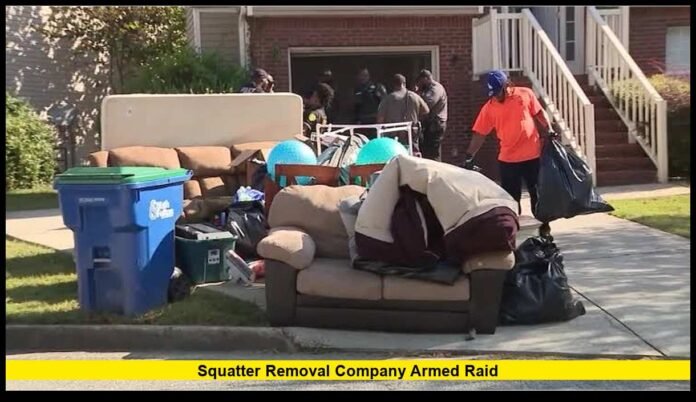

A private property-removal operation in California has become the focus of a criminal investigation after authorities accused a squatter-removal company owner and members of his team of conducting an armed entry at a San Bruno residence. The Squatter removal company Armed raid case has brought renewed attention to the legal boundaries of private eviction services, property-owner rights, and the risks of using force during residential occupancy disputes.
The incident reportedly occurred on January 6, 2026, at a property in San Bruno. Prosecutors allege that members of a private removal team entered the home equipped with firearms and swords and confronted people inside, demanding that they leave.
The company’s founder, James Jacobs of ASAP Squatter Removal, has been charged with multiple felonies connected to the incident. He has pleaded not guilty, and the case remains pending.
The controversy has become particularly significant because it highlights the difference between helping a property owner recover a residence through lawful procedures and attempting to remove occupants through a private operation involving alleged threats or force.
Details of the January San Bruno Incident
The alleged raid took place at a residence on Allen Drive in San Bruno during the early hours of January 6. The home was involved in a dispute after it was sold, while a former occupant continued living there and reportedly disputed the demand to leave.
According to reporting on the incident, the removal team allegedly arrived in tactical clothing and entered the residence after forcing access. People inside reportedly encountered the group and were told they had a limited amount of time to pack their belongings and leave.
The occupants called emergency services, and police responded to the property. The incident initially involved a civil property dispute, but investigators subsequently examined evidence connected to the alleged operation.
Authorities reportedly reviewed video footage and other investigative material as they assessed whether the actions of the removal team went beyond a civil dispute and involved criminal conduct.
The case is now centered on allegations that the entry and confrontation involved weapons, threats and unlawful restraint.
Seven Felony Charges Filed Against Company Founder
James Jacobs, the founder of ASAP Squatter Removal, faces seven felony counts arising from the San Bruno incident.
The charges reportedly include:
- One count of first-degree burglary
- Two counts of assault with a semiautomatic firearm
- Four counts of false imprisonment by violence
Prosecutors allege that Jacobs and individuals working with his company entered the home and confronted occupants during the operation.
Jacobs has pleaded not guilty. The allegations have not been proven in court, and he remains entitled to the presumption of innocence.
A scheduled court appearance is expected on December 3, 2026, according to reporting on the case. The court proceedings will determine how the prosecution moves forward and whether the charges ultimately result in a conviction, dismissal or other resolution.
How ASAP Squatter Removal Markets Its Services
ASAP Squatter Removal has attracted attention for marketing its services with a tactical approach to dealing with property occupancy disputes.
The company has advertised the use of specialized equipment and tactical gear and has promoted its ability to assist owners facing difficult situations involving people occupying properties.
Such marketing can appeal to property owners who feel trapped in lengthy disputes, particularly when they believe someone is occupying a residence without authorization.
However, the marketing of a private removal service does not establish that the company has legal authority to conduct a forced eviction.
Property owners should carefully distinguish between companies that provide lawful assistance, documentation, security or property-management services and businesses that claim they can physically remove occupants outside the legal process.
A company promising a quick resolution should not be treated as a replacement for a court judgment or legally authorized eviction enforcement.
California Law Limits Private Eviction and Removal Tactics
California generally requires residential evictions to proceed through the legal system. A property owner cannot simply decide to physically remove an occupant, change locks or shut off utilities to force someone out when the law requires a court process.
The California Courts’ eviction guidance explains the basic process, including written notice, filing an unlawful detainer case, obtaining a court decision and using a court-issued writ of possession for enforcement.
Readers can review the official process through the California Courts eviction guide.
The state’s legal framework is designed to establish who has the right to possession and to provide a process for resolving disputes. That procedure is especially important when the occupant disputes the property owner’s claims or asserts tenancy rights.
California’s Attorney General also provides information about tenant protections and unlawful eviction practices. The state’s official tenant rights and landlord-tenant information explains where residents can find guidance and legal assistance.
The existence of a property dispute does not automatically authorize a private company to use force or conduct an independent eviction.
How the Legal Eviction Process Works
Property owners seeking to recover residential property generally need to follow a sequence of legal steps. The details depend on the type of occupancy, the reason for removal and any applicable local protections.
1. Provide the required notice
The owner generally must provide the appropriate written notice explaining the legal reason for seeking possession and the deadline applicable to the occupant.
2. File an unlawful detainer lawsuit
If the occupant does not comply with the notice, the property owner may be able to file an unlawful detainer action in court.
3. Allow the case to proceed
The occupant may have an opportunity to respond and raise legal defenses. The court considers the evidence and determines whether the owner is entitled to possession.
4. Obtain a judgment and writ of possession
If the property owner prevails, the court can issue the appropriate order authorizing the next stage of enforcement.
5. Lawful enforcement
The eviction is carried out by the sheriff or other legally authorized officer under the applicable court order and procedure.
The California Department of Justice’s eviction-process guidance provides information about tenant rights and the legal requirements surrounding eviction.
For San Mateo County residents, the San Mateo County Sheriff’s Office is an official source for law-enforcement information and sheriff-related services.
What Property Owners Should Know Before Hiring a Removal Company
The case involving ASAP Squatter Removal could serve as a warning for property owners considering private companies to help with difficult occupancy disputes.
Before hiring a company, owners should ask several important questions.
- What exactly is the company legally authorized to do?
- Does the contract clearly identify the services being provided?
- Does the company have appropriate insurance?
- Are personnel properly licensed where licensing is required?
- Does the company rely on court orders and lawful enforcement procedures?
- Does it make unrealistic promises about immediate removal?
- Does it use intimidation, threats or weapons as part of its advertised approach?
- Is the owner being advised to consult a qualified attorney?
A property owner who hires a company may still face legal, financial or other consequences if the operation involves unlawful conduct. Contracting with a private service does not automatically shield an owner from liability for actions taken during an attempted removal.
Owners dealing with unauthorized occupants, former tenants or disputed possession should consider getting legal advice before allowing anyone to enter or attempt to remove people from a residence.
Why the Case Matters Beyond San Bruno
The San Bruno prosecution is drawing attention to a broader issue involving property owners, housing disputes and businesses that promise to help remove occupants.
For property owners, the case highlights the frustration that can arise when recovering a home becomes a lengthy legal process. Owners may face property damage, lost income, legal fees and uncertainty while disputes continue.
For occupants, the incident raises concerns about personal safety and the possibility of being confronted by private individuals who claim to have authority to remove them.
For private removal businesses, the case underscores the importance of clearly understanding and respecting the legal limits of their work.
The controversy also raises questions about how law enforcement should respond when a dispute that began as a civil matter involves allegations of weapons, threats, forced entry or physical restraint.
The outcome of Jacobs’ criminal case could become an important development in the debate over private squatter-removal services, particularly companies that promote aggressive tactics to resolve property disputes.
What Happens Next?
The criminal case against Jacobs is ongoing, and he has pleaded not guilty to the felony allegations. His scheduled court appearance on December 3, 2026, is one of the next developments readers may want to watch.
The prosecution will have to establish its allegations through the legal process, while the defense will have an opportunity to challenge the evidence and present its position.
Meanwhile, the underlying property dispute is separate from the criminal prosecution. Civil proceedings determine possession of the home, while the criminal case examines whether the alleged actions of Jacobs and others violated the law.
The incident has already become a high-profile example of how an attempt to resolve an occupancy dispute can escalate into a serious criminal case when allegations involve armed entry and threats.
The San Bruno case is a reminder that property rights, eviction laws and personal safety must all be considered—what do you think about the use of private companies in squatter disputes? Share your opinion and follow the latest developments as the case moves forward.