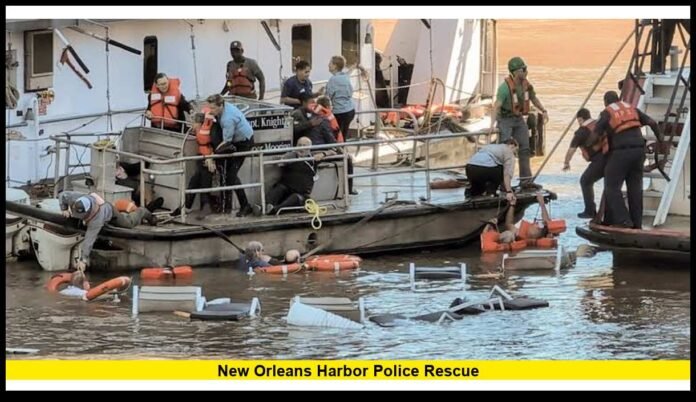

The New Orleans Harbor police rescue became one of the most remarkable maritime emergency responses of November after a tanker struck a docked passenger riverboat on the Mississippi River, sending the vessel into a rapid and dangerous capsizing sequence. The incident occurred near the Port of New Orleans on November 13, 2026, and placed nearly 200 passengers and crew in immediate danger. Harbor Police officers, firefighters, Coast Guard personnel, tugboat crews, port employees and other responders rushed into action as passengers evacuated and people fell into the water. Everyone aboard the damaged cruise vessel was eventually accounted for, making the outcome extraordinary given the severity of the incident.
The rescue has attracted attention not only because of the scale of the emergency, but also because of the decisions made by Harbor Police Chief Melanie Montroll and her officers. A rapidly deteriorating vessel, passengers struggling to escape, injuries among rescuers and the threat of additional danger created a situation in which emergency personnel had to act quickly while balancing the risks to themselves and others.
A Tanker Collision Turned Into a Major River Emergency
The emergency unfolded around midday on November 13, when the tanker Atlantic Asphalt struck the docked American Heritage near the Port of New Orleans. The passenger riverboat had arrived earlier and was preparing to begin disembarkation when the tanker hit it.
The impact damaged the passenger vessel and triggered a chain of events that quickly became more dangerous. The American Heritage began taking on water, shifted into an unstable position and eventually rolled onto its side before becoming partially submerged in the Mississippi River.
The tanker was reportedly experiencing a steering-related problem before the incident. However, the precise cause and circumstances surrounding the mechanical issue remain part of the ongoing investigation. Investigators are examining the collision to determine what happened aboard the tanker and what factors contributed to the crash.
The riverboat was carrying a large number of passengers and crew members. Officials initially described the number aboard as approximately 180 to 190 people, while subsequent information provided slightly different totals. Regardless of the exact figure, the scale of the evacuation made the incident a significant challenge for emergency personnel.
The American Heritage Capsized as Passengers Tried to Escape
The collision created an immediate danger for everyone aboard the American Heritage. Passengers had to leave the vessel while it was becoming increasingly unstable, and the available evacuation routes changed as the boat began to tilt and sink.
Some passengers managed to disembark before the vessel capsized. Others were caught in the developing emergency as the riverboat rolled and began pushing people into the water.
The boat’s position and movement made evacuation particularly difficult. A vessel that is initially accessible from a dock can become dangerous within minutes if it begins listing, flooding or losing stability. The crew and responders had to adapt as conditions changed.
The Mississippi River added another layer of danger. People who fell into the water needed immediate assistance, while responders had to work around the damaged vessel, nearby boats and changing conditions at the scene.
The rescue operation became a race against time. Every minute mattered as emergency crews attempted to locate passengers, pull people from the water, move them to safety and confirm that nobody remained trapped or missing.
Melanie Montroll and the Decision to Send Officers Aboard
Chief Melanie Montroll, head of the New Orleans Harbor Police Department, was at a departmental Thanksgiving gathering when the emergency call came in. The planned gathering quickly ended as officers and department personnel moved into response mode.
Montroll’s responsibility was to coordinate the Harbor Police response while the situation developed. As the passenger vessel began taking on water, the emergency required decisions about where officers should go, what rescue actions they should undertake and how personnel could assist passengers without creating additional casualties.
One of the most consequential decisions involved sending two Harbor Police officers onto the damaged riverboat.
The officers were tasked with helping people aboard and supporting evacuation efforts while the vessel’s condition continued to worsen. The decision involved considerable risk because the riverboat was unstable and could capsize at any moment.
The vessel eventually rolled onto its side, and both officers were injured during the rescue. They were among the people transported to hospitals, but later updates indicated that they had been released.
Montroll’s decision has received significant attention because it illustrates the difficult balance emergency leaders face. Waiting can increase the danger to people trapped aboard, but sending personnel into an unstable vessel can expose rescuers to serious injury.
The chief has indicated that the decision was made to save lives and that she would make the same call again under similar circumstances. The rescue has since become a prominent example of the risks that maritime law enforcement officers face during emergencies.
How Harbor Police and Firefighters Pulled People From the Mississippi River
The rescue required more than getting passengers off the docked boat. Once the American Heritage began capsizing, people ended up in the water and needed help reaching safety.
Harbor Police officers were among the first responders. Their actions included helping passengers escape, assisting people in the river and coordinating with other agencies arriving at the scene.
The New Orleans Fire Department also deployed a substantial response. Nearly 70 firefighters reportedly participated in the rescue and related operations, helping pull survivors from the water and bring them toward the dock.
Responders faced several challenges simultaneously:
- A rapidly changing vessel position: The riverboat was becoming unstable as it took on water.
- Passengers in the Mississippi River: People who entered the water needed immediate assistance.
- A large number of people to account for: Officials had to establish who had escaped, who had been rescued and whether anyone remained missing.
- Medical needs: Passengers and crew required evaluation and treatment after the collision and evacuation.
- Limited time: The capsizing created pressure to complete the evacuation before conditions became even more dangerous.
The rescue was not limited to official emergency vessels. Nearby maritime operators and crews also helped people in the water. Commercial vessels and tugboat crews contributed to the effort, demonstrating how people already working along the river can become essential resources during a major maritime emergency.
Tugboat Crews and Commercial Mariners Played a Major Role
The Mississippi River is one of the country’s most important commercial waterways, and a large number of vessels operate near the Port of New Orleans. During the collision, nearby crews responded quickly to help.
Tugboats and other vessels assisted with rescuing passengers from the river and supporting the emergency response. Their proximity to the incident allowed some crews to act rapidly while official rescue teams were still arriving and organizing.
Maritime workers are familiar with the challenges of operating on the river, including currents, vessel movement, navigation hazards and the need for coordination. That experience can be particularly valuable during an emergency involving people in the water.
The rescue highlighted the importance of cooperation between public safety agencies and private maritime operators. Harbor Police, firefighters, Coast Guard personnel, port employees and commercial crews worked toward the same immediate objective: getting everyone out of danger.
The response also demonstrated how a unified effort can make a difference when an emergency involves a large vessel and a crowded waterway.
Nearly 200 People Were Accounted For
Officials confirmed that all passengers and crew aboard the American Heritage were eventually accounted for. The successful headcount was one of the most important developments of the rescue because the riverboat had capsized and many people had entered the water.
Approximately 180 to 190 people were initially reported aboard. Later reporting provided different totals, reflecting the continuing process of confirming the number of passengers and crew involved.
Harbor Police Chief Melanie Montroll said a significant number of passengers were able to leave the vessel before it capsized. The remaining passengers and crew required additional rescue assistance, with responders working to bring people out of the river and onto safer ground.
The operation involved more than simply pulling people from the water. Once passengers reached the dock or the Port of New Orleans administration building, emergency personnel needed to determine their identities, assess their medical conditions and make sure they were no longer in immediate danger.
Officials and cruise line personnel also had to coordinate passenger assistance, including transportation, accommodation arrangements and communication with family members.
The fact that everyone was accounted for was a major achievement considering how quickly the incident escalated.
Thirty-Two People Were Initially Hospitalized
The collision and rescue left dozens of people requiring medical treatment. Officials initially reported that 32 people were transported to area hospitals, including passengers and two Harbor Police officers.
The injuries were generally described as noncritical during the initial response. However, medical updates changed over the following days as patients received treatment, recovered and were discharged.
By November 20, officials reported that only one passenger remained hospitalized and that the individual was in serious condition. Several others who had been hospitalized earlier had been released.
The injuries involved people affected by the collision, evacuation and rescue. Passengers who were thrown into the water faced the risks associated with falling, impact, exposure and the physical demands of getting out of the river.
The two Harbor Police officers who entered the damaged vessel were also injured. Their hospitalization underscored the risks that rescuers accepted while attempting to help passengers.
The rescue ended without fatalities, but the incident still left injured passengers, disrupted travel plans and people dealing with the loss of personal belongings.
The Port of New Orleans Became an Emergency Assistance Center
After passengers and crew escaped the damaged riverboat, the Port of New Orleans administration building became an important staging area for assistance.
People who reached shore needed more than immediate rescue. Many had been separated from belongings, phones, identification, luggage and other personal items. Some needed medical attention, while others required help contacting relatives or arranging transportation.
The response included support services designed to address the immediate needs of passengers and crew members. Emergency personnel and assistance organizations helped provide essentials such as food, water, blankets and other supplies.
Hotel accommodations were also arranged for affected passengers, while transportation assistance helped people make plans to continue their journeys or return home.
The disruption was particularly difficult for passengers who had been completing a cruise and expected to disembark normally. Instead, they suddenly faced an emergency evacuation, possible injuries and uncertainty about their belongings and travel arrangements.
The coordinated assistance effort helped move the response beyond the immediate rescue and toward recovery for those affected.
Nearly 70 Firefighters Participated in the Rescue
The scale of the New Orleans Fire Department’s involvement became clearer in the days following the collision. Department officials reported that nearly 70 firefighters assisted with the rescue operation.
Their work included helping people out of the Mississippi River, moving survivors toward the dock and providing assistance after people reached shore.
Firefighters also worked alongside other emergency personnel to manage the scene, support medical operations and help account for passengers.
The rescue required careful coordination because multiple groups were working at the same time. Some personnel were focused on the water, others were helping people on the dock, and medical teams were evaluating those who had been rescued.
The involvement of such a large number of firefighters reflected the seriousness of the incident. A passenger vessel carrying a large group of people had capsized near an active port, and the emergency response required significant manpower and equipment.
Port Officials Recognized the Rescue Team
The successful rescue prompted public recognition of Harbor Police officers, port employees, maritime partners and first responders.
Port of New Orleans officials praised the bravery and immediate actions of personnel who helped passengers escape the damaged vessel. Recognition also extended to tugboat crews, commercial mariners and emergency agencies that joined the operation.
Chief Melanie Montroll and the Harbor Police Department received attention for their leadership during the emergency. The actions of the two officers who entered the riverboat were particularly notable because they were injured during the rescue.
The recognition emphasized that the outcome depended on the entire response network rather than one individual or department. The rescue involved people who acted immediately, coordinated their efforts and continued working while the situation remained dangerous.
The incident has become an example of how emergency response preparation, professional judgment and cooperation can help protect lives during a maritime disaster.
The NTSB Investigation Continues
The National Transportation Safety Board is investigating the collision between the Atlantic Asphalt and the American Heritage. The investigation remains ongoing, and authorities have not yet issued a final determination explaining exactly why the tanker struck the passenger vessel.
Initial information pointed to a steering-related problem aboard the tanker. Investigators are examining the circumstances surrounding the reported loss of steering and the events leading up to the collision.
The investigation may involve examination of vessel systems, operating conditions, navigation information, communications and other evidence that could help establish the sequence of events.
The NTSB has recovered the tanker’s voyage data recorder, which may provide important information about the vessel’s operation before and during the incident. Investigators will analyze available data as part of the process of determining what happened.
The full investigation may take considerably longer than the immediate emergency response. Authorities have not yet established a final cause, and conclusions should not be drawn before the investigation is completed.
Recovery Operations and River Safety Remain Important
Following the collision, the damaged riverboat and tanker created additional concerns for the Port of New Orleans and the Mississippi River’s commercial traffic.
Authorities implemented restrictions in the affected area while emergency personnel assessed conditions and worked on the next stages of response. River traffic disruption was a significant concern because the Mississippi River is a major route for commercial shipping and maritime transportation.
Recovery and salvage work also required careful planning. The damaged passenger vessel remained a major obstacle and hazard, while responders needed to assess the condition of the wreck and determine appropriate steps for moving or securing it.
The Coast Guard and other maritime authorities have been involved in the ongoing response and safety work. Their responsibilities include coordinating the investigation, evaluating hazards and supporting efforts to restore normal river operations.
The incident also highlighted the importance of protecting the surrounding waterway during vessel recovery. A major marine accident can create risks beyond the immediate collision, including navigation hazards, operational disruptions and concerns related to damaged vessels.
The recovery process is expected to continue as authorities gather evidence, assess the wreck and determine the appropriate steps for managing the affected vessels.
What the Rescue Reveals About Maritime Emergency Preparedness
The New Orleans emergency demonstrated how quickly a maritime incident can become a life-threatening situation. A vessel that is docked and preparing to unload passengers may appear to be in a routine operating environment, but a collision can rapidly change the conditions.
Emergency responders must be prepared for multiple problems at once. They may need to evacuate passengers, rescue people in the water, provide medical assistance, establish communications, coordinate vessels and maintain an accurate accounting of everyone involved.
The incident also showed the importance of training for situations that may not occur frequently but can have serious consequences. Harbor Police personnel operate in an environment where vessel collisions, industrial incidents, fires, hazardous conditions and water rescues are potential emergencies.
Preparation can help officers and other responders make decisions under pressure. However, maritime emergencies also require flexibility because the situation may change faster than a standard response plan can be carried out.
The rescue highlighted several critical elements of emergency preparedness:
- Rapid response: Emergency personnel arrived quickly and began assisting passengers.
- Multiagency coordination: Local, state and federal responders worked together.
- Water rescue capability: Personnel and nearby maritime crews helped people who entered the river.
- Passenger accountability: Responders worked to confirm that everyone aboard had been located.
- Medical support: Injured people received treatment and transportation to hospitals.
- Leadership under pressure: Emergency officials made difficult decisions while the vessel was deteriorating.
- Community and maritime cooperation: Nearby commercial crews contributed to the rescue effort.
These factors helped turn a potentially catastrophic collision into an emergency in which everyone aboard survived.
The Mississippi River’s Importance Makes Vessel Safety Critical
The Mississippi River is central to the economic and transportation activity of New Orleans. Commercial vessels, tankers, barges, passenger boats and other maritime traffic move through the waterway every day.
The river’s importance means that a major accident can affect more than the people aboard the vessels involved. It can also disrupt shipping, create navigation restrictions, affect port operations and require extensive emergency resources.
The November 13 collision has placed renewed attention on the risks associated with vessel operations in a busy maritime environment. Investigators will determine whether the reported steering issue contributed to the collision and whether other factors played a role.
The incident also reinforces the importance of vessel maintenance, navigation procedures, communication and emergency planning. Those issues are likely to remain part of the broader discussion as authorities complete their investigation and recovery operations.
Latest Update on the New Orleans Harbor Police Rescue
As of the latest available reporting, all passengers and crew involved in the incident have been accounted for, and no fatalities have been reported. The initial medical response sent 32 people to hospitals, while the number of patients remaining hospitalized had fallen to one by November 20.
The Port of New Orleans has recognized Harbor Police officers, port employees, maritime crews and other first responders for their work. The two Harbor Police officers who entered the damaged riverboat were injured but later released from the hospital.
The investigation into the collision remains ongoing. Authorities have identified a steering-related issue as part of the early information surrounding the tanker, but the final cause has not been officially established.
Recovery and salvage work, maritime safety measures and the investigation remain important parts of the response following the incident.
Final Thoughts
The New Orleans Harbor police rescue was a remarkable emergency response that unfolded under dangerous and rapidly changing conditions. A tanker struck a docked riverboat, passengers were forced to evacuate, the vessel capsized and people entered the Mississippi River. Harbor Police officers, firefighters, Coast Guard personnel, tugboat crews, port workers and other responders worked together to bring everyone to safety.
Chief Melanie Montroll’s decision to send officers aboard the damaged vessel has become one of the most discussed aspects of the rescue. The officers accepted significant risks while attempting to help passengers, and their actions demonstrated the difficult responsibilities emergency leaders face during a crisis.
The outcome was extraordinary: everyone aboard was accounted for, no fatalities were reported, and the rescue highlighted the value of teamwork, preparation and quick action. As investigators continue examining the collision and authorities manage recovery operations, the people who responded to the emergency remain central to the story of the Miracle on the Mississippi.
Share your thoughts in the comments and stay updated for the latest developments in the New Orleans Harbor Police rescue and Mississippi River maritime emergency.