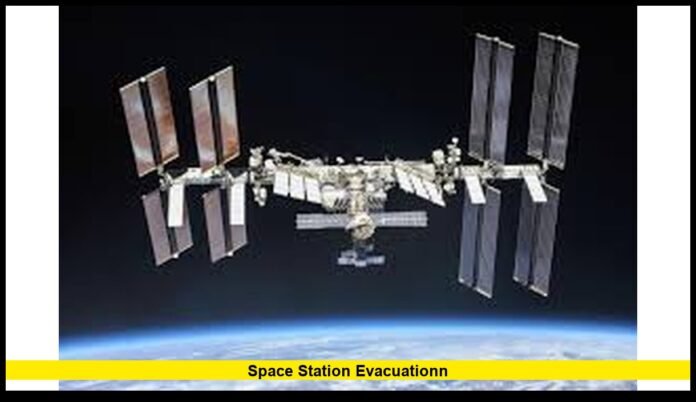

The latest space station evacuation concerns have placed the International Space Station under intense scrutiny after astronauts aboard the orbiting laboratory were directed to follow emergency safety procedures linked to an ongoing air leak issue in a Russian section of the station. While no crew members were in immediate danger and no departure from the station occurred, the development highlighted the importance of rapid-response protocols that protect astronauts living hundreds of miles above Earth.
The International Space Station (ISS) remains one of the most ambitious engineering projects ever undertaken. For more than two decades, it has served as a permanent human presence in space, supporting scientific research, technology testing, and international cooperation. Recent events, however, have reminded the world that operating a complex spacecraft in orbit presents unique challenges that require constant monitoring and maintenance.
As engineers continue evaluating the situation, astronauts remain focused on their daily responsibilities while mission teams work to ensure the station remains a safe environment for everyone onboard.
The Incident That Triggered New Safety Measures
Engineers have monitored pressure loss in this area for several years. Previous inspections identified small cracks and structural concerns that led to multiple repair efforts. Those repairs reduced the leak rate and allowed normal station operations to continue.
More recent monitoring data, however, showed signs that air loss was increasing again. As a result, mission controllers implemented additional safety measures and directed crew members to prepare for potential emergency scenarios.
The response reflected standard operational procedures rather than evidence of an immediate threat. Space agencies regularly practice emergency protocols to ensure astronauts can react quickly if conditions change.
Even so, the development attracted worldwide attention because any issue involving station pressure is treated with exceptional seriousness.
Why Air Leaks Are a Major Concern in Space
On Earth, a small crack in a structure may seem relatively minor. In space, the situation is dramatically different.
The International Space Station relies on a carefully maintained atmosphere that allows astronauts to breathe, sleep, work, and conduct research. Any leak creates a pathway for that atmosphere to escape into the vacuum of space.
A tiny leak can often be managed successfully for long periods. However, engineers must monitor it continuously because changes in size or location can alter the rate of air loss.
If pressure decreases too quickly, astronauts could face significant operational challenges. That is why mission controllers maintain sophisticated monitoring systems capable of detecting even subtle changes in atmospheric conditions.
Every pressure reading is analyzed carefully. When measurements indicate an unexpected trend, teams investigate immediately.
The recent increase in air leakage prompted engineers to intensify those investigations and activate additional safety precautions.
The Russian Segment Remains the Focus
The area attracting the most attention is connected to the Russian-operated portion of the station.
This section contains critical systems and living spaces that support long-duration missions. Over the years, engineers have performed extensive inspections and repairs to address structural concerns in specific compartments.
Officials have repeatedly emphasized that the station remains safe for astronauts. Nevertheless, recurring leaks have become one of the most closely watched technical issues facing ISS operators.
Repair teams continue examining affected areas while reviewing data collected from sensors throughout the station.
The goal is not only to stop the current leakage but also to better understand why the issue continues to reappear despite earlier repair efforts.
Astronauts Move Into Docked Spacecraft as a Precaution
One of the most widely discussed aspects of the incident involved astronauts entering their docked spacecraft during safety operations.
This action sparked headlines around the world, but it is important to understand what it means.
The move does not automatically indicate that an evacuation is underway.
Instead, astronauts enter docked vehicles as a precaution whenever mission controllers want to maximize readiness. By doing so, crews can leave the station rapidly if conditions unexpectedly worsen.
These spacecraft function as emergency escape vehicles throughout every ISS mission.
Current crew members have access to spacecraft capable of returning them safely to Earth if necessary. Keeping those vehicles available and ready is a fundamental part of station operations.
The procedure demonstrated how carefully space agencies approach astronaut safety.
How Emergency Protocols Work on the ISS
The International Space Station operates under detailed emergency procedures developed through decades of experience.
Astronauts train extensively before launch to prepare for scenarios ranging from equipment failures and fires to pressure leaks and medical emergencies.
When an anomaly occurs, mission control teams first assess available data.
Engineers analyze sensor readings, communications systems, structural information, and environmental conditions.
Depending on the results, astronauts may receive instructions to isolate sections of the station, relocate to safer modules, or prepare spacecraft for departure.
The current situation involved heightened readiness rather than an active evacuation order.
Such precautions are designed to provide astronauts with the greatest possible safety margin while experts evaluate conditions.
The Importance of Crew Dragon and Other Docked Vehicles
Modern space stations maintain emergency return capability through docked spacecraft.
For NASA astronauts, the SpaceX Crew Dragon spacecraft serves this role. Russian crew members also have access to spacecraft designed for transportation between Earth and orbit.
These vehicles remain attached to the ISS during missions and are maintained in a ready state.
Should a serious emergency occur, astronauts can quickly board, undock, and begin their return journey.
The existence of multiple emergency return options significantly enhances station safety.
It also gives mission controllers flexibility when responding to technical challenges such as air leaks, equipment malfunctions, or unexpected environmental conditions.
The readiness of these spacecraft played a major role in the response to recent air leak concerns.
A Space Laboratory Unlike Any Other
The International Space Station is far more than a place where astronauts live.
The facility serves as a world-class research laboratory supporting hundreds of scientific investigations every year.
Researchers study everything from human health and biology to advanced materials, fluid physics, agriculture, and future spaceflight technologies.
Many experiments conducted aboard the ISS would be impossible on Earth because they rely on the microgravity environment of space.
Scientists use those unique conditions to explore questions that could improve medicine, manufacturing, communications, and long-term exploration.
Protecting the station therefore protects not only its crew but also years of valuable scientific work.
Challenges of Operating an Aging Orbital Facility
The International Space Station first began assembly in orbit during the late 1990s.
Since then, astronauts have continuously occupied the facility, making it one of the longest-running human spaceflight projects in history.
Operating such a complex structure for decades presents significant engineering challenges.
Station components experience constant temperature swings as the ISS moves between sunlight and darkness.
Radiation exposure, mechanical stress, and the harsh environment of space also affect equipment over time.
Engineers conduct regular maintenance to keep systems functioning properly.
Despite those efforts, aging infrastructure inevitably requires additional monitoring and repair.
The latest space station evacuation concerns illustrate the broader reality that maintaining a long-serving orbital laboratory demands ongoing vigilance and technical expertise.
International Cooperation During Critical Moments
One of the defining features of the ISS program is international collaboration.
The station represents a partnership involving multiple countries, agencies, and technical teams working toward common goals.
During technical incidents, experts from different nations share information, review engineering data, and coordinate operational decisions.
This cooperative approach has helped sustain the ISS through numerous challenges over the years.
The current air leak issue has once again demonstrated the value of that partnership.
Engineers across multiple organizations continue working together to evaluate risks, assess repair options, and maintain safe operations aboard the station.
What Engineers Are Doing Right Now
Addressing an air leak in space requires a systematic approach.
Teams first identify the most likely source of the pressure loss.
They then conduct inspections, analyze structural conditions, and perform tests designed to narrow down the exact location of the leak.
Repair techniques may include sealing materials, structural reinforcements, and additional monitoring equipment.
Once repairs are completed, engineers verify results through repeated pressure measurements.
The process can take time because safety considerations require careful validation before officials declare a problem resolved.
Current efforts remain focused on stabilizing conditions and reducing air loss while preserving normal station operations.
The Human Side of Life in Orbit
While engineers work on technical solutions, astronauts continue adapting to life aboard the station.
Crew members follow demanding schedules that include scientific experiments, maintenance work, exercise sessions, and communication with mission control.
Training prepares them for unexpected situations, allowing them to remain calm during operational challenges.
Astronauts routinely practice emergency procedures before and during missions.
That preparation helps ensure they can respond effectively whenever unusual conditions arise.
The recent incident showcased the professionalism and readiness that have become hallmarks of modern human spaceflight.
Looking Ahead for the ISS Program
The International Space Station remains central to global space exploration efforts.
The laboratory continues supporting research that could influence future missions to the Moon, Mars, and beyond.
At the same time, space agencies are evaluating long-term plans for future orbital destinations and commercial space stations.
Until those next-generation facilities become operational, the ISS will continue serving as humanity’s primary laboratory in low Earth orbit.
Maintaining its safety and functionality remains a top priority.
The recent air leak concerns underscore both the challenges and achievements associated with operating a permanent human outpost in space.
Current Status
Astronauts aboard the International Space Station remain safe as engineers continue monitoring the air leak situation.
Emergency preparedness measures remain in place, and mission controllers continue analyzing pressure data from affected areas of the station.
Repair efforts are ongoing, while scientific research and daily operations continue under close supervision.
Although the situation prompted increased caution and international attention, crews remain supported by extensive safety systems, emergency procedures, and decades of operational experience.
The response has demonstrated the resilience of the ISS program and the commitment of space agencies to protecting astronauts while preserving one of the most important scientific facilities ever built beyond Earth.
What are your thoughts on the challenges of maintaining a permanently occupied space station? Share your perspective and stay tuned for more updates from the world of space exploration.