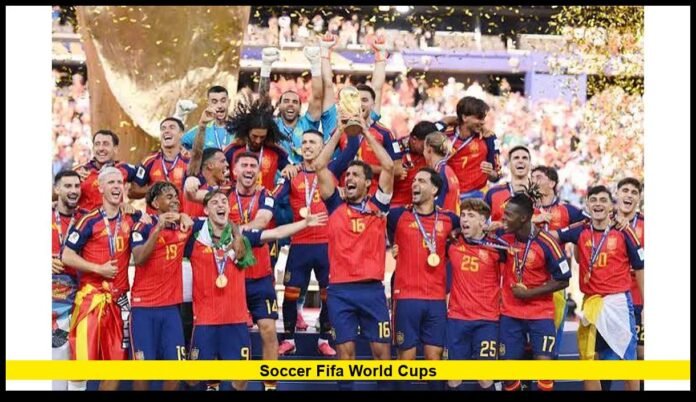

The soccer FIFA World Cup continues to stand as the pinnacle of international football, captivating billions of fans across every continent. From dramatic last-minute goals to unforgettable championship celebrations, the tournament has shaped the history of the sport for nearly a century. The 2026 edition marks one of the most significant milestones in World Cup history, introducing an expanded competition, more participating nations, and an unprecedented three-country hosting arrangement. As excitement builds throughout the tournament, supporters around the globe are witnessing a new era of international football.
Key Points Summary
╔════════════════════════════════════════════════════════════════════╗
║ – The 2026 FIFA World Cup is the largest edition ever, featuring 48 national teams. ║
║ – The United States, Canada, and Mexico are jointly hosting the tournament. ║
║ – A record 104 matches are scheduled under the expanded competition format. ║
║ – More countries than ever before have earned the chance to compete on football’s biggest stage. ║
║ – The tournament continues to unite billions of fans while showcasing the world’s elite players. ║
╚════════════════════════════════════════════════════════════════════╝
A Tournament That Defines International Football
Few sporting events carry the global influence of the FIFA World Cup. Every four years, national teams set aside club rivalries to compete for the sport’s most prestigious trophy. For players, lifting the World Cup represents the highest achievement in football, while for supporters it creates memories that often last a lifetime.
Unlike domestic leagues that span several months, the World Cup condenses extraordinary drama into a few weeks. Every match carries enormous importance, and a single goal can determine whether a nation advances or heads home.
Since the inaugural tournament in Uruguay in 1930, the competition has evolved into a worldwide celebration of athletic excellence, national pride, and cultural unity.
2026 Introduces a Historic New Chapter
The current World Cup is unlike any previous edition.
For the first time, 48 national teams are participating instead of the traditional 32. This expansion reflects FIFA’s goal of giving more countries the opportunity to compete while increasing the tournament’s global reach.
The larger field also means significantly more matches. Instead of the previous 64-game schedule, fans now enjoy a record-breaking 104 matches, providing additional opportunities for emerging football nations to challenge established powers.
The tournament is also making history by being jointly hosted by three nations—the United States, Canada, and Mexico. Never before has the men’s FIFA World Cup been organized on such a large geographical scale.
The expanded format has created fresh storylines, introduced new rivalries, and allowed supporters to discover talented players from countries that previously struggled to qualify.
North America Welcomes the World
Hosting the tournament across three countries presents unique opportunities for fans and participating teams alike.
Major cities throughout North America have transformed into football destinations, welcoming supporters from every corner of the globe. Modern stadiums, upgraded transportation networks, and extensive fan festivals have created an atmosphere that extends far beyond the matches themselves.
Host venues span iconic metropolitan areas, including New York/New Jersey, Los Angeles, Dallas, Atlanta, Houston, Miami, Seattle, Philadelphia, Boston, Kansas City, the San Francisco Bay Area, Toronto, Vancouver, Mexico City, Guadalajara, and Monterrey.
Each city offers its own culture, traditions, and matchday experience, allowing international visitors to experience the diversity of North America while following their national teams.
How the Expanded Tournament Works
The introduction of 48 teams required a redesigned competition format that balances fairness with excitement.
The participating nations are divided into twelve groups of four teams. Every team plays three group-stage matches, earning points for victories and draws. At the conclusion of group play, the top two teams from each group automatically advance to the knockout rounds.
They are joined by the eight best third-place finishers, creating a 32-team knockout bracket.
From there, the competition follows the familiar elimination format:
- Round of 32
- Round of 16
- Quarter-finals
- Semi-finals
- Third-place playoff
- Final
This structure rewards consistency during the group stage while ensuring that more countries remain in contention for longer periods.
More Nations, Greater Opportunity
Perhaps the biggest benefit of expansion is the increased representation from every football confederation.
Countries that previously faced extremely difficult qualification paths now have realistic opportunities to compete on the world stage. Emerging football programs gain invaluable experience against elite opposition, accelerating the development of players and national federations.
For supporters, this means discovering new styles of play, unfamiliar stars, and compelling underdog stories that enrich every edition of the tournament.
Many football analysts believe the broader participation will strengthen international football for decades by encouraging investment in youth development across more nations.
The World’s Most Successful Teams
Although new countries continue to rise, several national teams have established remarkable World Cup legacies.
Brazil remains the most successful nation in tournament history with five championships. Known for its attacking football and legendary players, Brazil has consistently produced memorable performances across generations.
Germany and Italy each own four World Cup titles, reflecting decades of tactical excellence and consistency.
Argentina captured its third championship after an unforgettable triumph in Qatar, while France has cemented itself among the modern football powers with multiple titles in recent decades.
Uruguay, England, and Spain have also etched their names into football history through championship victories that continue to inspire future generations.
Every new tournament offers another opportunity for these football giants to add to their impressive records while ambitious challengers attempt to create history.
Why the World Cup Captivates Billions
The FIFA World Cup is much more than a sporting competition.
It represents national identity, cultural pride, and shared celebration. During the tournament, streets fill with supporters wearing national colors, public viewing areas attract thousands of fans, and millions of households gather to watch matches together.
The emotional investment is unlike almost any other sporting event.
Players who compete against one another throughout the club season suddenly become teammates representing their countries. Fans witness moments of joy, heartbreak, resilience, and unity that transcend sport.
Even nations without football traditions often become captivated by the tournament’s atmosphere and dramatic storylines.
The soccer FIFA World Cup also introduces new generations of supporters to international football, inspiring countless children to begin playing the game after watching their heroes compete.
Technology Has Changed the Modern Game
Football has embraced technology to improve decision-making while preserving the flow of matches.
Video Assistant Referee (VAR) remains one of the most significant innovations. Match officials can review goals, penalty decisions, direct red cards, and cases of mistaken identity using multiple camera angles.
Goal-line technology instantly determines whether the entire ball has crossed the line, eliminating uncertainty in one of football’s most important decisions.
Semi-automated offside technology uses sophisticated tracking systems to assist officials in identifying offside positions more quickly and accurately.
Although debates surrounding officiating continue, technological advancements have increased accuracy and reduced many of the controversies that once dominated major tournaments.
Economic Impact Beyond Football
Hosting the World Cup creates enormous economic activity for host cities and surrounding regions.
Millions of visitors travel to attend matches, generating substantial demand for hotels, restaurants, transportation services, entertainment venues, and retail businesses.
Infrastructure projects often accompany the tournament, including stadium improvements, public transit upgrades, airport enhancements, and urban development initiatives.
International media coverage also provides long-term exposure that can encourage future tourism and business investment.
While hosting requires significant financial commitments, many cities view the tournament as an opportunity to showcase themselves before a global audience.
Unforgettable Moments That Defined the Tournament
Every edition of the World Cup produces moments that become part of sporting history.
Legendary goals, remarkable comebacks, dramatic penalty shootouts, and emotional celebrations continue to define football’s greatest competition.
Historic performances by players such as Pelé, Diego Maradona, Zinedine Zidane, Ronaldo Nazário, Andrés Iniesta, Kylian Mbappé, and Lionel Messi have elevated the tournament’s legacy across generations.
Each new World Cup introduces fresh heroes who inspire millions while adding another unforgettable chapter to football history.
Supporters often remember exactly where they watched iconic finals, making the tournament a shared cultural experience that extends far beyond the ninety minutes played on the field.
The Road to Qualification
Reaching the World Cup remains one of football’s toughest challenges.
National teams compete through qualification tournaments organized by their respective continental confederations. The journey often lasts several years and requires consistent performances against regional rivals.
With the expansion to 48 teams, additional qualification places have been allocated across Europe, South America, North America, Asia, Africa, and Oceania.
This broader representation has made qualification more achievable for developing football nations while maintaining a highly competitive standard.
Even so, earning a place at the World Cup remains one of international football’s greatest accomplishments.
What Makes Winning So Difficult
Unlike domestic leagues that reward consistency over many months, the World Cup demands excellence in every stage of the competition.
A slow start can jeopardize qualification from the group stage, while one mistake in the knockout rounds may end a nation’s championship hopes.
Players must also manage intense travel schedules, enormous media attention, passionate crowds, and the pressure of representing millions of supporters.
Depth, tactical flexibility, strong leadership, and mental resilience often prove just as important as technical ability.
Champions are remembered not only for their talent but also for their ability to perform under extraordinary pressure.
Looking Ahead
As international football continues to evolve, the FIFA World Cup remains its defining event.
The expanded tournament has created more opportunities for nations to compete, introduced fresh excitement for supporters, and reinforced football’s position as the world’s most popular sport.
Every edition produces new stars, unforgettable matches, and stories that inspire future generations. Whether a traditional powerhouse claims another title or an emerging nation creates history, the World Cup continues to deliver moments that unite billions of people through their shared passion for football.
For fans across every continent, the tournament remains the ultimate celebration of skill, determination, teamwork, and national pride.
Which team do you think will lift the trophy? Share your predictions in the comments and stay tuned for more football news and tournament updates.