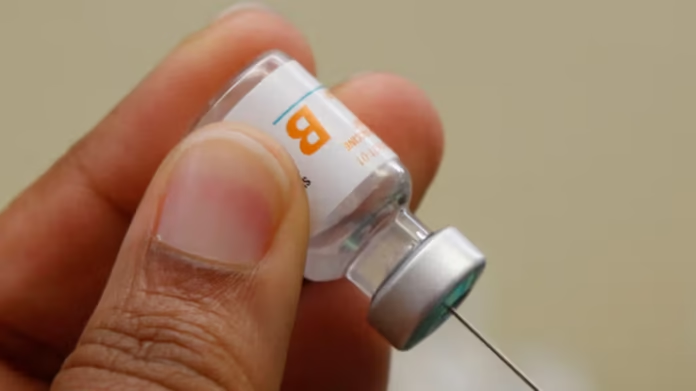

The hep b vaccine prevents infection from the hepatitis B virus, a contagious liver disease that can turn into a lifelong illness if left unchecked. As of August 11, 2026, the vaccine remains a cornerstone of U.S. immunization policy, and it offers between 80% and 100% protection against the virus for people who complete the recommended series.
What Hepatitis B Actually Does to the Body
Hepatitis B attacks the liver. Some infections stay acute, meaning the body clears the virus within a few months. Others become chronic, meaning the virus stays in the bloodstream for years or even decades. Roughly 2.4 million people in the United States currently live with acute or chronic hepatitis B, and about two-thirds of those with chronic infection don’t even know they have it.
Chronic hepatitis B raises the risk of cirrhosis, liver failure, and liver cancer. The virus spreads through blood, semen, and other body fluids, which means it can pass through unprotected sex, shared needles, or from a mother to her baby during childbirth.
The Core Protection: What the Hep B Vaccine Prevents
The hepatitis B vaccine trains the immune system to recognize and destroy the virus before it can establish a lasting infection. Specifically, it prevents:
- Acute hepatitis B infection
- Chronic hepatitis B infection, which can last a lifetime
- Liver cirrhosis caused by long-term viral damage
- Liver cancer linked to chronic hepatitis B
- Mother-to-child transmission during birth
This last point matters enormously. Babies infected with hepatitis B at birth face a much higher chance of developing chronic infection than adults who get infected later in life. That’s why the birth dose has historically been such a critical part of the U.S. vaccination schedule.
Where U.S. Policy Stands Right Now
The last twelve months brought real turbulence to hepatitis B vaccine policy, and website visitors searching this keyword deserve the most accurate, current answer.
In December 2025, the Advisory Committee on Immunization Practices voted 8 to 3 to shift the birth dose from a universal recommendation to a shared clinical decision-making model for babies born to mothers who test negative for hepatitis B. Under that proposal, parents would consult a doctor and decide together whether their newborn gets the first dose at birth or waits until two months of age.
The Centers for Disease Control and Prevention adopted that guidance on January 5, 2026, along with a broader overhaul of the childhood immunization schedule. The American Academy of Pediatrics, the American Public Health Association, and several other medical groups sued, arguing the changes bypassed proper scientific review.
On March 16, 2026, Judge Brian Murphy of the U.S. District Court for the District of Massachusetts issued a preliminary injunction. The ruling stayed the January 5 memo, blocked the newly appointed ACIP members from acting, and reversed the hepatitis B changes made at the December 2025 meeting. As a direct result, the universal birth dose recommendation is back in effect for now, and pediatricians nationwide continue advising a hepatitis B shot within 24 hours of birth for all newborns, regardless of the mother’s test results.
For infants born to mothers who test positive for hepatitis B, or whose status is unknown, the birth dose and hepatitis B immunoglobulin recommendation never changed throughout this entire dispute. That guidance has stayed firm the whole time.
The lawsuit, AAP et al. v. Kennedy, is still working through the courts, and further rulings or appeals could shift the picture again. Anyone tracking this topic closely should watch for updates from the CDC and the American Academy of Pediatrics directly, since the legal situation remains active.
The Standard Vaccination Schedule for Children
Under the currently restored guidance, children typically receive three doses:
- First dose: within 24 hours of birth
- Second dose: at 1 to 2 months of age
- Third dose: between 6 and 18 months of age
Some vaccine brands use a two-dose schedule for adolescents aged 11 to 15, given several months apart. A doctor or pharmacist can confirm which brand and schedule applies to a specific patient.
Adult Recommendations Also Remain in Place
The CDC recommends the hepatitis B vaccine for all adults aged 19 to 59, regardless of individual risk factors. Adults 60 and older can also receive the vaccine, particularly if they have risk factors such as diabetes, multiple sex partners, injection drug use, or occupational exposure to blood.
Despite the availability and effectiveness of the vaccine, only about 30% of adults in the United States are currently vaccinated against hepatitis B. Public health experts continue to point to that gap as one of the biggest missed opportunities in preventive care today.
Why the Vaccine Matters Beyond Just the Individual
Hepatitis B caused an estimated 1.1 million deaths worldwide in 2022, largely from long-term liver damage rather than the initial infection itself. Vaccination programs have already produced measurable results. Chronic hepatitis B prevalence among children under age five has dropped sharply worldwide since routine infant vaccination became standard practice.
The World Health Organization notes that timely vaccination offers close to complete protection against the virus. That protection compounds over a population: fewer infected children today means fewer chronic carriers, fewer cases of liver cancer, and lower transmission rates decades from now.
Safety and Side Effects
The hepatitis B vaccine has an extensive safety record built over more than three decades of use in the United States. Most side effects are mild and temporary, including soreness at the injection site, low-grade fever, or fatigue. Serious allergic reactions are rare. Medical organizations, including the American Academy of Pediatrics, have continued to stand firmly behind the vaccine’s safety profile even amid the recent policy disputes.
What Parents and Adults Should Do Right Now
Given the shifting regulatory landscape, the most reliable move is a direct conversation with a pediatrician or primary care provider. Doctors continue to follow the medically restored schedule, and insurance coverage for the hepatitis B vaccine remains unchanged under Medicaid, the Children’s Health Insurance Program, and the Vaccines for Children Program.
Anyone unsure of their own vaccination status can request a simple blood test to check for hepatitis B antibodies. Missing a dose isn’t a major setback either. The vaccine series doesn’t need to restart from scratch if a dose gets delayed; the next dose can simply be given as soon as possible.
A Vaccine With a Long Track Record
Hepatitis B was first identified by Nobel laureate Dr. Baruch Blumberg, whose research eventually led to the development of the first hepatitis B vaccine. That original breakthrough paved the way for the vaccine formulations used today, some of which combine hepatitis B protection with other childhood immunizations in a single shot.
Despite ongoing political and legal battles over vaccine policy, the underlying medical consensus hasn’t wavered. Medical societies across the country, from the Infectious Diseases Society of America to the Society for Maternal-Fetal Medicine, continue to affirm that hepatitis B vaccination prevents serious, sometimes fatal, liver disease.
This story is still developing as the court case continues, so check back for the latest on where hepatitis B vaccine policy stands.