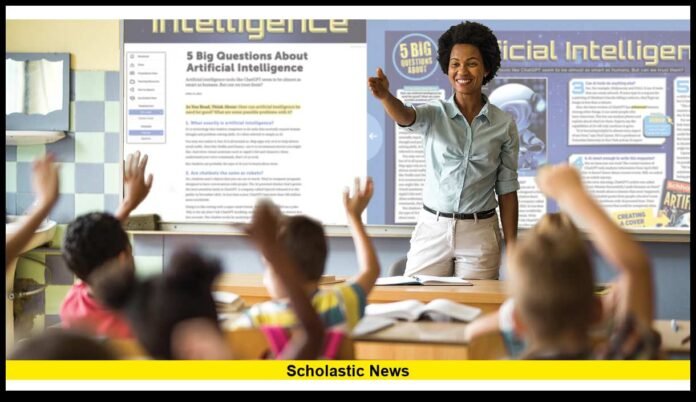

The Scholastic News 5/6 magazine continues to stand out in 2025 as one of America’s most trusted classroom news resources for fifth- and sixth-grade students. Designed by Scholastic Inc., it bridges literacy instruction with real-world events, helping students learn to read critically, think independently, and form informed opinions. Teachers nationwide rely on it to bring authentic journalism into classrooms and connect lessons to the headlines shaping the world right now.
A Closer Look at Scholastic News 5/6
Scholastic News 5/6 is tailored specifically for students aged 10 to 12. Each issue balances engaging current-events reporting with nonfiction reading strategies, so learners grasp how news stories work while building vocabulary and comprehension.
The publication comes in both print and digital formats, allowing flexibility for traditional classrooms and modern blended-learning environments. Every issue features:
- Age-appropriate news articles on science, civics, technology, and culture
- Sidebars explaining key terms and background concepts
- “Think and Write” prompts encouraging reflection and debate
- Online videos, read-aloud tools, and interactive quizzes
This blend of formats turns news literacy into a multisensory learning experience. Students not only read about the world—they analyze, question, and discuss it.
Fall 2025 Highlights From Scholastic News 5/6
Throughout the fall semester, Scholastic News 5/6 has spotlighted stories that tie directly to global and national conversations. The November 2025 issues have included:
- Exploring Space Exploration: A feature on NASA’s Artemis program updates students on preparations for the 2026 lunar mission.
- Understanding Elections: A civics section breaks down how local and national elections work, why voting matters, and how young citizens can get involved.
- Protecting the Planet: Articles cover sustainable farming, recycling breakthroughs, and the youth activists tackling plastic waste.
- Science in Everyday Life: New coverage on renewable energy, robotics, and how artificial intelligence supports medicine and transportation.
Each story includes visuals and comprehension questions that meet Common Core ELA standards, giving teachers ready-to-use literacy lessons.
How Teachers Use Scholastic News 5/6 Every Week
Across U.S. classrooms, teachers integrate Scholastic News 5/6 into reading blocks, social studies lessons, and writing workshops. Many educators start “News Fridays,” when students analyze an article together, underline evidence, and summarize the main idea.
Common classroom applications include:
- Close-reading practice with annotation of nonfiction text.
- Group discussions about cause-and-effect or author’s purpose.
- Writing extensions such as opinion essays or mini editorials.
- Vocabulary games using boldface terms from each issue.
Because articles are written in multiple reading levels, teachers can differentiate instruction easily, ensuring that all learners—advanced or emerging—participate meaningfully.
Digital Growth and New 2025 Features
Scholastic’s digital transformation has taken major strides this year. The Scholastic News 5/6 online portal now includes:
- AI-assisted reading help, offering context clues and definitions when students hover over a word.
- Google Classroom integration for direct assignment posting.
- Audio narration that models fluent reading and supports English learners.
- Interactive polls allowing classes nationwide to compare opinions on story topics.
- Archive access to hundreds of previous issues categorized by topic and reading skill.
Teachers report that these features increase engagement and comprehension, especially when students toggle between reading and listening modes.
Why Scholastic News 5/6 Remains a Trusted Classroom Resource
At a time when students encounter a constant stream of online information, Scholastic News 5/6 gives them a safe, reliable source of journalism. Every article is written by professional education reporters and reviewed by child-development experts to ensure accuracy and age suitability.
The publication’s editorial approach promotes:
- Fact-based reporting without bias or sensationalism.
- Critical thinking through balanced perspectives.
- Cultural awareness via stories representing diverse voices.
By exposing students early to ethical news writing, Scholastic helps shape informed, discerning future readers.
Developing Media Literacy Skills
One of the most valuable outcomes of using Scholastic News 5/6 is the development of media literacy. Teachers guide students to analyze headlines, evaluate sources, and distinguish opinion from fact.
Lessons emphasize skills such as:
- Identifying credible evidence in a text.
- Detecting persuasive language and bias.
- Cross-checking information with other reliable outlets.
This training prepares students to navigate digital media responsibly—an essential competency in today’s information-rich world.
Student Engagement and Classroom Impact
Feedback from classrooms across the country in 2025 underscores the impact of Scholastic News 5/6. Teachers consistently report increased participation and stronger nonfiction writing skills.
Recent educator survey highlights:
- 92 % observed greater interest in current events.
- 89 % saw improved comprehension test scores.
- 95 % noted that weekly news discussions strengthened speaking and listening standards.
Students enjoy discovering that “news” can mean more than politics—it can involve science breakthroughs, cultural celebrations, and inspiring young changemakers like themselves.
Parental Involvement and Home Learning
Many parents appreciate that Scholastic News 5/6 encourages family discussions. Each issue includes extension questions designed to carry learning beyond school walls.
For example:
- After reading about national parks, families might plan a weekend hike.
- Following an article on technology ethics, kids and parents can set digital-use goals together.
Because subscriptions include home login access, parents can view the same digital issue their child reads in class, supporting shared literacy experiences.
Subscription Details for the 2025–2026 School Year
The 2025–2026 Scholastic News 5/6 package gives educators everything they need for the full academic year:
| Component | Description |
|---|---|
| Print Edition | 20 issues per classroom set, mailed throughout the school year. |
| Digital Access | Interactive stories, videos, and archives viewable on any device. |
| Teacher Materials | Lesson plans, vocabulary sheets, and answer keys aligned with standards. |
| Student Tools | Read-aloud feature, highlighting, and comprehension quizzes. |
Schools can purchase site licenses, district bundles, or individual classroom subscriptions. Scholastic also provides grant opportunities to support underserved schools.
Connecting Global and Local Perspectives
In 2025, Scholastic News 5/6 has expanded its global coverage to show students how worldwide events relate to their local communities. Recent features have highlighted:
- Young inventors designing clean-water systems in Kenya.
- American students participating in global climate conferences.
- Profiles of classrooms partnering with peers overseas through virtual exchanges.
By presenting news through a global lens, the publication helps students appreciate diversity and the interconnectedness of today’s world.
Integration With Core Curriculum Standards
Each Scholastic News 5/6 article includes detailed teacher notes aligning lessons with Common Core State Standards and Next Generation Science Standards. Reading comprehension strategies—summarizing, inferring, determining author’s point of view—are reinforced naturally through real-world content.
In social studies, students link articles about government or civic duty to units on the U.S. Constitution and citizenship. Science teachers use current-event stories to connect textbook concepts to real-time research and technology innovations.
How Scholastic News 5/6 Builds Lifelong Learners
Beyond skill building, the publication nurtures curiosity and empathy. Many students say their favorite sections are “In the News” or “Student Voices,” where kids their age share achievements and ideas. Seeing peers featured for community service or invention motivates readers to act within their own neighborhoods.
Teachers report that Scholastic News 5/6 not only boosts reading skills but also inspires civic engagement—whether through recycling projects, volunteering, or student-council participation.
Technological Innovation in Education
In step with modern classrooms, Scholastic News 5/6 integrates seamlessly with one-to-one laptop and tablet programs. The 2025 digital dashboard allows teachers to track reading progress and quiz performance in real time.
These analytics help educators differentiate instruction by highlighting which comprehension skills need reinforcement. Combined with Scholastic’s teacher support community, it forms a complete ecosystem of professional development and student growth.
The Broader Impact on U.S. Education
Scholastic’s mission—to encourage a lifelong love of reading—remains clear through this program. In the past decade, classroom magazines like Scholastic News 5/6 have evolved from paper pamphlets to multimedia learning hubs.
Today, more than 5 million students in the United States access Scholastic News 5/6 each month. The magazine’s consistent relevance demonstrates that journalism can thrive as an educational tool even in a digital era dominated by fast-moving content.
Looking Ahead: The Future of Scholastic News 5/6
The coming year promises additional innovations. Scholastic editors plan to introduce student-produced video segments and interactive global news maps that allow classes to track events in real time.
Another upcoming feature, “Ask a Reporter,” will let students submit questions to professional journalists, further connecting classroom learning with authentic media practice. These updates aim to deepen engagement and keep the magazine’s content fresh for the next generation of learners.
Summary
The Scholastic News 5/6 program remains a cornerstone of upper-elementary education in 2025. Through factual, age-appropriate journalism, it teaches students how to read critically, analyze information, and care about their communities. Its blend of print and digital media ensures that every learner—no matter their reading level or location—can access quality news designed just for them.
As classrooms evolve, Scholastic News 5/6 continues to prove that curiosity, literacy, and truth still have a central place in learning.
How is Scholastic News 5/6 sparking conversations in your home or classroom? Share your thoughts below and stay connected for more updates on this essential learning resource!