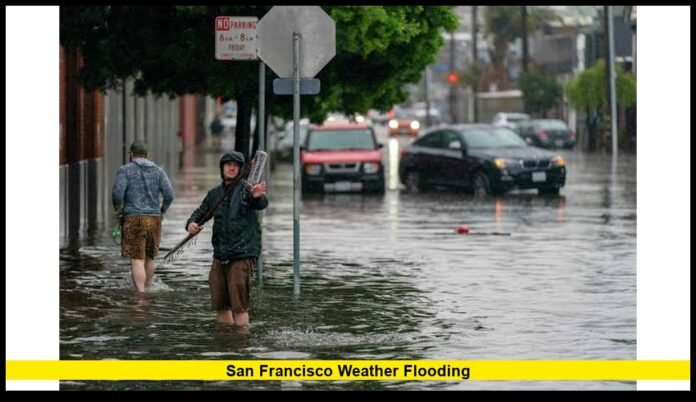

San Francisco weather flooding has become a major concern after a powerful November storm brought record rainfall, flooded streets, transportation disruptions, emergency rescues, and damage to buildings and businesses across the city. The atmospheric river that moved through Northern California on November 18 produced intense rainfall, strong winds, and hazardous conditions that overwhelmed drainage systems in several locations. The storm’s effects continued into Thursday, November 19, with additional showers, possible thunderstorms, coastal flooding concerns, and hazardous ocean conditions remaining part of the weather outlook.
San Francisco experienced an extraordinary amount of rain during the storm, with downtown rainfall surpassing the city’s previous daily record for November 18. Floodwater affected streets, waterfront areas, freeway ramps, commercial properties, and transportation routes. Residents faced difficult commuting conditions, while emergency personnel responded to incidents involving stranded motorists, flooded vehicles, and storm-related hazards.
The situation has also raised concerns about how the city handles intense rainfall, particularly in low-lying neighborhoods, waterfront locations, and areas where drainage systems can become overwhelmed during severe weather.
Record-Breaking Rainfall Hits San Francisco
The November storm brought an unusually intense period of rainfall to San Francisco and surrounding Bay Area communities. Downtown San Francisco recorded approximately 2.28 inches of rain by 3 p.m. Wednesday, November 18, according to weather reporting. That amount surpassed the previous November 18 daily rainfall record of 2.24 inches, which was established in 1918.
The rainfall was significant because much of it arrived within a relatively short period. Heavy downpours placed pressure on the city’s drainage infrastructure and caused water to accumulate in streets and other low-lying locations.
San Francisco’s normal November rainfall is considerably lower than the amount delivered by the storm. The intense precipitation contributed to flooding across the city and created difficult conditions for drivers, pedestrians, businesses, and public transportation users.
The storm was not limited to San Francisco. Much of Northern California experienced heavy rainfall, strong winds, and flood concerns as the weather system moved across the region.
How the Atmospheric River Created Dangerous Conditions
The storm was associated with an atmospheric river, a weather system capable of transporting large amounts of moisture from the Pacific Ocean toward the West Coast.
Atmospheric rivers can produce significant rainfall when moisture-rich air moves into coastal and inland regions. Depending on the storm’s speed, intensity, and location, these systems may create prolonged periods of rain, strong winds, flooding, and other hazardous conditions.
In San Francisco, the combination of intense rainfall and urban infrastructure contributed to widespread water accumulation. Streets, sidewalks, parking areas, and other paved surfaces prevent rainwater from soaking naturally into the ground. Instead, much of the water flows toward storm drains and lower areas.
When rainfall arrives faster than drainage systems can handle it, flooding can develop quickly. This was evident during the November storm, when water accumulated across several neighborhoods and affected roadways, buildings, and transportation infrastructure.
The storm also brought strong winds that increased the risk of falling branches, damaged trees, power outages, and other weather-related problems.
Flooding Reported Across San Francisco Neighborhoods
Flooding affected multiple parts of San Francisco during the storm, with water accumulating in streets, commercial areas, and waterfront locations.
The Embarcadero and Pier 14
The Embarcadero experienced significant flooding, including areas near Pier 14. Water covered portions of waterfront walkways and streets as heavy rain and rough bay conditions affected the area.
The waterfront is particularly vulnerable during powerful storms because rainfall can coincide with elevated tides and changing water levels. These conditions may make drainage more difficult and increase the risk of water reaching streets and public walkways.
Residents and visitors were urged to avoid hazardous waterfront areas, particularly locations where water was moving across walkways or waves were reaching barriers.
Mission Street and Downtown San Francisco
Downtown streets also experienced flooding during the storm. Water accumulated around busy intersections and commercial areas, affecting pedestrians, businesses, and motorists.
Flooding in downtown San Francisco created additional difficulties because the area contains heavily used roads, transit routes, office buildings, retail businesses, and public spaces.
Some locations experienced drainage problems as intense rainfall overwhelmed the systems designed to move water away from streets.
Outer Sunset Neighborhood
The Outer Sunset was also affected by flooding. Heavy rainfall caused water to accumulate on neighborhood streets, with reports showing water moving through sections of the area.
Coastal neighborhoods may face multiple storm-related risks, including heavy rain, strong winds, high surf, and flooding. Residents in these locations may experience conditions that differ from those in inland neighborhoods.
Flooding Around Major Streets and Intersections
Flooding was reported around major roadways and intersections, including areas near 13th and Harrison streets. Other streets and freeway access points also experienced dangerous water accumulation.
The flooding was not limited to locations that regularly experience water problems. The intensity of the storm created conditions that affected areas where significant flooding may not normally occur during ordinary rainfall.
This made travel particularly difficult for motorists who were unfamiliar with the developing conditions.
Freeway Closures and Traffic Problems
Flooding disrupted traffic throughout San Francisco and parts of the surrounding region.
Several freeway ramps and road sections experienced water accumulation, forcing drivers to avoid affected areas. Interstate 280 and Highway 101 were among the transportation routes affected by storm-related problems in and around the city.
Some locations experienced water deep enough to make driving unsafe. Floodwater can hide pavement damage, debris, potholes, and other hazards. Drivers who attempt to cross flooded roads may lose control of their vehicles or become stranded.
Authorities encouraged motorists to avoid unnecessary travel during the worst conditions and to follow road closures and traffic instructions.
The storm also affected traffic in northern San Mateo County, where heavy rain created problems near freeway ramps and major roadways.
Commuters faced longer travel times, congestion, and changing road conditions. The situation highlighted the importance of checking traffic information before beginning a trip during severe weather.
Emergency Rescues and Flood-Related Hazards
Emergency crews responded to several incidents during the storm, including rescues involving people trapped in vehicles affected by floodwater.
Flooding can become dangerous within minutes when water rises rapidly around vehicles. Drivers may underestimate water depth or enter an area before realizing that the roadway has become impassable.
Emergency responders also dealt with storm-related hazards involving trees, infrastructure, and flooding.
Officials emphasized that motorists should not attempt to drive through flooded roads. Water can move more quickly than it appears, and vehicles can become unstable even when the floodwater does not look especially deep.
Pedestrians face similar risks. Floodwater may contain sewage, chemicals, debris, sharp objects, or other contaminants. Walking through standing or moving water can expose people to hazards that are difficult to see.
Residents should remain away from flooded areas unless emergency personnel or authorities indicate that access is safe.
Public Transportation Disrupted by the Storm
San Francisco’s public transportation network also experienced weather-related disruptions.
Muni services faced interruptions and route changes as flooding, fallen trees, and unsafe road conditions affected transit operations. Some routes required adjustments, while storm-related infrastructure problems created additional challenges for passengers.
Cable car operations were also affected by fallen trees and other storm conditions. Passengers experienced delays and service changes as transportation crews worked to address problems.
BART experienced weather-related delays, while ferry operations faced interruptions because of storm and water conditions.
Public transportation disruptions created problems for people commuting to work, traveling to medical appointments, attending school, and visiting the city.
Transit passengers should check service information before traveling because schedules, routes, and operating conditions may change as crews continue addressing storm damage.
San Francisco International Airport Experiences Flight Disruptions
San Francisco International Airport experienced significant weather-related disruption during the storm.
A ground stop was implemented during the severe weather, contributing to delays and cancellations. Heavy rain, strong winds, and operational challenges affected airline schedules.
As conditions improved, airport operations began recovering, but delays continued to affect travelers.
Passengers flying through SFO should check their airline’s latest flight information before leaving home. Travelers may also need additional time to reach the airport because flooding and traffic congestion can affect roads leading to the terminals.
Airport disruption can continue after the heaviest rainfall ends because aircraft, crews, passengers, and flight schedules may require time to return to normal operations.
Flooding Damages Businesses and Buildings
The storm also affected commercial properties and businesses across San Francisco.
Some businesses experienced flooding and temporarily closed while employees assessed conditions and protected property. Water can damage flooring, furniture, equipment, merchandise, electrical installations, and building materials.
Flooding at the Moscone Center also affected operations, with water entering portions of the facility and forcing closures of some exhibit-hall areas while the problem was addressed.
Commercial properties may face additional challenges after water recedes. Businesses must determine whether electrical systems, floors, walls, storage areas, and equipment are safe before reopening.
Floodwater can also create contamination concerns, particularly when water enters buildings through drains or sewer systems.
Property owners and business operators should prioritize safety inspections and avoid exposing employees or customers to areas where electrical, structural, or water-quality hazards remain.
Sewer System Problems and Drainage Overload
The storm placed significant pressure on San Francisco’s drainage and sewer infrastructure. When heavy rainfall exceeds the capacity of drainage systems, water can back up into streets, homes, businesses, and other properties.
Some locations experienced sewer-related flooding and water backing up into buildings. Stormwater infrastructure also struggled with the volume of rainfall, contributing to unusual water movement and flooding in certain areas.
These problems are especially concerning because floodwater entering through drainage or sewer systems may contain contaminants. Residents should avoid contact with water that may have come from sewer backups and should take appropriate precautions when cleaning affected areas.
San Francisco’s infrastructure is designed to manage rainfall and wastewater, but extreme weather can exceed the capacity of systems under certain conditions. Intense rainfall over a short period creates additional pressure on drainage networks, particularly in heavily developed areas where water cannot easily absorb into the ground.
Power Outages and Strong Winds Add to Storm Damage
Rain was not the only concern during the November storm. Strong winds also affected the Bay Area, creating risks involving trees, power lines, buildings, and electrical infrastructure.
Power outages were reported across the wider region as storm conditions affected utility operations. Thousands of customers experienced interruptions during the weather event.
Strong winds can cause branches to fall, damage electrical equipment, and create hazards around streets and residential properties. Heavy rain may also weaken soil around trees, increasing the risk that trees or large branches could fall.
Residents should avoid approaching downed power lines or electrical equipment. Floodwater may also create electrical hazards, particularly around buildings, vehicles, and utility installations.
People should report dangerous conditions to the appropriate emergency or utility authorities and remain away from damaged electrical infrastructure.
Coastal Flooding and High Surf Remain Important Concerns
San Francisco’s storm-related hazards extend beyond flooding caused by rainfall.
The National Weather Service forecast hazardous coastal conditions, including high surf and coastal flooding concerns near San Francisco Bay and San Pablo Bay. Elevated tides and storm-related water conditions may increase the risk of flooding along vulnerable waterfront locations.
High surf can also create dangerous conditions along Pacific Coast beaches.
Ocean Beach and other exposed coastal areas may experience large waves, strong currents, and sudden water surges. Waves can reach farther up the beach than expected, creating dangers for people walking near the shoreline.
Coastal hazards during the storm include:
- Large waves reaching beaches and waterfront walkways
- Strong rip currents
- Sneaker waves that move unexpectedly far up the shoreline
- Water overtopping seawalls and coastal barriers
- Coastal flooding during high tides
- Debris moving through shoreline areas
People should avoid entering the ocean during hazardous conditions and stay away from rocks, seawalls, piers, and other locations where waves may suddenly reach them.
The combination of rain, wind, high surf, and elevated water levels makes coastal areas particularly dangerous during powerful storms.
Thursday’s Weather Forecast and Continuing Rain Risk
San Francisco’s weather remained unsettled on Thursday, November 19, with additional showers and possible thunderstorms part of the forecast.
The weather system was expected to continue producing periods of rain, while conditions could include gusty winds and isolated thunderstorms. Some thunderstorms may bring brief heavy downpours that could create additional localized flooding.
Even if the overall rainfall becomes lighter than Wednesday’s record-setting storm, residents should not assume that flood hazards have disappeared.
Water may continue draining from streets and low-lying areas. Storm drains may remain under pressure, while damaged infrastructure and debris can slow the recovery process.
The forecast also indicated that showers could continue into Friday morning. Another weather system may bring additional rain later in the weekend, although the expected rainfall from that system was forecast to be considerably lower than the current storm.
Weather forecasts can change as systems move across the Pacific and into Northern California, so residents should continue checking updated forecasts and alerts.
Why San Francisco Is Vulnerable to Urban Flooding
San Francisco’s geography and urban infrastructure make the city vulnerable to flooding during periods of intense rainfall.
The city includes hills, coastal neighborhoods, waterfront areas, densely developed streets, and low-lying sections where water may accumulate. Rainwater moves downhill and can collect in areas where drainage is limited.
Several factors contribute to flooding risk.
Intense rainfall: Heavy rain falling over a short period can exceed the capacity of storm drains and drainage infrastructure.
Urban development: Roads, sidewalks, parking lots, and buildings prevent much of the rainfall from naturally soaking into the soil.
Low-lying areas: Streets and neighborhoods located at lower elevations may collect water from surrounding areas.
Drainage limitations: Storm drains may become overwhelmed or blocked by debris during powerful storms.
High tides: Elevated bay water levels may affect drainage near waterfront locations.
Coastal exposure: Areas near the ocean and bay may face additional flooding risks from high surf, tides, and storm conditions.
These factors help explain why flooding can develop in multiple locations during the same storm. A neighborhood that experiences little flooding during ordinary rain may become vulnerable when rainfall intensity increases significantly.
Safety Advice for Residents and Visitors
Residents and visitors should remain cautious while San Francisco deals with storm-related flooding and cleanup.
Floodwater can be dangerous even when it appears shallow. Drivers should avoid attempting to cross flooded streets, while pedestrians should stay away from water covering sidewalks and roadways.
Important safety precautions include:
- Avoid driving through flooded streets or freeway ramps.
- Never ignore road closures or barricades.
- Stay away from downed power lines.
- Avoid walking through standing or moving floodwater.
- Keep children and pets away from flooded areas.
- Check transit and airport conditions before traveling.
- Avoid beaches and exposed coastal areas during high surf.
- Allow extra time for commuting.
- Monitor official weather alerts and emergency announcements.
- Report dangerous flooding when it is safe to do so.
Residents whose homes or businesses have experienced flooding should be cautious when entering affected buildings. Electrical systems, contaminated water, damaged flooring, and weakened structures may create hazards.
People should avoid using electrical equipment that has been exposed to water until it has been properly inspected.
Recovery Efforts and What Happens Next
As rainfall decreases, San Francisco’s recovery efforts will focus on clearing debris, inspecting roads, addressing drainage problems, restoring transportation services, and assessing damage to buildings and businesses.
City crews and emergency responders may continue working in areas affected by flooding. Transportation agencies will also need to evaluate roads, transit infrastructure, and service routes before returning all operations to normal.
Businesses that experienced water intrusion may need to clean affected areas, repair damage, and inspect equipment before reopening.
Flood recovery often takes longer than the rainfall itself. Water may remain in low-lying areas after a storm passes, and damaged infrastructure can create additional problems during the cleanup process.
Residents should continue watching for road closures, transit updates, power restoration information, and emergency announcements.
Conditions may improve gradually, but the recovery process depends on how quickly floodwater drains and how much damage the storm caused.
Latest San Francisco Flooding Update
The latest developments indicate that San Francisco experienced a major storm event with record rainfall, widespread flooding, road closures, transportation interruptions, emergency responses, power outages, and damage to commercial and public facilities.
Downtown rainfall surpassed the previous November 18 record, while floodwater affected streets, waterfront areas, and transportation routes. Emergency crews responded to incidents involving stranded motorists, and public transportation and airport operations experienced significant disruption.
Additional rain and possible thunderstorms remain a concern as the weather system continues affecting the Bay Area. Coastal flooding, high surf, gusty winds, and water accumulation may create further hazards, especially in low-lying neighborhoods and exposed coastal areas.
The storm’s full impact will become clearer as cleanup and recovery operations continue. Residents should remain alert, avoid flooded locations, and check current conditions before traveling.
Final Thoughts
San Francisco weather flooding has demonstrated how quickly an intense storm can disrupt life across a major urban area. Record rainfall overwhelmed drainage systems, flooded streets and buildings, disrupted transportation, affected businesses, and created dangerous conditions for motorists and pedestrians.
Although the strongest rainfall may gradually move away, the risks associated with standing water, coastal flooding, damaged infrastructure, strong winds, and additional showers remain important concerns.
Residents should take precautions, avoid unnecessary travel through affected areas, and follow weather and emergency updates as conditions change. The city’s recovery will depend on continued drainage efforts, infrastructure inspections, transportation restoration, and the cleanup of damaged properties.
Stay updated on the latest San Francisco weather and flooding developments, and share your experience or observations in the comments to help others stay informed.