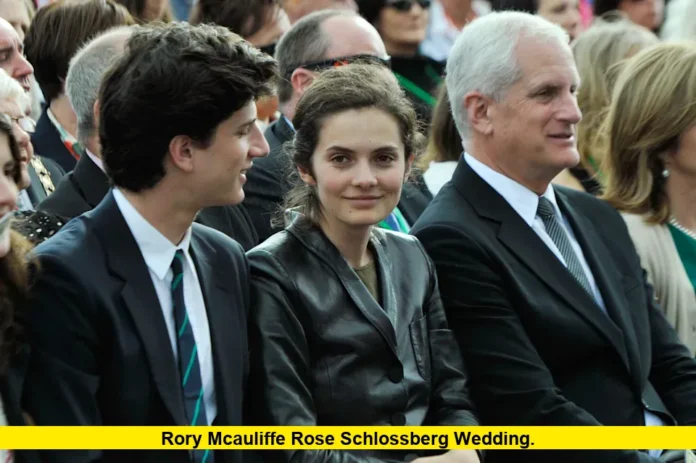

From the moment the name Rory McAuliffe Rose Schlossberg wedding appeared in headlines, it signalled something quietly significant: a meaningful union rooted in personal authenticity, celebrated away from relentless public scrutiny. The celebration took place in May 2022, in Ojai, California, when Rose Schumacher Schlossberg and Rory McAuliffe exchanged vows in a private ceremony that remains an example of blending family heritage, creative pursuit and modern love.
Background of Rose Schlossberg and Rory McAuliffe
Rose Schlossberg, born June 25, 1988, in New York City, is an artist, filmmaker, and writer shaped by both a historic family legacy and a deeply personal creative drive. As the daughter of Caroline Kennedy and Edwin Schlossberg, and the first grandchild of President John F. Kennedy, she grew up in an environment that valued public service, intellectual rigor, and cultural expression. Raised primarily in Manhattan, Rose was encouraged to pursue creative independence rather than public visibility, a principle that continues to define her career.
She earned her bachelor’s degree from Harvard University, where she studied English and developed a strong foundation in storytelling and visual language. She later completed a Master of Professional Studies at NYU’s Tisch School of the Arts, focusing on interactive media and emerging forms of digital expression. Her work spans short films, video installations, documentaries, and web-based projects. Rather than traditional Hollywood paths, Rose has gravitated toward experimental storytelling and socially conscious themes, often working behind the scenes as a writer, producer, and creative director. She is known for blending humor, restraint, and emotional depth while maintaining a low public profile.
Rory McAuliffe followed a different but equally creative path. Early in her career, she worked in film and production, gaining experience in storytelling, logistics, and collaborative work environments. Over time, she shifted her focus toward hospitality, drawn to the idea of creating physical spaces that foster connection and shared experience. This transition led her to Ojai, California, where she co-founded Rory’s Place with her sister.
Rory’s Place has become known for its farm-to-table philosophy, live-fire cooking, and emphasis on seasonal, locally sourced ingredients. The restaurant reflects Rory’s belief in hospitality as a form of creative expression—one that values community, sustainability, and warmth over trend-driven dining. Beyond food, the space functions as a social hub, hosting gatherings that emphasize collaboration and local culture.
When Rose Schlossberg and Rory McAuliffe came together, their partnership revealed a shared commitment to creativity, intention, and place. Though their professional backgrounds differ—one rooted in visual media, the other in hospitality—their values align around storytelling, craftsmanship, and meaningful connection. Now based in Ojai, they maintain a deliberately private life while remaining engaged in their respective creative and community-focused pursuits.
Read Also-Kennedy Daughter Death: The Life, Legacy, and Loss of Maeve Kennedy Townsend McKean
The Ceremony: Setting, Attendees, and Atmosphere
The wedding ceremony in May 2022 was held in or near Ojai, California, the region the couple had already chosen as home. Selecting Ojai marked a clear and intentional shift away from the traditional locations long associated with the Kennedy family, such as Washington, D.C., New England estates, or formal society venues. Instead, the setting reflected a personal sense of place—rooted in nature, creativity, and community rather than public legacy.
Ojai’s landscape played a central role in shaping the atmosphere of the ceremony. Surrounded by rolling hills, open skies, and a quiet rural elegance, the location offered a sense of calm and intimacy that aligned with the couple’s values. The natural environment allowed the event to feel grounded and organic, with an emphasis on presence and connection rather than spectacle. The setting conveyed refinement without rigidity, blending understated elegance with the ease of California countryside living.
Approximately 300 guests attended the celebration, making it sizable yet carefully curated. The guest list reflected the couple’s personal and professional worlds rather than political or dynastic associations. Attendees included close friends, family members, and individuals from the creative, entertainment, and hospitality communities, creating a diverse gathering unified by shared relationships rather than public recognition. The mix of guests reinforced the sense that the wedding was a personal milestone rather than a public event.
Attire reflected the same balance of individuality and elegance. Both brides wore white dresses, but each choice expressed personal style rather than tradition. One dress incorporated subtle red accents, while the other featured sheer lace detailing, underscoring a modern, non-traditional approach to bridal fashion. The overall dress code among guests was described as elegant yet relaxed, allowing personal expression while maintaining a cohesive aesthetic.
The ceremony and reception emphasized warmth, intention, and authenticity. Rather than formal pageantry or rigid structure, the celebration focused on shared moments, meaningful exchanges, and a welcoming atmosphere. Every element—from the setting to the guest experience—reflected a desire to prioritize connection over ceremony, intimacy over grandeur, and personal significance over inherited expectation.
Together, the choices surrounding the wedding underscored the couple’s broader approach to life: deliberate, creative, and rooted in values rather than visibility.
Style, Location, and Design Features
Choosing Ojai, California, as the setting for the celebration offered more than visual appeal. The location reflected the couple’s daily life and shared values, grounding the event in a place of genuine personal significance rather than symbolic tradition. Ojai’s natural seclusion also provided a degree of privacy, allowing the celebration to unfold away from major media centers and the expectations often attached to high-profile family events. The region’s understated charm supported a wedding environment that felt intentional, calm, and deeply personal.
The reception design drew clear inspiration from the ethos behind Rory’s Place, the restaurant co-founded by Rory McAuliffe. Food and gathering were central elements rather than secondary details. Live-fire cooking created a dynamic, sensory experience, while a raw-oyster bar encouraged informal interaction and movement among guests. Dining emphasized shared tables and a communal rhythm, reinforcing the idea of celebration as a collective experience rather than a staged performance.
Décor choices echoed the surrounding landscape and culinary philosophy. Natural materials, muted tones, and locally sourced elements shaped the visual identity of the event. Instead of ornate florals or heavy structural décor, the design leaned into organic textures, seasonal produce, and open-air arrangements. The absence of traditional ballroom formality allowed the space to feel breathable and fluid, aligning elegance with simplicity rather than excess.
Attire played a key role in expressing individuality and modern sensibility. Both brides chose white, maintaining a visual continuity while interpreting tradition through personal style. One gown featured bold red accents, introducing contrast and personality, while the other highlighted sheer lace detailing for a softer, textural effect. Footwear reportedly incorporated platform elements, reinforcing the rejection of conventional bridal expectations in favor of comfort, confidence, and self-expression.
Taken together, the style, location, and design elements created a cohesive atmosphere that felt distinctly Californian—creative, relaxed, and refined without formality. The celebration balanced approachability with intention, resulting in an event that reflected not only aesthetic taste but also the couple’s broader philosophy of living and gathering with purpose.
Why This Union Matters
For audiences across the United States, this wedding resonates beyond its immediate celebration, reflecting broader cultural and generational shifts in how identity, tradition, and partnership are expressed today.
First, it underscores personal agency. Even within one of America’s most historically prominent families, the choices surrounding this union emphasize intention over expectation. Rather than centering legacy-driven formalities or public spectacle, the couple prioritized meaning, place, and authenticity. This approach mirrors a wider trend in which individuals define milestones on their own terms, regardless of inherited narratives or public attention.
Second, the marriage illustrates a thoughtful balance between public heritage and private life. Rose Schlossberg carries a widely recognized family legacy, yet the partnership is grounded in everyday creative and professional pursuits. Her spouse’s work in hospitality and community-centered entrepreneurship anchors the relationship in tangible, lived experience. Together, they demonstrate how personal identity can coexist with historical lineage without being overshadowed by it.
Finally, the union reflects a broader cultural shift in contemporary America. Same-sex marriage is presented not as a statement but as a normalized expression of commitment. Creative entrepreneurship, regional living outside traditional power centers, and values-driven lifestyle choices all intersect in this event. The wedding becomes a quiet illustration of how traditions evolve—retaining significance while adapting to changing social realities.
In this way, the celebration stands as more than a personal milestone. It offers a snapshot of modern American life, where legacy, creativity, and authenticity can align without contradiction.
Life After the Ceremony
Since their wedding in May 2022, the couple has continued to build a shared life in Ojai, California, maintaining a deliberate balance between professional engagement and personal privacy. Their decision to remain rooted in Ojai reflects a long-term commitment to the community and lifestyle they had already established prior to the ceremony, rather than a temporary retreat following a public milestone.
Rory McAuliffe remains actively involved in the operation and growth of Rory’s Place, where the restaurant has continued to serve as both a culinary destination and a local gathering space. The business has earned steady recognition within regional hospitality circles for its emphasis on seasonal ingredients, live-fire cooking, and community-oriented dining. Rory’s role extends beyond day-to-day management, shaping the restaurant’s evolving identity and reinforcing its connection to local producers and patrons.
Rose Schlossberg has remained supportive of the venture while continuing her own work in the creative and media space. Though she keeps a low public profile, her presence reflects an ongoing interest in storytelling, visual media, and creative collaboration. Rather than pursuing visibility, Rose appears to prioritize thoughtful, behind-the-scenes work and selective engagement, consistent with her long-standing approach to her career.
In the years following the wedding, there have been no widely publicized anniversary events or high-profile family appearances tied to the marriage. This absence of public milestones underscores the couple’s preference for a grounded, private rhythm of life. Their focus appears centered on everyday continuity—maintaining local roots, supporting shared creative and professional endeavors, and nurturing a partnership built on intention rather than visibility.
Together, their post-ceremony life reflects a quiet stability, emphasizing longevity, collaboration, and personal fulfillment over public narrative.
Read Also-Rose Schlossberg Wife: A Detailed Profile of Her Life with Rory McAuliffe
Timeline at a Glance
| Date | Event |
|---|---|
| June 25, 1988 | Birth of Rose Schlossberg in New York City |
| Early 2022 | Rory’s Place opens in Ojai, co-founded by Rory McAuliffe |
| May 2022 | Wedding held in Ojai, California |
| 2022 onward | Couple reside and build life together in Ojai |
Wedding Highlights and Key Moments
- The venue’s ambiance: The reception built upon Rory’s Place’s attributes (live-fire cooking, local ingredients, open concept) which infused the wedding with a sense of place and passion for food and hospitality.
- Guest experience: Rather than a glamorous red-carpet type affair, the event emphasised shared dining, intimate conversation, creative energy and a relaxed Californian setting—making attendees feel part of the moment.
- Family dynamics: While the broader family legacy looms large, the couple structured the event on their own terms—selecting the locale, style and tone that reflected their values, rather than solely conforming to inherited expectation.
- Style and fashion: Attire, decor and overall design leaned toward non-traditional and personal. Whites with personal touches (red can be seen as bold), dropdown platform shoes, a raw-but-refined aesthetic—all signalled a nod to innovation within tradition.
- Community involvement: The local Ojai community and the restaurant’s team reportedly played crucial roles—supporting the celebration, providing catering, hospitality and anchoring the event in its immediate context rather than an external luxury venue.
Professional Overlaps and Shared Passions
The marriage reflects more than personal commitment; it highlights meaningful professional alignment and shared values that shape the couple’s everyday life. While Rose Schlossberg and Rory McAuliffe work in distinct fields, their careers intersect through creativity, intention, and a people-centered approach to their work.
Rose Schlossberg brings a background rooted in filmmaking, video installations, and media storytelling, cultivating a perspective shaped by narrative, visual design, and cultural context. Her creative work favors concept-driven projects over commercial visibility, emphasizing thoughtful execution and emotional resonance. This mindset complements Rory McAuliffe’s approach to hospitality, where experience, atmosphere, and human connection are central rather than purely transactional outcomes.
Rory’s work in hospitality reflects an entrepreneurial and culinary sensibility that treats food as both craft and community builder. Through Rory’s Place, she has created a space where local sourcing, open-fire cooking, and shared tables encourage interaction and presence. The restaurant operates as a creative environment in its own right—one shaped by rhythm, design, and collaborative energy.
The wedding itself became a natural convergence of these worlds. Hospitality and artistic expression blended seamlessly, allowing food, setting, and gathering to function as a shared narrative rather than separate elements. In this way, private legacy intersected with small-town California entrepreneurship, producing an event that felt lived-in and intentional rather than ceremonial.
Their decision to remain in Ojai, California, reinforces these priorities. Known for its natural beauty, creative culture, and slower pace of life, Ojai offers an alternative to major metropolitan and media-driven environments. The location supports a grounded lifestyle where professional pursuits and personal fulfillment coexist without the constant pressures of visibility or celebrity.
Together, their shared passions reveal a partnership defined not by parallel careers, but by aligned values—creativity, community, and a deliberate approach to both work and life.
Impact in the U.S. Cultural Context
Within the broader American lifestyle and celebrity landscape, this wedding reflects several defining cultural currents shaping how public figures and prominent families approach personal milestones today.
Most notably, it highlights how well-known families increasingly embrace modern definitions of partnership and ceremony. Rather than adhering to inherited expectations or symbolic traditions, the celebration reflects evolving norms around marriage, identity, and self-expression. Same-sex unions, personalized rituals, and non-traditional settings are presented as natural extensions of contemporary life rather than departures requiring explanation.
The event also reinforces a growing preference for meaning over spectacle. In an era often dominated by high-visibility celebrations and curated publicity, this wedding stood apart by centering intimacy, community, and authenticity. The emphasis on shared experience—food, place, and connection—illustrates a shift away from headline-driven events toward gatherings designed primarily for those directly involved.
Equally significant is the blending of creative entrepreneurship, regional living, and personal legacy. By choosing a small California town tied to everyday life and independent business, the couple aligned their celebration with a broader movement away from metropolitan, status-oriented venues. This approach reflects changing attitudes about success and fulfillment, where creativity, locality, and sustainability often take precedence over proximity to traditional power centers.
Finally, the wedding reaffirms that privacy and autonomy remain viable choices, even for those connected to widely recognized family names. The ability to mark a major life event quietly and on one’s own terms underscores a cultural shift toward personal boundaries and self-determination. In this context, the celebration becomes not just a wedding, but an example of how legacy and individuality can coexist in modern American life.
What to Look For Going Forward
Although the wedding itself has passed, the couple’s evolving life together continues to draw quiet interest among observers of American lifestyle, culture, hospitality, and creative entrepreneurship. Rather than dramatic public developments, future points of attention are likely to emerge through steady, values-driven choices.
One area to watch is the continued growth and influence of Rory’s Place. As the restaurant further establishes itself within regional and national culinary conversations, its role as both a business and community gathering space may expand. How the venue continues to reflect the couple’s shared priorities—local engagement, sustainability, and creative hospitality—could offer insight into how personal life and professional vision remain aligned.
Another point of interest is Rose Schlossberg’s future creative work. While she has long favored a low-profile approach, any new film, media, or storytelling projects may naturally reflect the perspectives shaped by her current life chapter. Whether or not her artistic output intersects publicly with the couple’s shared life, her work remains a lens into how creativity evolves alongside personal stability.
Observers may also note any community-oriented moments that surface over time, such as intimate gatherings, local collaborations, or small-scale celebrations. If such events occur, they are likely to emphasize participation and connection rather than visibility, consistent with the tone set by the wedding itself.
Finally, the couple’s ongoing approach to balancing family legacy with personal independence remains an underlying theme. Rose’s historic family background and Rory’s entrepreneurial path represent two distinct narratives that continue to coexist. How they navigate this balance—privately, deliberately, and outside conventional expectations—will likely define their public presence far more than any single event.
Taken together, what lies ahead appears less about milestones and more about continuity: building a life shaped by intention, creativity, and community rather than public performance.
Closing Thoughts
The Rory McAuliffe–Rose Schlossberg wedding represented more than a moment of celebration; it marked the beginning of a shared life shaped by creativity, authenticity, place, and partnership. Every aspect of the event—from its setting and design to its tone and intention—reflected a conscious choice to center meaning over display and connection over convention.
Bringing together two individuals from distinct yet complementary backgrounds, the celebration illustrated how personal values can guide both life and ceremony. One path rooted in artistic expression and cultural storytelling, the other in hospitality and community building, converged naturally into a union defined by balance and mutual respect.
Ultimately, the wedding offered a broader reflection on modern partnership. It showed how tradition can evolve without losing significance, and how identity, legacy, and independence can coexist. In doing so, it quietly reinforced the idea that the most enduring unions are those crafted with intention—grounded not in expectation, but in shared priorities and a deliberate vision for life together.
Feel free to share your thoughts on the celebration, the couple’s lifestyle choices or what this union says about how notable families are evolving today.