
Horror fans have plenty to anticipate this year, but few upcoming releases have generated as much excitement as robert eggers werewulf. Following the remarkable success of his gothic vampire drama Nosferatu, filmmaker Robert Eggers is preparing another visually striking period horror story that revisits one of mythology’s oldest and most terrifying creatures. Rather than presenting another modern monster tale, the director is returning to medieval England, where fear, folklore, and superstition shaped everyday life.
The project has already attracted widespread attention thanks to its acclaimed cast, authentic historical setting, and Eggers’ reputation for creating atmospheric films that blur the boundaries between history and horror. While many story details remain closely guarded, the information released so far paints the picture of a movie unlike any recent werewolf adaptation.
A New Chapter in Robert Eggers’ Career
Robert Eggers has become one of contemporary cinema’s most recognizable filmmakers because of his distinctive storytelling style. Instead of relying on conventional horror formulas, he creates deeply immersive worlds inspired by real historical periods. Every production features painstaking research into architecture, costumes, language, religious beliefs, and folklore, allowing audiences to experience another era rather than simply watching a fictional story.
That commitment to authenticity helped The Witch become one of the defining horror films of the last decade. The Lighthouse demonstrated his willingness to experiment with visual storytelling, while The Northman brought Viking history to life on an epic scale. More recently, Nosferatu introduced a new generation of viewers to one of horror’s greatest legends through haunting cinematography and unforgettable performances.
Now, Eggers is turning his attention to another timeless monster.
Returning to Medieval Folklore
Unlike many werewolf films that place the creature in present-day cities or suburban neighborhoods, this production travels back centuries to medieval England. During that period, supernatural beliefs were woven into daily life, and unexplained events were often blamed on curses, demons, or mythical beasts.
The story unfolds during the 13th century, an era marked by political unrest, harsh living conditions, and deeply rooted religious traditions. Villages were isolated, forests stretched for miles, and rumors could spread faster than facts. This setting provides an ideal backdrop for a tale centered on fear and uncertainty.
Instead of emphasizing action or spectacle, the film appears to focus on psychological tension. The threat may be physical, but the emotional impact comes from how ordinary people respond when confronted with something they cannot explain.
A Star-Studded Cast
The film brings together several talented performers who have already proven themselves across action, drama, fantasy, and horror.
Aaron Taylor-Johnson leads the cast, continuing a career that has included everything from blockbuster action films to award-winning dramatic performances. His ability to portray emotionally conflicted characters makes him an intriguing choice for a story that explores both human vulnerability and monstrous transformation.
Joining him is Lily-Rose Depp, whose performance in Nosferatu earned widespread praise. Her return suggests another emotionally layered character navigating terrifying circumstances in a harsh medieval world.
Longtime Eggers collaborator Willem Dafoe is also back for another project. Dafoe’s intense screen presence has become a defining feature of several Eggers productions, and audiences will undoubtedly be eager to see what kind of mysterious figure he portrays this time.
Ralph Ineson, known for his unmistakable voice and commanding performances, reunites with the director as well. Additional cast members include Jan Bijvoet, Jack Morris, Bodhi Rae Breathnach, and Ritchi Edwards, giving the production an ensemble capable of delivering both emotional depth and dramatic intensity.
Why This Werewolf Story Stands Apart
Werewolves have appeared in cinema for decades, yet many recent adaptations have leaned toward fast-paced action or heavy computer-generated effects. Eggers appears to be taking the opposite approach.
Rather than reinventing the creature through science fiction or modern fantasy, he is drawing inspiration from the oldest surviving legends surrounding shape-shifting beings. Medieval beliefs about wolves were often connected to religion, curses, witchcraft, and divine punishment. Those traditions create opportunities for horror that extends far beyond the monster itself.
Fear in medieval society was deeply connected to faith and survival. Entire communities could become consumed by paranoia, suspecting neighbors of dark secrets or supernatural crimes. That psychological element may become just as important as the creature stalking the countryside.
Authentic Language and Historical Detail
One hallmark of every Robert Eggers production is his commitment to historical accuracy. Reports surrounding the film indicate that the screenplay incorporates language inspired by authentic medieval English.
Rather than simplifying dialogue entirely for modern audiences, the production embraces historical speech patterns to strengthen immersion. Although accessibility remains important, preserving elements of medieval language helps create an atmosphere rarely seen in mainstream horror.
This attention to detail extends beyond dialogue.
Costume designers have recreated clothing based on historical records. Set builders have constructed villages that resemble genuine medieval settlements. Production designers have focused on architecture, farming tools, churches, homes, and weapons appropriate for the period.
Even the landscapes play an important role. Dense forests, muddy roads, stone churches, and isolated villages reinforce a sense of isolation where help may be impossible to find.
A Visual Style Built Around Atmosphere
One reason audiences continue to praise Eggers’ work is his remarkable visual storytelling.
His films rarely depend on constant action. Instead, slow camera movements, natural lighting, carefully framed compositions, and immersive sound design gradually increase tension.
Early promotional material suggests this project continues that tradition.
Fog-covered forests, flickering torchlight, weathered stone buildings, and gloomy skies establish a world where danger feels ever-present. Every location appears lived-in rather than constructed solely for cinematic spectacle.
Instead of revealing every terrifying detail immediately, the visuals encourage viewers to imagine what may be hiding just beyond the edge of the frame.
Practical Effects Over Excessive CGI
Modern horror audiences increasingly appreciate practical filmmaking techniques, and Robert Eggers has consistently favored tangible effects whenever possible.
Although digital technology remains useful for enhancing certain scenes, practical makeup, prosthetics, costumes, and physical sets often create more convincing horror because actors interact directly with their surroundings.
Many fans expect the werewolf itself to benefit from this philosophy.
Rather than becoming a purely computer-generated creature, the transformation and monster design may rely heavily on practical craftsmanship, giving the film a timeless appearance that fits its historical setting.
What Early Promotional Material Reveals
The marketing campaign has deliberately avoided revealing major plot developments.
Instead, early footage emphasizes atmosphere over exposition.
Audiences have seen glimpses of medieval villages surrounded by darkness, frightened townspeople gathering inside churches, hunters carrying primitive weapons, and mysterious figures moving through dense woodland.
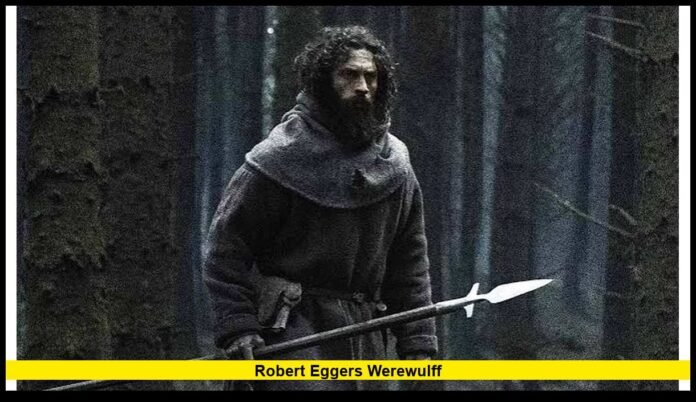
One official image featuring Aaron Taylor-Johnson presents a rugged warrior traversing a misty forest with a spear in hand, suggesting survival rather than conquest may define the character’s journey.
Importantly, promotional material has largely concealed the full appearance of the central creature. This deliberate restraint builds anticipation while allowing mystery to remain an essential part of the viewing experience.
Building on the Success of Nosferatu
The extraordinary response to Nosferatu significantly raised expectations for Eggers’ next project.
Critics praised the film’s craftsmanship, performances, production design, and ability to reinterpret a classic horror icon without sacrificing originality. Audiences likewise embraced its slow-burning atmosphere and visual ambition.
That success demonstrated there remains strong demand for intelligent horror rooted in mythology instead of formulaic jump scares.
The upcoming film seeks to continue that momentum while exploring an entirely different legendary creature.
A Holiday Release With Confidence
The film is scheduled to arrive in theaters on December 25, 2026, an increasingly attractive release window for prestige genre films.
Rather than avoiding holiday competition, studios have recognized that audiences often embrace major cinematic events during the Christmas season. Horror fans, in particular, have shown a willingness to support unconventional releases outside the traditional Halloween calendar.
Launching during the holiday period also positions the movie as one of the year’s final blockbuster releases.
Why Horror Fans Are Watching Closely
Interest continues to grow because the production combines several elements rarely found together in modern horror.
The historical setting provides authenticity.
The cast brings proven acting talent.
The director has established a reputation for meticulous filmmaking.
The marketing campaign has resisted revealing too much too soon.
Together, these factors have created significant anticipation months before release.
For longtime admirers of Robert Eggers, the project represents another opportunity to experience folklore brought to life through historical realism rather than fantasy spectacle. For newcomers, it may serve as an accessible introduction to a filmmaker whose work consistently challenges expectations.
Later in the production cycle, robert eggers werewulf is expected to receive additional trailers, interviews, and promotional material that will offer a clearer look at its characters and central conflict while preserving many of the mysteries surrounding the story.
Final Thoughts
Few filmmakers working today possess such a distinctive creative identity. Robert Eggers has repeatedly demonstrated that horror can be intellectually engaging, visually breathtaking, and emotionally unsettling without relying on familiar genre conventions.
His latest feature appears ready to continue that tradition by combining medieval history, authentic folklore, exceptional performances, and haunting visual storytelling into one unforgettable cinematic experience.
As anticipation builds toward its theatrical debut, the film has already established itself as one of the year’s most eagerly awaited horror releases. Whether viewers are fascinated by werewolf mythology, historical drama, or atmospheric filmmaking, this upcoming production promises an experience unlike anything else arriving in theaters this year.