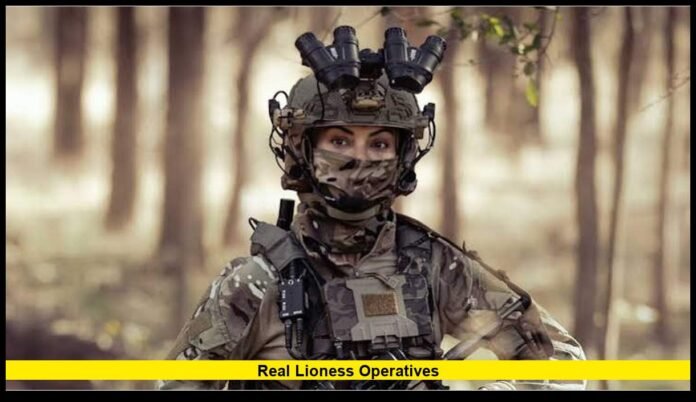

The story of real lioness operatives is receiving renewed attention as Taylor Sheridan’s Lioness continues its third season on Paramount+. The renewed interest follows criticism from former Team Lioness members who say the popular drama presents a very different picture from the women who actually served in Iraq.
The distinction has become especially important in August 2026. The television series has turned the Lioness name into a global espionage franchise, while the original program involved U.S. military women who operated alongside combat units during the Iraq War.
Former service members Ranie Ruthig and Michelle Dallocchio have spoken publicly about the differences. Their comments have brought attention back to the women behind the historical program and the missions they performed.
The real story is far less like a Hollywood spy thriller. It is a story about military necessity, combat, cultural restrictions, intelligence gathering and women serving in dangerous areas of Iraq.
Why the Real Lioness Story Is Trending Again
The latest attention comes as Lioness Season 3 continues its weekly release schedule. The third season premiered August 2, 2026, and has kept the franchise firmly in the spotlight.
The television drama follows CIA officer Joe McNamara, played by Zoe Saldaña, as she manages highly dangerous intelligence operations. Nicole Kidman plays Kaitlyn Meade, while Michael Kelly and Morgan Freeman also appear in major roles.
The fictional storyline involves covert missions, intelligence networks and female operatives working close to terrorist or hostile organizations.
That is not what the original Lioness program was.
The real women were U.S. service members. They were attached to combat formations and performed duties that male soldiers could not always perform because of cultural restrictions surrounding contact with Iraqi women.
Their assignments could include searches, patrols, intelligence collection and interaction with local communities. Some were also caught in firefights.
That history is now being discussed again because veterans believe the television version can leave audiences with the wrong impression about what the original women actually did.
What the Original Lioness Program Was
Team Lioness developed during the Iraq War as an operational response to a specific battlefield problem.
Male soldiers frequently could not physically search Iraqi women. Cultural expectations and local customs made searches by male troops highly sensitive or unacceptable.
That created a security problem for American forces.
Women could potentially transport weapons, money, drugs or other materials. If male soldiers could not search them, military units needed female personnel who could perform that task.
Female soldiers were therefore attached to combat formations.
The program was not originally built as a glamorous elite unit. There was no television-style recruitment process in which an intelligence officer selected women to infiltrate terrorist organizations.
Instead, the program grew from battlefield requirements.
Women who had entered the Army in support positions could suddenly find themselves accompanying combat units. Their military specialties could include engineering, logistics, mechanics and other support work.
The reality of their deployments was shaped by the war around them.
The Women Were Operating in Real Combat Zones
One of the most important facts about the original program is that the women were not simply working behind the front lines.
The 2008 documentary Lioness focused on women who served in Iraq during some of the most dangerous periods of the conflict.
The documentary follows five women connected to the 1st Engineer Battalion: Shannon Morgan, Rebecca Nava, Kate Pendry Guttormsen, Anastasia Breslow and Ranie Ruthig.
They went to Iraq as support soldiers. Their original duties involved providing supplies and logistical assistance.
Their assignments changed when commanders needed women to accompany combat units.
That meant patrols, searches and exposure to enemy activity.
During fighting in Ramadi, women such as Morgan and Ruthig became involved in combat alongside male soldiers. Their experiences later became central to the documentary’s portrayal of women’s unexpected role on the battlefield.
The significance of those events was enormous.
At the time, Department of Defense policy restricted women from direct ground combat roles. Yet women were already finding themselves in combat situations because military operations did not always fit neatly within official job descriptions.
The Difference Between Military Lionesses and CIA Operatives
The biggest misconception surrounding the term comes from the television series.
Paramount+’s Lioness portrays a fictional CIA program. Female operatives are recruited for clandestine missions and placed in situations involving espionage and counterterrorism.
The original Lioness program was different.
It was connected to the U.S. military’s operations in Iraq. The women were service members supporting combat formations.
They were not a secret CIA assassination team.
They did not exist primarily to infiltrate terrorist organizations.
Their missions grew out of the practical realities of counterinsurgency warfare.
The difference can be summarized simply:
| Historical Team Lioness | Television Lioness |
|---|---|
| U.S. military personnel | Fictional CIA operatives |
| Developed during the Iraq War | Modern espionage storyline |
| Attached to combat formations | Organized around covert missions |
| Searched Iraqi women | Infiltrates hostile organizations |
| Gathered information | Conducts intelligence operations |
| Engaged with civilians | Focuses heavily on espionage |
| Some members came from support specialties | Characters receive specialized operational training |
| Real wartime experiences | Fictional characters and missions |
The shared name is therefore the strongest connection.
The missions themselves are substantially different.
Why Female Soldiers Were Needed
The reason women became so important to these operations was tied to cultural restrictions.
American forces could search Iraqi men without facing the same cultural objections. Searching women was different.
A male soldier entering an Iraqi home and physically searching women could create serious cultural and operational problems.
Female service members provided an answer.
They could interact with Iraqi women and children in ways that male troops often could not.
They could conduct searches while reducing cultural tensions.
They could also speak directly with women in local communities.
That access had intelligence value.
Women living in neighborhoods sometimes knew information about local activities that might never reach male soldiers. Female service members could build relationships that gave military units a different view of what was happening on the ground.
The role therefore extended beyond physical searches.
It became part of the broader counterinsurgency effort.
Read More – When Is Lioness Season 3? Release Date, Episode Schedule, Cast, and What to Expect
The Real Work Was Broader Than Searches
The historical Lioness mission included several responsibilities.
Women could accompany patrols, participate in searches and interact with civilians. Some also helped military units gather information.
Their presence could calm situations involving women and children.
Community engagement became another part of the work.
Women could visit local communities, communicate with residents and help establish relationships that were difficult for male troops to create.
This made them useful to commanders operating in complicated urban environments.
Their ability to work with women was especially important in areas where cultural expectations limited male access.
The women were therefore performing a role that combined military security with community interaction.
That combination is one of the biggest differences between their real experiences and the fictional spy missions shown on television.
The Ramadi Experience Changed the Story
The Battle of Ramadi became particularly important to the historical record surrounding the women featured in the documentary.
On April 6, 2004, a U.S. Marine combat unit moving through Ramadi encountered an ambush. The fighting developed into a larger series of engagements.
Among the soldiers involved were women serving with the Army.
Ruthig and Morgan survived the fighting.
Their participation challenged the perception that women serving in support positions were physically separated from combat.
They were not.
The battlefield had placed them in the same dangerous environment as male combat troops.
That experience became one of the defining elements of the documentary Lioness.
The film showed how women who had entered Iraq as support personnel could return home having experienced direct combat.
Ranie Ruthig’s Connection to the Story
Ranie Ruthig remains one of the most recognizable veterans associated with the original Lioness story.
Her experience was documented through interviews and archival material in the 2008 documentary.
She and Shannon Morgan were involved in the Ramadi fighting described by the filmmakers.
Ruthig has since spoken about the differences between her real experience and the fictional television adaptation.
Her criticism centers on the transformation of the historical Lioness name into a spy narrative.
For veterans such as Ruthig, the original story is important because it represents a significant moment in women’s military history.
The women were not seeking celebrity.
They were performing military duties during a war.
Their experiences became historically significant because they demonstrated the gap between official military policy and what women were actually doing in combat environments.
Michelle Dallocchio and the Veteran Perspective
Michelle Dallocchio is another former member who has recently spoken about the historical program.
Her comments have helped renew public discussion about how the television series represents the women behind the name.
Dallocchio served with Team Lioness during the Iraq War.
Her perspective is important because she experienced the military program directly rather than through a fictional script.
The criticism from veterans does not mean that the Paramount+ drama must reproduce every historical detail.
Television is allowed to create fictional characters and missions.
The concern is that viewers unfamiliar with the history may assume that the fictional CIA operation accurately represents the real program.
It does not.
The distinction matters because the real women performed duties that were important precisely because they were operating within the military structure of the Iraq War.
The Psychological Cost of Service
Another part of the real Lioness story that veterans have emphasized is the impact of combat after returning home.
The documentary did not focus solely on battlefield action.
It also followed the women as they returned to their families and attempted to resume ordinary life.
The transition could be difficult.
They had experienced war, firefights and the pressure of operating in dangerous environments. At home, those experiences could be difficult for people who had never served to understand.
The film presents the women as soldiers, wives, mothers and daughters.
That personal dimension is important.
The real Lioness story was not simply about combat achievements. It was also about the consequences of being sent into war and then expected to return to normal life.
That human element is largely different from the fast-moving structure of the television series.
The Program Helped Change the Conversation About Women in Combat
The historical significance of Team Lioness extends beyond the individual missions.
The women became part of a broader transformation in the U.S. military.
During the Iraq War, women were increasingly operating in environments that made traditional distinctions between combat and support work difficult to maintain.
Women could officially be assigned to support specialties.
But support soldiers still traveled with combat units.
They could still come under enemy fire.
They could still be wounded.
They could still fight back.
Team Lioness became one visible example of that reality.
The experience contributed to larger discussions about women’s military roles.
Those discussions eventually became part of a much broader policy shift.
What Happened to the Lioness Concept
The original program did not continue forever in its initial form.
As the wars in Iraq and Afghanistan developed, the military created other female-focused engagement structures.
Female Engagement Teams became increasingly important.
These teams allowed female service members to interact with women in local communities, conduct searches and support information-gathering operations.
The underlying idea remained similar.
Female troops could provide access that male troops could not.
The programs also demonstrated how gender could affect counterinsurgency operations.
Eventually, the U.S. military changed its broader policy on women serving in combat roles.
In 2013, the Department of Defense announced the end of its policy excluding women from assignments in units whose primary mission involved direct ground combat.
That change marked an important institutional development.
The circumstances that had helped produce the original Lioness program were therefore part of a much larger transformation in military policy.
Why the 2008 Documentary Remains Important
For anyone trying to understand the real history, the documentary Lioness offers a direct connection to the women who lived through it.
The film was directed by Meg McLagan and Daria Sommers.
It uses interviews, personal journals and archival footage to tell the stories of women who served in Iraq.
Its focus is different from the television drama.
There are no fictional CIA headquarters.
There is no Hollywood-style recruitment of an undercover operative.
Instead, the documentary follows service members dealing with war and its consequences.
That makes the film especially valuable today.
The popularity of the Paramount+ series has introduced the Lioness name to a much larger entertainment audience. The documentary provides historical context for people who want to understand where that name came from.
What Season 3 Means for the Historical Conversation
Season 3 has brought the fictional version back into the spotlight.
The new season continues the story of Joe McNamara and her intelligence team. The plot remains firmly rooted in fictional espionage.
That success has also increased interest in the real military history.
For veterans, the renewed attention creates both an opportunity and a concern.
It provides a chance to tell more people about women who served in Iraq.
At the same time, the popularity of fiction can make it difficult for audiences to separate dramatization from history.
The current discussion is therefore less about whether Lioness should be treated as a documentary and more about making sure the real women are not forgotten.
The Real Story Deserves Its Own Recognition
The women who served under the Lioness concept entered Iraq as members of the U.S. military.
Many were not trained as traditional combat soldiers.
Some were engineers, mechanics, clerks or other support personnel.
Yet the realities of the Iraq War placed them beside combat troops.
They conducted searches.
They interacted with civilians.
They gathered information.
They traveled through dangerous areas.
Some experienced direct fighting.
Their story demonstrates how modern warfare can blur the boundaries between combat and support roles.
It also shows why women became an important part of U.S. counterinsurgency operations.
Real Lioness Operatives and the Story Audiences Should Remember
The renewed attention in 2026 gives audiences an opportunity to look beyond the fictional world created for television.
The women who inspired the Lioness name were real service members who faced the realities of the Iraq War.
Their work developed from an operational need. Their presence allowed U.S. forces to interact with and search Iraqi women while respecting cultural restrictions.
The women also became involved in combat operations that challenged existing assumptions about women’s military roles.
Their history eventually contributed to broader conversations about women in combat and the changing structure of the U.S. armed forces.
The television series has created an entirely different fictional interpretation. Its CIA operatives, covert missions and international espionage plots belong to the world of entertainment.
The historical women belong to a different story.
That story is about military service, battlefield danger and the experiences of women who found themselves fighting in a war despite having entered the Army in support roles.
As Season 3 continues, the conversation surrounding the original Lioness program is likely to remain relevant. The popularity of the drama has made the name familiar to millions of viewers, but the real history gives that name its deeper meaning.
The most important point is simple: the original women did not need fictional identities to make their service extraordinary. Their actual experiences already changed how Americans understood women’s roles in modern warfare.
What are your thoughts on the difference between the real military history and the television version? Share your opinion in the comments and stay updated as new developments emerge.