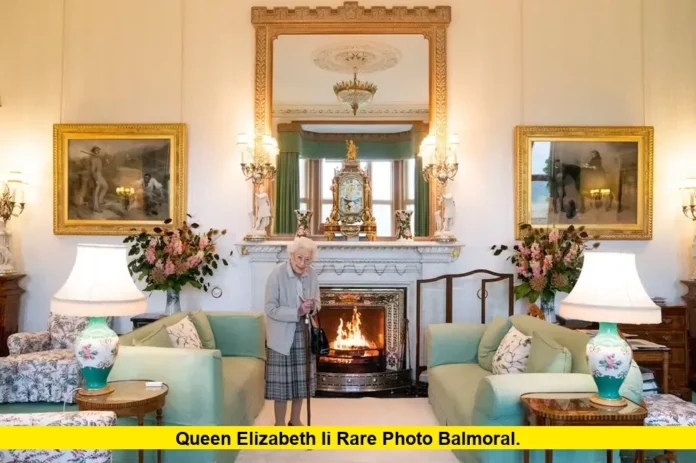

Queen Elizabeth II rare photo Balmoral searches are drawing renewed attention as the late monarch’s centenary year brings previously overlooked images and archival photographs back into public view. In 2026, Balmoral has played a particularly important role in commemorations of Elizabeth II, including a photographic exhibition at the Scottish estate celebrating the 100th anniversary of her birth.
The renewed interest is not tied to a single newly discovered photograph. Instead, it reflects a broader release, display and rediscovery of images showing Elizabeth II at Balmoral across different periods of her life. Some photographs capture her with members of her family, while others show the monarch in the Highland surroundings that remained closely associated with her private life.
For U.S. readers searching for the latest context, the key development is the way Balmoral photographs have become part of the late Queen’s 2026 centenary story. The estate hosted a photographic exhibition featuring iconic moments from Elizabeth II’s life and reign, giving visitors another opportunity to see her connection with the Scottish residence through images.
Why Balmoral Photos of Queen Elizabeth II Are Receiving Attention
Balmoral occupied an unusual place in Elizabeth II’s life. Unlike the formal settings associated with Buckingham Palace or major state occasions, the Scottish estate was strongly linked with family time, outdoor activities and a more private side of royal life.
That distinction helps explain the continuing appeal of old Balmoral photographs. Images from the estate often show Elizabeth away from the highly controlled surroundings of official ceremonies.
The National Portrait Gallery, for example, holds a 1967 photograph by David Montgomery titled Queen Elizabeth II (‘Queen Elizabeth with Corgis (Balmoral)’). The image was made at Balmoral and documents the Queen with her dogs in a setting far removed from the traditional formal royal portrait.
The photograph is particularly notable because Montgomery later recalled the assignment as an effort to show the monarch as an ordinary person in her home environment. The resulting image became an important visual record of Elizabeth at Balmoral during the 1960s.
Rare Balmoral Images Show a More Personal Side of the Queen
Many of the photographs associated with Balmoral are valuable because they document moments outside Elizabeth II’s official schedule.
One archive record held by the Science Museum Group identifies a photograph of Elizabeth II and Prince Philip at Balmoral from August 1959. The image belongs to the Daily Herald photographic archive and is cataloged as part of a collection covering the couple at Balmoral during that period.
The archival material provides an important reminder that photographs described online as “rare” are not necessarily newly discovered. In many cases, the images have existed in institutional collections for decades but receive fresh attention when royal anniversaries or exhibitions bring them back into the public conversation.
That distinction matters in 2026. Elizabeth II’s centenary has generated renewed examination of photographs held by museums, galleries, royal archives and photographic agencies.
A Major Balmoral Portrait From 2010
One of the most significant official Balmoral portraits is the photograph taken by Julian Calder in 2010.
The Royal Collection identifies the image as a portrait of Queen Elizabeth II standing near the Gelder Burn on the Balmoral Estate. She wears the robes and insignia of the Order of the Thistle, while the Highland landscape forms the background.
Calder drew inspiration from 19th-century portraits of Highland clan chiefs. The result deliberately combines the traditions of Scottish portraiture with the modern image of Elizabeth II as monarch.
The setting also made the photograph more challenging than a conventional studio portrait. The Royal Collection notes that the Queen faced rain and Highland midges while the photograph was being made.
The image later became part of the Royal Collection’s Royal Portraits: A Century of Photography exhibition. A 2025 Royal Collection Trust announcement described the Calder portrait as one of the exhibition’s standout works and highlighted its connection to Balmoral.
Although that exhibition has ended, the portrait remains part of the documented photographic history surrounding Elizabeth II.
Balmoral’s Role in Queen Elizabeth II’s Final Years
Balmoral became even more closely associated with Elizabeth II after her death there on September 8, 2022.
The Royal Collection Trust records that the Queen died at Balmoral Castle at age 96. Her death occurred at the Scottish estate after she had spent many years treating Balmoral as an important private retreat.
That history gives Balmoral photographs added significance today.
Images from earlier decades can now be viewed alongside photographs from the final years of Elizabeth’s life. Together, they document a relationship with the estate that stretched across much of her 70-year reign.
The connection was also emphasized during the 2026 centenary celebrations. King Charles III recorded a video tribute to his mother inside Balmoral Castle’s library ahead of what would have been her 100th birthday. The location was significant because Balmoral was where Elizabeth II died in 2022.
The setting of that tribute reinforced Balmoral’s importance within the family’s memories of Elizabeth.
Rare Photographs Become More Significant During the 2026 Centenary
Elizabeth II was born on April 21, 1926. Her 100th birthday would have fallen on April 21, 2026, making this year an especially important period for royal photographic archives.
The centenary produced exhibitions, public displays and newly highlighted photographs across the United Kingdom.
At Balmoral itself, the estate’s 2026 program included a photographic exhibition commemorating the centenary. The exhibition presented iconic moments from Elizabeth II’s life and reign, with the ceremonial robe of the Order of the Thistle serving as its centerpiece.
That exhibition is important when assessing the current interest in rare Balmoral images. It shows that photographs of Elizabeth are not simply being circulated online as nostalgic material. They are also being presented within formal commemorations of her life.
The Royal Collection Trust has likewise expanded its centenary-related programming. Its 2026 exhibitions and publications have placed greater emphasis on Elizabeth II’s personal style, official portraits and visual legacy.
Previously Overlooked Images of Elizabeth and Her Family
Another source of renewed interest has been the publication and republishing of photographs showing Elizabeth with her children at Balmoral.
A 2026 collection highlighted images of the Queen with a young Prince Charles and Princess Anne at the estate. The photographs were presented as glimpses of the family life that helped make Balmoral especially meaningful to Elizabeth.
Such images differ from formal royal portraits because they show Elizabeth within a family environment.
Photographs of the Queen with her children, horses, dogs and other elements of country life help explain why Balmoral generated so many memorable images throughout her reign.
The estate provided photographers with a very different visual setting from London. Instead of ceremonial rooms, photographers could capture the royal family against mountains, gardens, open grounds and traditional Scottish surroundings.
The Queen, Her Corgis and Balmoral
Elizabeth II’s relationship with her dogs is another recurring theme in Balmoral photography.
The National Portrait Gallery’s 1967 David Montgomery portrait specifically identifies the Queen with corgis at Balmoral. The photograph forms part of the gallery’s collection and remains a documented example of the monarch in a less formal setting.
Other historical collections also preserve photographs of Elizabeth with dogs at the estate.
Getty Images’ archive includes an image of Elizabeth II at Balmoral with one of her corgis dated September 28, 1952, only months after she became queen.
That photograph is particularly interesting because it comes from the beginning of her reign. It places the newly crowned monarch in the familiar surroundings of Balmoral while she was still adjusting to the responsibilities that would define the next seven decades.
Why the Word “Rare” Needs Context
Searches for a “rare” Queen Elizabeth II photograph can sometimes create confusion.
A photograph may be considered rare because it is seldom reproduced, because it comes from a private or institutional archive, or because a publication has recently brought it to wider attention. That does not necessarily mean the image was discovered for the first time.
The distinction is especially important with historical royal photographs.
The Science Museum Group, National Portrait Gallery and Royal Collection Trust maintain cataloged records of photographs that may not receive widespread public attention. Their collections show that many images have established provenance and documentation even when they are unfamiliar to general audiences.
Therefore, the most accurate way to describe many of these photographs is as rarely seen, rarely reproduced or newly highlighted rather than claiming that every image has just been discovered.
Balmoral Photography Through the Decades
The surviving record covers much of Elizabeth II’s life.
| Period | What the photographs document |
|---|---|
| 1950s | Elizabeth with Prince Philip and her young family at Balmoral |
| 1960s | Informal photographs of the Queen at home, including images with her corgis |
| 1970s and later | Family and outdoor life at the Scottish estate |
| 2010 | Julian Calder’s formal Highland portrait |
| 2022 | Balmoral’s final association with Elizabeth’s life |
| 2026 | Centenary exhibitions and renewed attention to archival images |
The breadth of the archive is one reason Balmoral photographs remain compelling.
They do not represent a single moment. Instead, they form a visual timeline covering Elizabeth’s transformation from young queen and mother to Britain’s longest-reigning monarch.
The 2026 Centenary Has Given Old Photographs New Life
The strongest current development is not the sudden appearance of one universally confirmed “lost” Balmoral photograph.
Instead, 2026 has created a major new context for photographs that were already preserved in royal and institutional collections.
The centenary has prompted exhibitions and new publications, while media outlets have revisited images that show Elizabeth II away from formal duties. A separate 2026 exhibition at The King’s Gallery in London, for example, has explored Elizabeth’s fashion and visual identity during her lifetime.
Balmoral remains central to that visual story because it represents one of the places where the Queen could appear less formal.
For American audiences, this helps explain why photographs from the estate continue to attract attention decades after they were taken. The images combine historical importance with a more intimate view of one of the most photographed figures of the 20th and early 21st centuries.
What the Rare Balmoral Photos Reveal
The enduring appeal of these photographs comes down to their contrast with the traditional image of Elizabeth II.
The public saw her at state dinners, parliamentary ceremonies, diplomatic meetings and national celebrations. Balmoral photographs often show something different.
They can depict the Queen surrounded by family, walking with dogs, spending time outdoors or posing against the Scottish landscape.
The images therefore provide a visual record of Elizabeth as both monarch and private individual.
That contrast has become especially meaningful in 2026. The centenary celebrations are looking back across her entire life, and Balmoral provides one of the clearest settings for understanding the personal side of that story.
The Lasting Importance of Queen Elizabeth II’s Balmoral Photographs
The latest interest in Queen Elizabeth II rare photo Balmoral material is closely connected to the centenary year and the renewed public examination of her photographic legacy.
Official collections confirm that significant Balmoral photographs exist across museums, galleries and royal archives. They range from early images of Elizabeth with Prince Philip and her children to the celebrated 2010 Julian Calder portrait and the intimate 1967 photograph of the Queen with her corgis.
The images also tell a larger story.
Balmoral was not merely a backdrop for royal photography. It was a place that accompanied Elizabeth II through generations of family life and remained important until the final days of her reign.
As the Queen’s centenary year continues to bring archival material back into focus, photographs from Balmoral offer one of the clearest visual reminders of the woman behind the crown.
Which Queen Elizabeth II photograph from Balmoral stands out most to you? Share your thoughts and stay tuned for more verified updates from the royal archives.