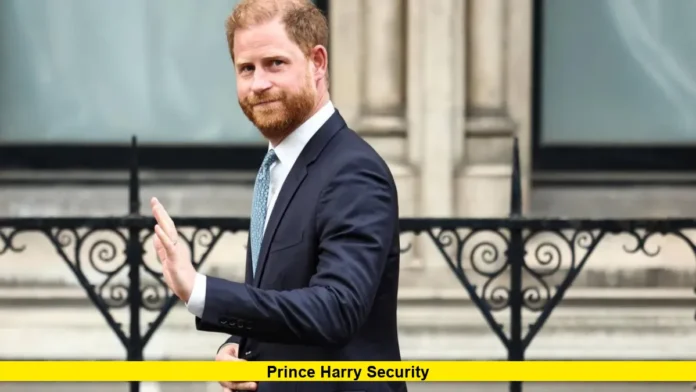

Prince Harry security has remained one of the most closely watched and controversial issues surrounding the British royal family in recent years. What began as a private family decision to step back from royal duties has evolved into a prolonged legal and political struggle over who pays for protection, who decides on risk levels, and what it means for a prince to visit his home country without the safety net he once had. As Harry continues to press for restored police protection during his UK visits, the topic continues to dominate headlines, court dockets, and public debate.
Background: How the Security Dispute Began
The roots of the Prince Harry security controversy trace back to 2020, when Harry and his wife, Meghan Markle, announced their decision to step back from their roles as senior working royals and relocate to North America. As part of that transition, the taxpayer-funded, round-the-clock police protection that Harry had received for most of his life was downgraded. Instead of automatic security coverage, protection during his visits to Britain would be assessed on a case-by-case basis by the Executive Committee for the Protection of Royalty and Public Figures, commonly known as Ravec.
Ravec is the body responsible for determining who receives publicly funded security in Great Britain, weighing factors such as terrorism threats, extremism, stalking risks, and other foreseeable dangers. Once Harry left his position as a senior royal, officials determined that his case-by-case status meant he no longer automatically qualified for the same level of coverage he previously received. This decision set off years of disagreement between Harry’s legal team and the Home Office, the government department legally responsible for Ravec’s rulings.
Harry has argued that private security, which he has used since the change, cannot fully replace official police protection. Private bodyguards in the UK are not permitted to carry firearms or access national intelligence databases, both of which Harry’s team has described as essential tools for keeping his family safe from credible threats, including what he has previously referred to as documented extremist and hostile activity directed at his family.
The Legal Battle: Court Rulings and Appeals
Prince Harry’s fight to reverse the Ravec decision has played out largely in the British courts. In 2022, he filed for a judicial review of the security downgrade, arguing that the process used to reach the decision was flawed and that he had been treated unfairly compared with other individuals who continue to receive protection. The High Court ultimately dismissed this initial challenge, ruling that Ravec’s decision-making process was lawful.
Harry did not stop there. His legal team took the case to the Court of Appeal, where a two-day hearing took place in April 2025. Barristers representing Harry argued that he had been “singled out” for “inferior treatment” and that his safety, security, and life were “at stake” without full protection. The Home Office pushed back, telling the court that Ravec’s decision had been made under a “unique set of circumstances” and that there was no proper legal basis to challenge it.
In May 2025, the Court of Appeal dismissed Harry’s case. Reading the judgment, Master of the Rolls Sir Geoffrey Vos said the panel could not find that Ravec’s reasoning had been illogical or inappropriate. The court agreed with the Home Office’s position that the security downgrade stemmed from Harry’s change of status and the fact that his circumstances now fall outside Ravec’s usual Great Britain-focused remit. Harry publicly said he was devastated by the ruling and told the BBC he would “struggle to forgive” the decision, adding that he did not feel it was safe to bring his family to Britain under the current arrangements.
Harry pursued one final legal avenue, seeking permission to take the case further. That effort ended in late June 2026, when judges upheld the downgraded protection status and rejected his final appeal. The court found that Harry’s sense of grievance over the process did not amount to a legal basis for overturning the earlier rulings, effectively closing off his remaining courtroom options on this specific challenge.
The Ravec Review and Renewed Push for Protection
While the courts have consistently ruled against him, Harry has continued to pursue the matter through other channels. In December 2025, he wrote directly to the Home Secretary, Shabana Mahmood, requesting a fresh, formal risk assessment, something his team says had not been fully conducted for the Sussex family since 2020. Reports indicated that this correspondence prompted Ravec’s Risk Management Board to reconsider his threat level, reframing the conversation from a legal dispute into a procedural question about whether the original risk assessment process had genuine gaps.
This distinction matters. A legal appeal challenges whether a decision was correct, while a procedural review challenges whether the process behind the decision was thorough. Governments and oversight bodies are often more willing to revisit process failures than to reverse discretionary rulings that have already been upheld by the courts. Reports throughout early 2026 described divisions within Ravec itself, with security officials reportedly supportive of reinstating some level of protection given ongoing threat concerns, while political figures within the committee remained cautious about the public reaction such a reversal might trigger.
Public Interest and the Upcoming UK Visit
Public interest in Prince Harry security has intensified again in mid-2026 amid confirmation that Harry, and potentially Meghan Markle along with their children, Prince Archie and Princess Lilibet, plan to travel to the United Kingdom. For Archie and Lilibet, this would mark their first visit to the UK since infancy, adding significant emotional weight to the security question, since it could also open the door to a long-awaited reunion with King Charles, who has not seen his youngest grandchildren in person for several years.
However, just ahead of the planned trip, reports indicated that Ravec had declined to provide official police protection for the visit, casting uncertainty over whether Meghan and the children would ultimately join Harry. According to multiple accounts, Harry is expected to travel regardless, while the participation of the rest of his family remains under review depending on what security provisions can be arranged. Harry’s representatives have emphasized that his UK itinerary includes both public and private engagements across the country, and have stated that “risk follows the person, not the place,” pushing back on suggestions that the dispute is simply about where the family stays during their visit.
Royal commentators have described a “real sense of frustration” within palace circles as the visit remained in limbo, with sources suggesting the institution has gone to considerable lengths to accommodate the family, including offers involving a royal residence. At the same time, some security insiders have publicly dismissed elements of the dispute as more about internal family dynamics and palace politics than genuine safety concerns, while others maintain that Harry’s military service, including two tours of duty in Afghanistan, makes him a legitimately elevated target and strengthens the case for restored protection.
Prince Harry UK Security Arrangements
Under the current framework, Prince Harry UK security arrangements require his team to formally request police protection ahead of any visit, with Ravec assessing the request based on the nature of his engagements, the venues involved, and the latest available threat intelligence rather than granting protection automatically. This case-by-case system means Harry does not have guaranteed access to armed police protection, and in the lead-up to his most recent planned visit, reports indicated that such a request had been turned down, leaving his team to rely on a combination of private security and coordination with police liaison contacts where possible. Officials have described the broader vetting process as “rigorous and proportionate,” while Harry’s camp maintains that a proper, updated risk assessment, something they argue has been missing since 2020, is essential to reaching a fair outcome for his family’s safety.
Final Thoughts
The Prince Harry security saga reflects a broader tension between personal safety concerns and the structural realities of stepping outside a formal royal role. Despite losing his legal battle at every stage, including his final appeal in June 2026, Harry has continued to press for a resolution through administrative and political channels rather than the courts. Whether this renewed pressure results in any meaningful change to his protection status remains uncertain, but the issue continues to shape not only his relationship with the UK government but also his family’s ability to visit the country he still refers to as home. As his planned visit unfolds, the outcome of these security discussions will likely influence how, and whether, Meghan Markle and their children accompany him on future trips to Britain.
Stay tuned for the latest updates on this developing story, and share your thoughts on Prince Harry’s ongoing security battle in the comments below.