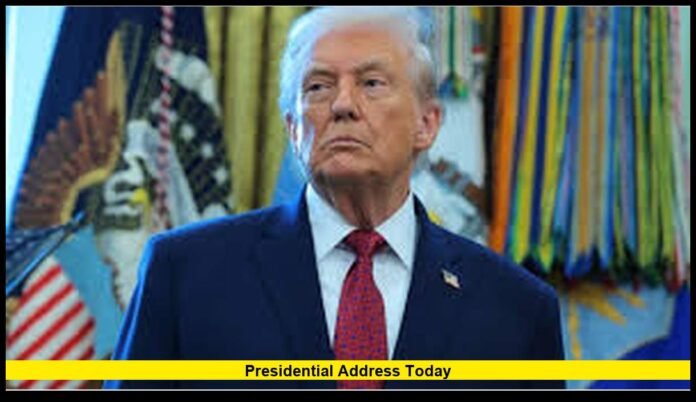

The presidential address today placed the full attention of the nation on the White House as the President delivered a nationally televised speech aimed at outlining priorities, acknowledging challenges, and reinforcing leadership during a critical period for the United States. Broadcast during prime time, the address reached millions of Americans at home and quickly became a central topic of discussion across political, economic, and social circles.
National addresses are reserved for moments when a president believes direct communication is necessary. This speech was presented as an opportunity to speak plainly to Americans, clarify the administration’s direction, and provide reassurance amid ongoing uncertainty. From economic pressures to global responsibilities, the address touched on issues that affect daily life while emphasizing continuity, responsibility, and forward momentum.
The Importance of the Presidential Address Today
A presidential address carries a weight that differs from routine public appearances. It is not a campaign event, nor is it a casual update. The presidential address today was delivered with the understanding that Americans expect clarity, seriousness, and leadership during such moments.
When a president speaks directly to the nation, it reflects an intention to rise above political divisions and focus on shared concerns. These addresses often serve as markers in an administration’s timeline, allowing the public to assess progress and understand upcoming priorities.
For many viewers, this address functioned as a national checkpoint. It offered a chance to hear where the country stands, what actions have been taken, and what direction leadership intends to pursue next.
Setting and Presentation From the White House
The address was delivered from the White House, reinforcing the formality and authority of the moment. This setting has long symbolized stability and continuity in American governance, making it the natural backdrop for a message intended for the entire nation.
The prime-time broadcast ensured broad accessibility. Families, workers, and retirees alike were able to tune in, creating a shared viewing experience that remains rare in today’s fragmented media environment. The presidential address today followed a structured format, with carefully paced delivery and clear transitions between topics.
The president’s tone remained measured throughout the speech. Rather than dramatic gestures or confrontational language, the delivery emphasized calm, focus, and deliberation. This approach signaled an effort to reassure and steady the public.
Opening Message and National Unity
The opening moments of the presidential address today were dedicated to acknowledging the realities Americans are facing. The president spoke directly to families dealing with financial strain, communities affected by uncertainty, and individuals concerned about the country’s direction.
By beginning with recognition rather than celebration, the address established credibility. The message emphasized unity and shared responsibility, reinforcing the idea that progress depends on collective effort rather than division.
This opening also framed the rest of the speech. It positioned the address as a conversation with the nation, not a lecture, and set expectations for honesty and accountability.
Economic Conditions as a Central Focus
Economic stability formed the foundation of the presidential address today. The president spoke extensively about the state of the economy, recognizing that financial concerns remain top of mind for many Americans.
Topics included price stability, job growth, and long-term economic resilience. The address acknowledged that while progress has been made in some areas, challenges remain. Rather than presenting the economy as either failing or fully recovered, the president described it as a work in progress requiring sustained attention.
The message emphasized practical steps and steady improvement. Economic policy was framed as a balance between immediate relief for households and long-term strategies designed to strengthen the nation’s financial foundation.
Jobs, Employment, and Workforce Participation
Employment plays a defining role in economic security, and the presidential address today devoted significant attention to jobs and the workforce. The president highlighted the importance of stable employment opportunities across industries and regions.
The speech discussed efforts to support job creation, workforce training, and skills development. Emphasis was placed on ensuring that workers are prepared for changing economic demands, including advancements in technology and shifts in global markets.
The address reinforced the idea that work is about more than income. It provides dignity, stability, and opportunity, strengthening families and communities alike.
Wages and Economic Opportunity
Beyond employment numbers, the presidential address today addressed wages and earning potential. The president spoke about the need for work to provide meaningful economic security, allowing families to meet basic needs and plan for the future.
The address emphasized policies aimed at supporting fair compensation and economic mobility. While acknowledging that wage growth varies across sectors, the message focused on creating conditions where opportunity can expand.
This portion of the speech connected economic policy to everyday life, highlighting how income stability affects housing choices, education decisions, and overall quality of life.
Cost of Living Pressures on American Families
Rising costs remain a major concern nationwide. During the presidential address today, the president addressed housing affordability, food prices, energy expenses, and healthcare costs.
The speech acknowledged that cost-of-living pressures are felt differently across regions and income levels. By recognizing these variations, the address aimed to reflect the lived experiences of Americans rather than relying solely on broad averages.
The message emphasized ongoing efforts to improve affordability while maintaining economic balance. Rather than promising immediate fixes, the address focused on persistence and coordinated action.
National Security and America’s Role Abroad
National security and foreign affairs were addressed as essential components of domestic stability. The presidential address today outlined the administration’s approach to protecting U.S. interests while promoting global stability.
The president spoke about maintaining a strong defense, supporting allies, and engaging diplomatically to prevent conflict. The address emphasized readiness without aggression, highlighting the importance of preparation and restraint.
This portion of the speech reinforced the idea that international events have direct consequences for economic stability and national safety at home.
Border Security and Immigration Management
Immigration policy remains a defining issue in American politics. The presidential address today addressed border security and immigration management as ongoing priorities requiring careful balance.
The president spoke about enforcement, legal processes, and the need for orderly systems. The address emphasized security while also acknowledging the complexity of immigration challenges.
By addressing this issue in a national address, the administration signaled its intention to approach immigration as a serious governance matter rather than a talking point.
Energy Policy and Economic Stability
Energy policy featured prominently in the presidential address today, reflecting its impact on both household budgets and national security. The president discussed domestic energy production, infrastructure, and long-term planning.
The address emphasized reliability and affordability, highlighting the role of energy in supporting economic growth and job creation. Energy was framed as a practical issue affecting transportation, manufacturing, and daily living costs.
This section reinforced the administration’s focus on stability and preparedness rather than short-term solutions.
Healthcare and Public Well-Being
Healthcare remains a central concern for millions of Americans. During the presidential address today, the president addressed access to care, affordability, and system sustainability.
The speech acknowledged ongoing challenges, including rising costs and access disparities. Rather than presenting healthcare as a solved issue, the address framed it as an area requiring continued attention and incremental improvement.
Healthcare was linked to economic security, emphasizing that health stability supports workforce participation and family well-being.
Education and Workforce Preparation
Education was presented as a long-term investment in national success. The presidential address today emphasized the importance of preparing students and workers for a changing economy.
The president spoke about supporting educators, strengthening schools, and expanding access to training and higher education. Education was framed as both an economic necessity and a civic responsibility.
This portion of the address highlighted the connection between learning, opportunity, and national competitiveness.
Community Strength and Social Stability
Beyond specific policy areas, the presidential address today emphasized the importance of strong communities. The president spoke about public safety, civic engagement, and social cohesion.
The address highlighted the role of local institutions and shared values in maintaining stability. Rather than focusing solely on federal action, the message emphasized partnership across levels of government and society.
This broader perspective reinforced the idea that progress depends on collective effort.
Tone, Language, and Presidential Style
The tone of the presidential address today was deliberate and steady. The president avoided inflammatory language, focusing instead on clarity and reassurance.
Sentences were structured to be accessible, allowing viewers to follow complex topics without confusion. The language emphasized responsibility and continuity, reflecting the seriousness of the moment.
This style aimed to build trust and maintain focus on substance rather than spectacle.
Public Response and National Discussion
Following the presidential address today, reactions emerged across the country. Supporters highlighted the emphasis on stability and practical priorities. Critics questioned whether actions would fully address the challenges outlined.
Regardless of perspective, the address succeeded in generating discussion. It became a reference point for political debate, media analysis, and public reflection.
National addresses often influence discourse not only through content, but through timing. This speech arrived when many Americans are seeking clarity and direction.
How the Address Fits Within the Presidency
The presidential address today aligns with the administration’s broader approach to communication and governance. By choosing a formal national address, the president emphasized leadership and accountability.
Such speeches often serve as milestones, offering insight into priorities and setting expectations for future actions. They provide a framework against which policy decisions are measured.
For many viewers, this address clarified how the administration views its role and responsibilities.
What the Address Signals for the Months Ahead
While the presidential address today did not announce immediate changes, it outlined themes likely to guide upcoming decisions. Economic stability, national security, and domestic resilience were presented as ongoing priorities.
Future actions are expected to reflect the direction outlined in the speech. The address serves as a roadmap, offering context for developments that follow.
Why Presidential Addresses Still Matter
In an era of constant information and rapid news cycles, presidential addresses remain rare moments of shared national focus. The presidential address today demonstrated why this tradition endures.
Such speeches offer clarity and perspective. They allow citizens to hear directly from their leader and assess the country’s direction without intermediaries.
As the national conversation continues, the presidential address today stands as a defining moment that invites Americans to reflect, engage, and remain attentive to the path ahead.