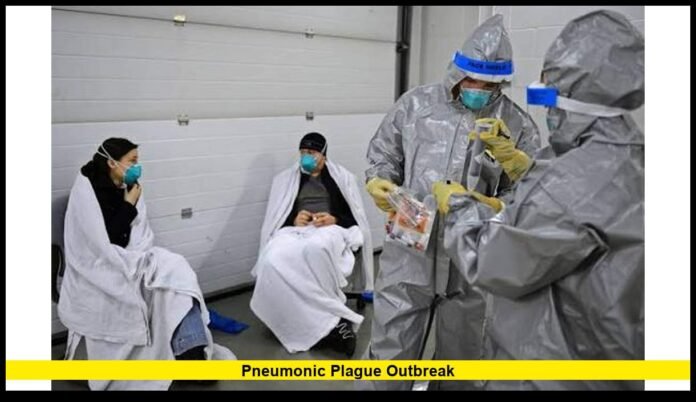

Pneumonic Plague outbreak reports in Russia have triggered widespread concern after a laboratory worker in Siberia died following severe pneumonia, but authorities have not confirmed that the illness was caused by plague. The case involves an employee of the Irkutsk Anti-Plague Research Institute in Shelekhov, where officials have carried out extensive health and safety measures following her death.
The woman, identified in multiple reports as 28-year-old Daria Shipilova, became seriously ill in late September and died on October 2. Initial reports connected her illness to possible exposure to Yersinia pestis, the bacterium responsible for plague. Nearly 200 people who may have had contact with her were reportedly placed under medical observation.
The situation remains closely watched because pneumonic plague can spread through respiratory particles and can become life-threatening rapidly without treatment. However, Russia’s federal health authorities have said the woman was diagnosed with pneumonia of unknown etiology and that further testing did not identify microorganisms connected to her professional duties.
That latest assessment is important. It means the reported incident should not be presented as a confirmed large-scale plague outbreak. Authorities have also described the sanitary and epidemiological situation in the Irkutsk region as stable.
What Happened in Irkutsk?
The incident began after a laboratory employee working at the Irkutsk Anti-Plague Research Institute developed a severe respiratory illness.
She was treated at a hospital in Shelekhov, a city located near Irkutsk. Her condition reportedly deteriorated rapidly, and she required intensive medical care and mechanical ventilation.
The woman’s employment made the situation particularly concerning. Anti-plague research facilities work with organisms associated with serious infectious diseases, including Yersinia pestis.
Initial reports suggested that she might have been exposed to plague bacteria during laboratory work. Some accounts said she accidentally broke a test tube containing the pathogen while handling biological material.
That account has not been established as the confirmed cause of her illness by Russian health authorities.
Other reports have described possible exposure during work-related activities outside the laboratory. Because those details remain inconsistent, they should not be treated as established facts.
The confirmed point is that a laboratory employee developed severe pneumonia and died while authorities investigated the possibility of a dangerous infectious disease.
Why the Case Raised Fears of Pneumonic Plague
The concern centered on the combination of the woman’s occupation, her severe respiratory illness and the rapid deterioration of her condition.
Pneumonic plague affects the lungs and represents one of the most serious forms of plague infection. Unlike bubonic plague, which usually produces swollen lymph nodes, pneumonic plague primarily causes respiratory disease.
The possibility of a laboratory exposure therefore created an immediate public-health concern.
Officials responded by identifying people who had contact with the patient and placing them under medical observation. Reports put the number of people monitored at close to 200.
Some hospitals and other facilities in the region also introduced preventive measures.
Those actions demonstrate the seriousness with which officials treated the initial concern. They do not, however, prove that all people under observation were infected.
According to regional officials, people identified as contacts were being monitored and tested, and no additional infections had been established among those being observed.
Russia’s Latest Official Assessment
The most significant development came from Russia’s federal public-health authorities.
Rospotrebnadzor said the woman had pneumonia of unknown etiology. The agency also reported that expanded testing of samples did not identify microorganisms connected with her professional work.
Authorities further stated that no incident involving pathogenic microorganisms had been recorded at the research institute.
That assessment directly affects how the situation should be described.
Early reports used stronger language and connected the death to plague. Later official information did not confirm that diagnosis.
As a result, there is currently a clear difference between the initial reports and the latest official position.
The latest assessment does not establish that the woman died from pneumonic plague.
It also does not establish that a laboratory accident released Yersinia pestis into the surrounding community.
Nearly 200 People Were Placed Under Observation
One of the most notable parts of the response was the monitoring of people who may have had contact with the deceased employee.
Reports indicated that approximately 200 people were placed under medical observation.
Some were reportedly monitored in medical facilities, while others were subject to health surveillance because of their potential exposure.
This response reflects the seriousness of suspected pneumonic plague.
If a person has confirmed pneumonic plague, close contacts may require urgent assessment because the disease can spread through respiratory particles.
However, being placed under observation does not mean that an individual has contracted the infection.
Health officials can use observation periods to monitor for symptoms, perform testing and intervene quickly if evidence of infection appears.
In the Irkutsk case, officials have not reported confirmed additional cases among the monitored contacts.
What Is Pneumonic Plague?

Pneumonic plague is a severe form of plague caused by Yersinia pestis.
The bacterium naturally circulates among certain small mammals and their fleas. Humans can become infected through flea bites, contact with infected materials or inhalation of infectious respiratory particles.
Pneumonic plague is different from bubonic plague because the infection primarily involves the lungs.
The disease can develop quickly.
Common symptoms can include:
- Fever
- Chills
- Weakness
- Headache
- Muscle pain
- Cough
- Chest discomfort
- Difficulty breathing
- Severe respiratory illness
- Blood-stained sputum in advanced cases
Because these symptoms can resemble other serious respiratory illnesses, doctors cannot reliably diagnose plague based only on symptoms.
Laboratory testing is necessary to confirm infection.
Why Pneumonic Plague Requires Rapid Treatment
Pneumonic plague is dangerous because the disease can progress quickly.
The World Health Organization states that untreated pneumonic plague can be fatal. Antibiotics can successfully treat plague when medical care begins early.
This makes early recognition particularly important.
A suspected patient may therefore receive urgent medical attention before laboratory confirmation is available if doctors believe plague is a realistic possibility.
Public-health officials may also identify close contacts while diagnostic testing continues.
These measures are designed to prevent avoidable deaths and reduce the possibility of additional transmission.
The existence of these precautions does not automatically mean that an outbreak has been confirmed.
Is Russia Experiencing a Confirmed Plague Outbreak?
The latest available official information does not establish a confirmed pneumonic plague outbreak in the Irkutsk region.
This point is critical because several early reports described the situation as a plague outbreak after the laboratory worker’s death.
Russian health authorities have since stated that the patient had pneumonia of unknown etiology.
They also reported that expanded testing did not detect microorganisms connected to her professional activities.
The authorities have described the sanitary and epidemiological situation in Irkutsk and Shelekhov as stable.
Therefore, the current evidence does not justify reporting that a confirmed pneumonic plague epidemic is spreading through Siberia.
The investigation remains important, but the diagnosis has not been publicly established as pneumonic plague by the latest official assessment.
What About the Reported Laboratory Accident?
A reported laboratory accident became one of the central elements of the story.
Several media reports said the woman may have broken a test tube containing live plague bacteria while working with biological material.
That account has attracted significant attention because direct exposure to Yersinia pestis could represent a serious occupational hazard.
However, Russian authorities have not confirmed that such an accident caused the woman’s illness.
The latest official assessment said no incident involving pathogenic microorganisms had been recorded at the institute.
That means the reported laboratory accident should not be treated as an established fact.
The distinction is especially important for a news article because an unconfirmed explanation can quickly become mistaken for a confirmed finding when repeated across social media.
Why Local Authorities Took Preventive Measures
The death prompted a range of precautionary measures in the Irkutsk region.
Medical facilities reportedly introduced restrictions, while other organizations implemented additional health precautions.
Reports also indicated that some public events were canceled or restricted.
A large industrial facility in Shelekhov reportedly introduced mask requirements for workers as a precaution.
Such measures can appear alarming to residents, especially when officials do not immediately provide detailed information about the suspected disease.
However, preventive actions are often used while officials determine whether an infectious disease is present.
The measures therefore should not be interpreted as proof that widespread pneumonic plague transmission has been confirmed.
Are There Additional Confirmed Cases?
The latest official information does not establish a wider cluster of confirmed pneumonic plague infections among the patient’s contacts.
Officials have reported that identified contacts were placed under medical observation and subjected to testing.
No confirmed secondary transmission has been established in the available official assessment.
That is a major distinction when evaluating the risk.
One suspected or unexplained illness can trigger a major public-health response without becoming a sustained outbreak.
Authorities typically monitor contacts precisely to determine whether transmission has occurred.
In the Irkutsk situation, that monitoring remains an important part of the response.
What Does This Mean for Americans?
For people in the United States, the Russia incident does not currently indicate a confirmed pneumonic plague emergency inside the country.
There is no verified evidence that the Irkutsk case has resulted in an outbreak spreading to the United States.
The United States does experience occasional plague infections because Yersinia pestis remains present in some wildlife populations.
Human cases are uncommon, but health authorities remain prepared to investigate suspected infections.
A recent U.S. example involved a fatal pneumonic plague case in Arizona that occurred in 2025 and was later described by the Centers for Disease Control and Prevention.
That case was separate from the current Russian incident.
There is no confirmed evidence linking the Arizona infection to the Irkutsk case.
How Plague Occurs in the United States
Plague has not disappeared from the natural environment.
The bacterium remains established in certain animal populations, particularly in parts of the western United States.
Rodents and their fleas can maintain the bacterium in nature.
Humans can become infected when they encounter infected animals, fleas or contaminated material.
Pneumonic infection creates an additional concern because an infected person can potentially transmit the bacteria through respiratory particles.
Despite that possibility, human plague remains rare in the United States.
The recent Russian incident does not change that basic epidemiological reality.
Why the Russian Situation Is Being Closely Watched
The case remains significant because pneumonic plague can produce severe disease and because the patient worked in a facility associated with plague research.
The number of people placed under observation also demonstrates how seriously authorities initially treated the possibility of exposure.
At the same time, the latest official testing has not confirmed that plague caused the woman’s illness.
That combination of uncertainty and serious potential consequences explains why the situation continues to receive international attention.
Health authorities must investigate the possibility of a dangerous infection while avoiding an unsupported declaration of an outbreak.
What Would Confirm a Pneumonic Plague Case?
A diagnosis cannot be established simply because a patient has pneumonia and works at an anti-plague laboratory.
Doctors need appropriate clinical and laboratory evidence.
Confirmation generally involves testing for Yersinia pestis using suitable patient specimens.
Laboratory evidence is especially important in this case because the official assessment currently identifies pneumonia of unknown etiology rather than confirmed plague.
If additional laboratory findings become available, the assessment could change.
Until then, the current official position remains the most reliable basis for reporting the incident.
Could the Situation Become a Larger Public-Health Event?
There is no confirmed evidence that a larger outbreak is developing from the Irkutsk case.
Officials continue to monitor people who may have been exposed, which is an important precaution.
The number of monitored contacts alone cannot establish whether transmission has occurred.
The key indicators would be confirmed infections, evidence of person-to-person transmission and laboratory confirmation of Yersinia pestis.
Those findings have not been established in the latest official information.
For that reason, reports should distinguish carefully between a suspected exposure and a confirmed outbreak.
What Readers Should Watch for Next
The most important developments would involve new laboratory findings and updates about the people who were placed under observation.
A confirmed diagnosis would materially change the understanding of the case.
Similarly, evidence of additional laboratory-confirmed infections could indicate that transmission had occurred.
For now, authorities have reported a stable regional epidemiological situation.
Readers should also pay attention to whether Russian health officials release additional details about the cause of death, laboratory testing or the status of monitored contacts.
Those developments would provide the clearest indication of whether the current assessment changes.
Latest Situation at a Glance
| Category | Current information |
|---|---|
| Location | Irkutsk region, Siberia, Russia |
| Main incident | Death of an anti-plague institute employee |
| Date of death | October 2, 2026 |
| Reported illness | Severe pneumonia |
| Official diagnosis | Pneumonia of unknown etiology |
| Plague confirmed by latest official assessment | No |
| Possible laboratory exposure | Reported but not confirmed |
| People placed under observation | Nearly 200 reported |
| Confirmed secondary cases | None established in the latest official assessment |
| Regional health situation | Described by authorities as stable |
| Confirmed U.S. connection | None |
Frequently Asked Questions
What is the latest update on the Pneumonic Plague outbreak reports in Russia?
The latest official assessment does not confirm a pneumonic plague outbreak. Russian authorities reported that the deceased laboratory worker had pneumonia of unknown etiology and that expanded testing did not identify microorganisms associated with her professional activities.
Did the Russian laboratory worker have confirmed pneumonic plague?
The latest official information does not confirm that diagnosis. Earlier reports raised concerns about plague, but authorities subsequently described the illness as pneumonia of unknown etiology.
How many people were placed under observation?
Reports indicated that nearly 200 people who may have had contact with the woman were placed under medical observation.
Have additional plague cases been confirmed among those contacts?
The latest official information does not establish additional confirmed pneumonic plague infections among the monitored contacts.
Can pneumonic plague spread from person to person?
Yes. Pneumonic plague can spread through respiratory particles from an infected person, particularly during close contact.
Is pneumonic plague fatal?
It can be fatal when treatment is delayed. Early antibiotic treatment significantly improves the chances of survival.
Is there a pneumonic plague emergency in the United States?
There is no verified evidence that the Russian incident has created a pneumonic plague emergency or outbreak in the United States.
Does the Russian case affect Americans directly?
The latest information does not establish a direct threat to Americans from this incident. There is no confirmed evidence of transmission from the Russian case to the United States.
Why was the laboratory worker’s case investigated so urgently?
Her employment at an anti-plague research institute raised concerns about possible occupational exposure to dangerous pathogens, particularly because she developed severe respiratory illness.
Was a broken test tube confirmed as the source of infection?
No. Reports described a possible broken test tube containing plague bacteria, but Russian authorities have not confirmed that this incident caused the woman’s illness.
What is the main issue authorities are investigating?
Authorities are determining the cause of the woman’s severe pneumonia and assessing whether any dangerous infectious organism was involved.
What should readers understand about the current situation?
The situation is serious enough to warrant monitoring, but the latest official findings do not establish a confirmed pneumonic plague outbreak.
The latest information favors careful attention and verified updates, and readers should continue watching for confirmed developments as health authorities complete their assessment.