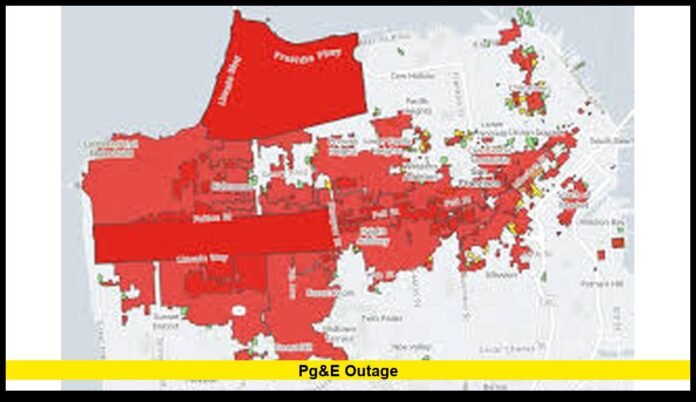

Northern California communities are once again preparing for widespread utility disruptions as dangerous fire weather conditions sweep across the region. The growing threat of a major pge outage has placed millions of residents on alert after powerful winds, dry vegetation, and elevated wildfire danger pushed emergency officials and utility crews into rapid response mode across multiple counties.
Weather conditions intensified through the weekend and into Monday as strong offshore winds moved through inland valleys, mountain ridges, and wildfire-prone communities. Red Flag Warnings expanded across broad sections of Northern California, prompting precautionary power shutoff planning and emergency wildfire preparation efforts.
Residents in parts of the Bay Area, Central Valley, North State, and Sierra foothills received warnings about possible planned blackouts designed to reduce wildfire ignition risks during the wind event. At the same time, scattered unplanned outages were already affecting neighborhoods where wind damage impacted utility infrastructure.
People living in high-risk zones were urged to fully charge phones, prepare backup lighting, secure emergency supplies, and stay updated on rapidly changing weather and outage conditions.
Dangerous Wind Conditions Increase Fire Risk Across Northern California
Meteorologists warned that a strong weather pattern developing over the western United States created ideal conditions for extreme fire behavior across California.
Dry air combined with intense offshore wind gusts raised wildfire concerns in many inland communities. Wind gusts exceeding 50 mph were forecast in elevated terrain, with some ridge-top locations expected to experience even stronger conditions overnight.
These weather patterns dramatically increase the danger of fast-moving wildfires because dry vegetation can ignite quickly and flames can spread rapidly under heavy wind pressure.
Emergency agencies closely monitored conditions throughout Northern California as temperatures remained warm and humidity levels dropped in many areas.
Fire officials stressed that even small ignition sources, including damaged electrical equipment, fallen tree limbs, or vehicle sparks, could create rapidly spreading fires under these conditions.
Utility Crews Prepare for Public Safety Power Shutoffs
As fire danger intensified, Pacific Gas and Electric began implementing Public Safety Power Shutoff preparations across multiple regions.
The precautionary shutoffs are designed to temporarily turn off electricity in wildfire-prone areas when weather conditions create elevated fire danger around overhead power infrastructure.
Officials explained that strong winds can blow debris into power lines, damage electrical equipment, or cause branches to fall onto energized systems. By shutting off power temporarily, utilities attempt to reduce the chance of infrastructure-related wildfire ignitions.
Communities across Northern California received notifications warning them about potential shutoffs as utility crews evaluated real-time weather conditions.
Some residents reported receiving alerts through text messages, phone calls, emails, and mobile applications warning them to prepare for possible power interruptions lasting several hours or longer.
Counties Under Increased Outage Monitoring
A large number of Northern California counties entered heightened monitoring status as wildfire concerns escalated.
Areas facing possible outage impacts included portions of:
- Alameda County
- Contra Costa County
- Napa County
- Sonoma County
- Solano County
- San Joaquin County
- Stanislaus County
- Glenn County
- Tehama County
- Colusa County
- Fresno County
- Lake County
- Yolo County
- Merced County
- San Benito County
Many of these counties contain rugged terrain, dry grasslands, forested hillsides, or aging overhead utility infrastructure that can become vulnerable during major wind events.
Officials emphasized that shutoff decisions were being made based on changing field conditions rather than fixed timelines.
Crews continued evaluating:
- Wind intensity
- Humidity levels
- Vegetation dryness
- Temperature conditions
- Fire spread potential
- Equipment safety concerns
Because weather conditions can shift quickly, outage areas may expand or change with little notice.
Bay Area Communities Brace for Potential Blackouts
Several Bay Area communities entered a period of elevated wildfire danger as offshore winds strengthened throughout the region.
Inland hills and mountain corridors became key concern zones because stronger winds often develop in higher elevations and canyon areas.
Communities near:
- Vacaville
- Fairfield
- Brentwood
- Antioch
- Dublin
- Livermore
- Napa Valley
- Sonoma hillsides
faced particularly high monitoring levels due to their proximity to dry vegetation and exposed electrical infrastructure.
Local governments activated emergency coordination centers while some park agencies temporarily restricted access to open-space areas because of wildfire concerns.
Residents rushed to prepare homes before possible outages by:
- Charging electronics
- Purchasing batteries
- Filling generators with fuel
- Stocking bottled water
- Securing extra food supplies
Gas stations and grocery stores in some areas experienced increased traffic as people prepared for extended outages.
Unplanned Power Failures Already Impacting Some Communities
While planned shutoffs remained the primary focus, severe weather also triggered unexpected outages in several regions before larger PSPS operations fully developed.
Wind gusts damaged utility lines, knocked branches into equipment, and caused scattered service interruptions across Northern California.
Traffic disruptions occurred in some areas after intersections lost signal power during peak travel periods.
Residents also reported:
- Flickering electricity
- Internet interruptions
- Cell service disruptions
- Temporary communication outages
Businesses relying on refrigeration systems, electronic payments, and internet-based operations faced operational difficulties as instability spread through parts of the electrical grid.
Emergency crews reminded residents to avoid approaching any downed power lines and to immediately report hazardous conditions to authorities.
Why California Continues Using Planned Power Shutoffs
The strategy expanded after devastating wildfires linked to utility infrastructure caused catastrophic destruction across multiple communities.
Utilities now rely on proactive shutoffs during dangerous weather events to reduce the likelihood of electrical sparks igniting dry vegetation.
The process is especially common during:
- Red Flag Warnings
- Offshore wind events
- Heat waves
- Extreme drought conditions
- Low humidity periods
Although the shutoffs are intended to improve safety, many residents continue expressing frustration over repeated disruptions.
Rural communities often experience the largest impacts because they contain longer stretches of exposed overhead infrastructure crossing forested terrain.
Businesses Face Growing Economic Pressure
Repeated outage events continue creating major challenges for businesses across Northern California.
Restaurants, wineries, farms, grocery stores, hotels, and small retailers often struggle during extended shutoffs because many operations depend heavily on refrigeration, digital systems, and climate control equipment.
Business owners in wildfire-prone regions say repeated outage events create uncertainty during busy travel and tourism seasons.
Agricultural operations also face serious concerns during prolonged outages, especially farms relying on electrically powered irrigation systems, refrigeration units, and processing equipment.
Some business owners have invested in backup generators and battery storage systems to reduce operational disruptions during PSPS events.
However, smaller businesses often face financial barriers that make large backup power systems difficult to afford.
Medical and Elderly Residents Remain Vulnerable
Emergency agencies continue placing special attention on medically vulnerable residents during wildfire-related outages.
People relying on:
- Oxygen systems
- Refrigerated medications
- Mobility equipment
- Electric medical devices
face increased risks when power interruptions last for extended periods.
Local governments and nonprofit organizations opened community resource centers in some regions where residents could access:
- Device charging stations
- Air conditioning
- Drinking water
- Medical assistance
- Updated emergency information
Officials encouraged families to check on elderly neighbors and vulnerable residents during outage periods, especially when hot temperatures persist.
Firefighters Increase Staffing as Conditions Worsen
Fire agencies across Northern California increased staffing levels ahead of the dangerous wind event.
Additional crews, aircraft, engines, and emergency resources were strategically positioned in high-risk areas to improve response times if wildfires ignited.
Officials warned that fires spreading during strong offshore wind events can become extremely dangerous within minutes.
Wildfire behavior experts noted that dry grasslands and brush-covered hillsides remain highly vulnerable even after previous wet seasons because vegetation can dry rapidly during periods of heat and wind.
Some regions also temporarily restricted outdoor burning activities and reminded residents to avoid equipment that could accidentally create sparks.
Travel Concerns Grow During High Wind Event
Strong winds created additional hazards for drivers traveling across Northern California.
Officials warned motorists to use caution on:
- Interstate 580 corridor
- Highway 101 mountain sections
- Rural canyon roads
- Elevated bridge crossings
Large vehicles, trailers, and RVs faced increased risk during periods of intense crosswinds.
Falling branches and blowing debris also created roadway hazards in some regions.
Authorities encouraged residents to limit unnecessary travel in heavily wooded or high-risk fire zones during the peak wind period.
Restoration Could Take Longer Than Many Residents Expect
Utility officials warned customers that restoring electricity after planned shutoffs may require extensive safety inspections before power can safely return.
Crews must:
- Inspect power lines
- Remove debris
- Repair damaged equipment
- Confirm weather improvements
- Verify wildfire conditions are no longer dangerous
This process can delay restoration even after winds begin weakening.
Mountain communities and remote rural areas often experience longer restoration timelines because crews may need additional time to safely access infrastructure.
Officials urged residents to prepare for outages lasting beyond a single day in some higher-risk regions.
Growing Debate Over California’s Power Infrastructure
The latest round of wildfire-related outages has renewed debate over California’s aging electrical infrastructure and long-term energy reliability challenges.
Many residents continue calling for faster undergrounding of power lines in wildfire-prone regions.
State leaders and utilities have invested billions of dollars into:
- Vegetation management
- Equipment upgrades
- Enhanced weather monitoring
- Grid hardening projects
- Underground utility expansion
Despite those efforts, wildfire-related outage events remain common during extreme weather conditions.
Experts warn that climate-driven weather extremes may continue increasing the frequency of dangerous fire conditions across the western United States.
Communities Remain on Alert as Fire Season Intensifies
Northern California now faces another tense stretch of wildfire season as dangerous weather conditions continue impacting communities across the region.
Fire agencies, emergency managers, utility crews, and local governments remain in active response mode while monitoring changing wind conditions.
Residents are being encouraged to stay prepared with emergency kits, evacuation plans, backup charging options, and multiple ways to receive alerts.
The current weather event serves as another reminder of how quickly conditions can change during California’s peak fire danger months.
For many families across Northern California, the combination of wildfire fear, strong winds, and the possibility of extended blackouts has become an increasingly familiar part of life during fire season.
Communities remain closely focused on weather developments as utility crews continue working to balance public safety with the growing demand for reliable electricity across the state.
Are outages affecting your area right now? Share your experience and keep checking for the latest updates as wildfire weather conditions continue developing across Northern California.