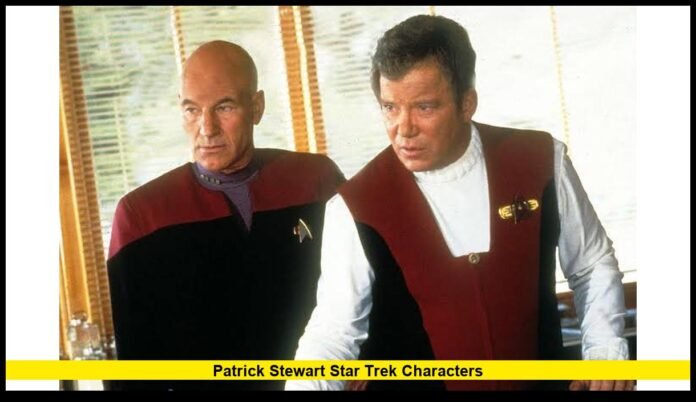

The Patrick Stewart Star Trek character is Captain Jean-Luc Picard, the respected Starfleet officer whose intelligence, diplomacy, and unwavering principles helped shape one of television’s most influential science fiction franchises. First introduced in Star Trek: The Next Generation in 1987, Picard became a distinctive kind of hero, one who often solved extraordinary problems through reason, compassion, and careful judgment rather than force. Patrick Stewart’s performance transformed the captain into a lasting cultural icon whose adventures spanned television, feature films, and a dedicated streaming series.
Picard’s story is closely connected to Star Trek’s optimistic vision of the future. As commander of the USS Enterprise-D, he represented an era in which humanity had moved beyond many of its historical divisions and embraced exploration, scientific discovery, and cooperation with other civilizations. Yet the captain’s missions were rarely simple. His crew encountered dangerous enemies, unfamiliar forms of intelligence, political disputes, and ethical dilemmas that challenged the Federation’s ideals.
Stewart brought theatrical precision and emotional depth to these stories, creating a character who could command a starship while remaining thoughtful, vulnerable, and open to new ideas. His portrayal continues to attract viewers interested in the enduring relationship between leadership, morality, and the human experience.
Key Points Summary
╔════════════════════════════════════════════════════════════════════╗
║ – Patrick Stewart portrayed Captain Jean-Luc Picard in Star Trek: The Next Generation, beginning in 1987. ║
║ – Picard became known for his diplomatic approach, intellectual curiosity, and commitment to ethical leadership. ║
║ – Stewart played the character in four theatrical films, including the popular Star Trek: First Contact. ║
║ – The streaming series Star Trek: Picard reunited the actor with the character for three seasons from 2020 to 2023. ║
║ – Picard’s legacy continues through his memorable adventures, relationships, and influence on science fiction storytelling. ║
╚════════════════════════════════════════════════════════════════════╝
Who Is Jean-Luc Picard in the Star Trek Universe?
Jean-Luc Picard is a senior Starfleet officer best known for commanding the USS Enterprise-D in Star Trek: The Next Generation. The fictional captain was born in La Barre, France, in 2305 and developed a distinguished career exploring the galaxy on behalf of the United Federation of Planets.
His responsibilities extend far beyond commanding a spacecraft. Picard must protect his crew, maintain diplomatic relationships, investigate scientific discoveries, and make decisions that can affect entire civilizations. These duties frequently place him in situations where there is no obvious right answer.
Unlike a commander who immediately resorts to combat, Picard generally prefers to understand the circumstances before choosing a course of action. He listens to specialists, evaluates competing arguments, and considers the long-term consequences of his decisions. When diplomacy fails, he can be decisive, but force is rarely his first choice.
His interests also reveal a more personal side. Picard enjoys archaeology, literature, classical music, and historical study. He is particularly associated with Earl Grey tea, which became a recognizable part of his routine.
These details make the captain more than a symbol of authority. They establish him as a curious, disciplined individual whose professional responsibilities coexist with personal interests, emotional challenges, and an ongoing desire to learn.
Patrick Stewart’s Casting and the Creation of an Icon
When Star Trek: The Next Generation premiered in 1987, it introduced a new crew tasked with carrying the franchise into a different television era. Casting Patrick Stewart as Picard proved central to the show’s identity.
Stewart had built an extensive career in theater, including classical stage performances that demanded precise language, controlled movement, and a strong command of dialogue. Those skills translated naturally into the role of a captain who frequently had to explain difficult decisions or negotiate with powerful representatives of unfamiliar civilizations.
At first, Picard could appear reserved and intimidating. As the series developed, however, audiences saw his loyalty to his crew, his occasional frustration, and his capacity for compassion. Stewart allowed the character to display authority without making him emotionally distant.
The series also gave Picard opportunities to make mistakes and reconsider his assumptions. His willingness to acknowledge difficult truths made his leadership more credible and helped distinguish him from less complex television heroes.
Across seven seasons, Stewart developed a performance that combined intellectual confidence with emotional restraint. His work helped establish Picard as a central figure in the franchise and gave the show a distinctive personality.
The Enterprise-D Years and Picard’s Leadership Style
Star Trek: The Next Generation ran for seven seasons, concluding in 1994. During that period, Picard led the Enterprise-D crew through first-contact missions, scientific investigations, diplomatic negotiations, and confrontations with civilizations that threatened the Federation.
The captain’s leadership depended on the expertise of his officers. His first officer, William Riker, provided tactical judgment and operational support. Data, an android officer, raised important questions about artificial intelligence and personhood. Beverly Crusher cared for the crew’s health, while Geordi La Forge managed the ship’s engineering systems. Worf and Deanna Troi contributed additional perspectives shaped by their backgrounds and professional responsibilities.
Picard rarely treated these differences as weaknesses. Instead, he recognized that sound decisions depended on hearing a range of informed opinions.
Some of the series’ most memorable stories placed him in situations where military success was less important than protecting individual rights. Other episodes examined whether artificial beings deserved recognition as independent persons or whether political authorities could justify sacrificing a minority for a perceived public benefit.
These stories gave Picard a distinctive role in science fiction. He was not simply exploring space; he was demonstrating how a society committed to progress might confront its own ethical shortcomings.
The Borg Conflict and One of Picard’s Greatest Challenges
One of Picard’s defining storylines involves the Borg, a collective that assimilates individuals and civilizations into a shared network. The two-part story The Best of Both Worlds places the captain at the center of a devastating confrontation.
The Borg capture Picard and transform him into Locutus, using his knowledge and experience to threaten the Federation. His rescue does not erase the consequences of what happened to him. Instead, the experience becomes an important part of his personal history.
The conflict returns in Star Trek: First Contact, where Picard must face the same enemy while confronting the anger and trauma left by his assimilation.
These stories reveal the limits of Picard’s self-control. His determination to protect humanity is admirable, but his personal connection to the conflict threatens to cloud his judgment.
The Borg storyline remains important because it allows Stewart to portray a captain whose strength is tested internally as well as externally. Picard must recognize that leadership includes understanding his own emotional responses, especially when those feelings could endanger others.
Patrick Stewart’s Four Star Trek Feature Films
Following the original television series, Stewart brought Picard to the big screen in four films, each highlighting a different dimension of the character.
Star Trek Generations (1994)
The first film connects Picard with James T. Kirk, the original Star Trek captain. Their encounter bridges two generations of the franchise and examines grief, purpose, and the importance of deciding how to live in the present.
Star Trek: First Contact (1996)
The second film pits Picard and the Enterprise-E crew against the Borg. It combines an action-driven story with a personal struggle over trauma, anger, and the responsibilities of command. The film remains a major entry in Stewart’s Star Trek career.
Star Trek: Insurrection (1998)
In this installment, Picard challenges a controversial Starfleet operation involving the Ba’ku. His decision to resist the plan demonstrates that loyalty to an institution does not require accepting every order without question.
Star Trek: Nemesis (2002)
The fourth film introduces Shinzon, a clone of Picard whose life has taken a dramatically different direction. Their confrontation examines identity, personal choices, and the possibility of becoming more than one’s origins.
Together, the films allowed audiences to see Picard beyond his routine duties aboard the Enterprise. They also reinforced the central question that follows him throughout the franchise: how can a leader remain faithful to his principles when circumstances become deeply personal?
Star Trek: Picard and the Return of a Familiar Captain
In 2020, Stewart returned to the role in Star Trek: Picard. The series revisited the character years after his command of the Enterprise-D and presented a man confronting the consequences of past decisions.
The first season follows Picard as he investigates a mystery involving synthetic life and the legacy of Data. The story questions whether fear can cause an institution to abandon the ideals it once defended.
The second season explores Picard’s family history and emotional experiences through a journey involving an altered timeline. It gives greater attention to the personal struggles that shaped his outlook on life.
The third season reunites Picard with familiar members of the Next Generation crew. Their mission combines a new danger with important revelations about Picard’s family and his relationships with the people who served alongside him.
The series concluded after three seasons in 2023. Its final chapter offered longtime fans a reunion with beloved characters while giving Picard a significant milestone in his continuing fictional story.
Rather than relying solely on nostalgia, the series examined how age, loss, friendship, and changing institutions influence an experienced leader. It showed that Picard’s defining qualities remained relevant even when he was no longer commanding a starship.
Latest Update on Patrick Stewart and His Star Trek Legacy
Patrick Stewart’s contribution to Star Trek remains a major part of his professional legacy. His portrayal of Picard helped shape how audiences understand the fictional captain and established a standard for thoughtful leadership in science fiction.
Stewart died on October 28, 2026, at the age of 86. His passing marked the end of a celebrated acting career that included theater, television, film, and voice performances. For Star Trek audiences, his work as Picard remains particularly significant because the character appeared across several decades of storytelling.
Although Star Trek: Picard concluded in 2023, interest in the character continues through streaming viewership, franchise discussions, and renewed appreciation for classic episodes and films. His adventures offer longtime fans an opportunity to revisit familiar stories while introducing younger viewers to a captain whose decisions often carried philosophical and emotional weight.
Stewart’s portrayal also demonstrates how a fictional character can remain relevant long after a television series ends. Picard’s questions about artificial intelligence, cultural differences, individual freedom, and institutional responsibility continue to connect with contemporary audiences.
Why Captain Picard Remains Important to Science Fiction
Picard’s influence comes from the combination of compelling storytelling and the values he represents. His adventures frequently ask whether technological advancement is enough to create a better society or whether progress also requires empathy, accountability, and respect for others.
The character is especially memorable because he does not always have immediate answers. He listens to his crew, weighs conflicting evidence, and sometimes changes his position when circumstances demand it.
His leadership also challenges the assumption that authority must be demonstrated through aggression. Picard can be firm without being cruel and decisive without dismissing alternative viewpoints. These characteristics make him an enduring example of principled leadership.
Patrick Stewart’s performance gave those qualities a recognizable personality. His delivery made complex conversations engaging, while his portrayal of personal struggles prevented the captain from becoming an unrealistic ideal.
For Star Trek, Picard represents the possibility of a future in which humanity continues to learn from its mistakes. His legacy is built not only on encounters with extraordinary civilizations but also on the difficult decisions that reveal what kind of society the Federation hopes to become.
Frequently Asked Questions
What is Patrick Stewart’s Star Trek character’s name?
Patrick Stewart portrayed Captain Jean-Luc Picard, a Starfleet officer who commanded the USS Enterprise-D in Star Trek: The Next Generation. The character later appeared in four feature films and the television series Star Trek: Picard.
When did Patrick Stewart first play Captain Picard?
Stewart first portrayed Picard in 1987, when Star Trek: The Next Generation premiered. He continued playing the character throughout the show’s seven-season run.
How many Star Trek movies feature Jean-Luc Picard?
Picard appears in four theatrical films starring Patrick Stewart: Star Trek Generations (1994), Star Trek: First Contact (1996), Star Trek: Insurrection (1998), and Star Trek: Nemesis (2002).
How many seasons of Star Trek: Picard were released?
Star Trek: Picard ran for three seasons, from 2020 through 2023. The series followed the retired captain as he confronted new dangers, revisited personal experiences, and reconnected with familiar characters.
What makes Captain Picard different from other Star Trek captains?
Picard is particularly recognized for his diplomatic approach, intellectual curiosity, and willingness to challenge authority when ethical principles are at stake. His stories frequently emphasize negotiation and understanding alongside the courage needed to confront danger.
What are Captain Picard’s most famous sayings?
“Make it so” and “Engage” are among Picard’s best-known expressions. Both became closely associated with his calm, decisive command style.
Conclusion
Captain Jean-Luc Picard remains one of Star Trek’s most enduring characters because his stories combine adventure with meaningful questions about leadership, justice, and humanity. Patrick Stewart’s performance brought depth and authenticity to the role, allowing audiences to connect with a captain who valued reason, compassion, and personal responsibility.
From the Enterprise-D’s exploration missions to the emotional reunions in Star Trek: Picard, Picard’s journey demonstrates that a great leader must be willing to listen, learn, and stand by fundamental principles even when doing so is difficult.
Stewart’s legacy continues through the performances that introduced generations of viewers to this remarkable character. Picard’s adventures remain a reminder that the future is shaped not only by technological achievements but also by the choices people make and the respect they show one another.
What is your favorite Captain Picard moment from Star Trek? Share your thoughts in the comments and stay tuned for more stories about the franchise’s most memorable characters.