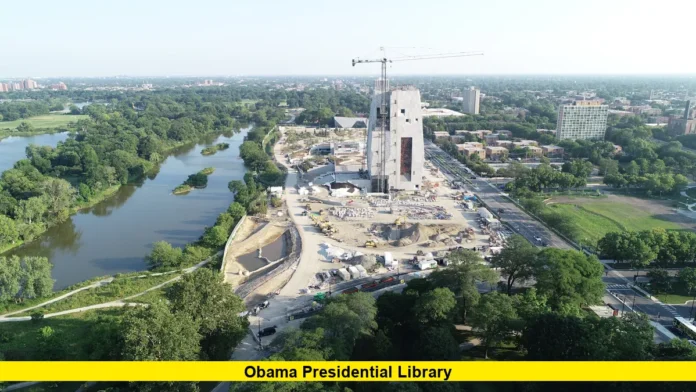

The Obama presidential library, officially known as the Obama Presidential Center, has become one of the most talked-about cultural landmarks in the United States following its long-awaited opening in Chicago. More than a decade after it was first announced, the sprawling campus on the city’s South Side now stands as a permanent tribute to Barack Obama’s presidency, his personal journey, and his enduring connection to the city where his political career began. For visitors, historians, and admirers of presidential history alike, the Obama presidential library represents both a museum experience and a living community space unlike any other presidential site in the country.
A Decade in the Making
The idea of building a home for Barack Obama’s presidential legacy dates back to 2015, when Obama and former First Lady Michelle Obama announced that Chicago would be the site of his future library. In a video released at the time, the former president explained that Chicago held special meaning for him, noting that the city was where he truly came into his own, both personally and professionally. That announcement set off years of planning, public debate, and legal challenges before construction could even begin.
The path from announcement to groundbreaking was not simple. Community organizations, including Friends of the Parks and Protect Our Parks, raised concerns about placing the center within Jackson Park, a historic public green space. Some groups worried about environmental impact, while others questioned whether transferring public parkland to a private foundation was legally sound. These disputes led to a federal lawsuit that delayed construction for years. It was not until June 2019 that a federal judge cleared the way for the project to move forward, allowing planning and construction to finally begin in earnest.
What the Obama Presidential Center Includes
Unlike traditional presidential libraries, the Obama Presidential Center is designed as a hybrid space that blends historical archives with community programming. The campus spans roughly nineteen to twenty acres within Jackson Park and includes several distinct components:
- A multi-level museum chronicling Obama’s presidency, personal history, and broader American milestones
- The Forum, a two-level space for events, learning programs, and public gatherings
- A branch of the Chicago Public Library, integrating everyday civic life into the campus
- Home Court, a community athletic facility
- Extensive gardens and public plazas, including the Women’s Garden and the John Lewis Plaza
- More than twenty site-specific art installations from artists around the world
Notably, the Obama Presidential Center is being described as the first fully digitized presidential library. Rather than housing the bulk of Obama’s official records on-site, the Obama Foundation has worked with the National Archives and Records Administration to digitize much of the archive, while original documents and artifacts remain preserved separately and are loaned to the center for rotating display. This approach marks a significant shift from how earlier presidential libraries have operated, prioritizing digital accessibility alongside the physical museum experience.
The Grand Opening Ceremony
The Obama Presidential Center held its dedication ceremony on June 18, 2026, drawing thousands of guests to John Lewis Plaza. The event brought together a wide range of political figures, celebrities, and cultural icons, reflecting the scale of Obama’s influence both nationally and internationally. Attendees included former administration officials, sitting and former elected leaders, and international dignitaries, alongside performers spanning multiple genres of music.
The ceremony featured musical performances from artists including Stevie Wonder, Bruce Springsteen, Jennifer Hudson, John Legend, and members of U2, among others, creating what many described as a celebratory and emotional atmosphere. During her remarks, Michelle Obama delivered a heartfelt tribute to her husband’s legacy, reflecting on his character and the work still ahead to strengthen American democracy. President Obama, in his own keynote remarks, spoke about shared American values and the responsibility of citizens to protect democratic institutions, describing the center as a reminder of what the country can be.
Following the invite-only dedication ceremony, the campus officially opened to the general public on June 19, 2026, which also marked the Juneteenth holiday. Organizers noted the symbolic significance of opening on that date, tying the center’s mission to broader themes of civil rights and progress. Reports from opening day described crowds reaching near capacity, with nearly two thousand visitors on the first day alone, some of whom were personally greeted by the Obamas.
Visiting the Museum Today
Since opening, the Obama Presidential Center has operated with a structure that separates free public campus access from ticketed museum entry. The outdoor spaces, including the gardens, plazas, and athletic facilities, remain free and open to everyone without a reservation. However, entry into the museum itself requires a timed ticket, a system similar to those used at other major Chicago cultural institutions.
General admission tickets grant access to all four levels of the museum, including the Oval Office replica and the Sky Room, which offers panoramic views of the surrounding South and West Side neighborhoods and the nearby lakefront. Adult tickets are priced at $30, while children’s tickets cost $23, and the center also offers free admission for Illinois residents on designated days each week. Given the high demand following the opening, tickets have often sold out well in advance, and the Obama Foundation continues to release additional dates on a rolling basis throughout the year.
The center is also accessible by public transportation, including several CTA bus routes and nearby Metra stops, making it a convenient stop for visitors exploring Chicago’s Hyde Park and Woodlawn neighborhoods. Its location places it close to other attractions such as the Museum of Science and Industry and the historic Jackson Park grounds, allowing visitors to combine a trip to the Obama presidential library with a broader day of sightseeing on the South Side.
Public Interest and Community Impact
The opening of the Obama Presidential Center has generated significant public interest, both for its historical importance and for its role in Chicago’s ongoing cultural landscape. Supporters have framed the center as a long-overdue investment in the South Side, an area that has historically received less development attention compared to other parts of the city. Programming plans include community events, educational partnerships with local schools beginning in the fall 2026 semester, and ongoing public exhibitions designed to engage visitors beyond a traditional museum walkthrough.
At the same time, the project has not been without criticism over the years. Some community members and advocacy groups raised concerns during construction about rising rents and the potential displacement of longtime residents near the site. Discussions about balancing preservation of public parkland with new development also shaped much of the public conversation throughout the center’s planning phases. These debates reflect broader questions that often accompany large-scale civic projects, particularly those built on historically significant public land.
Looking Ahead
With its doors now open, the Obama Presidential Center is expected to remain a major point of interest for tourists, students, and history enthusiasts for years to come. As digitization efforts with the National Archives continue, the center’s role as a modern, technology-forward interpretation of a presidential library is likely to draw attention from researchers and museum professionals studying how future presidential archives might be structured. Meanwhile, the Obama Foundation has indicated that public programming, guided tours, and rotating exhibits will continue to expand as the center settles into its role as a permanent Chicago institution.
For those planning a visit, checking current ticket availability in advance remains the most reliable way to secure entry, particularly during peak seasons or around notable anniversaries tied to Obama’s presidency. As with any major new attraction, details around hours, pricing, and programming may continue to evolve, and visitors are encouraged to confirm the latest information directly through official channels before planning a trip.
The Obama presidential library stands today not just as a record of a presidency, but as an active, evolving space intended to shape civic engagement on Chicago’s South Side for generations to come.
Have thoughts on the Obama Presidential Center, or planning a visit soon? Share your experience in the comments and stay tuned for more updates as this Chicago landmark continues to grow.