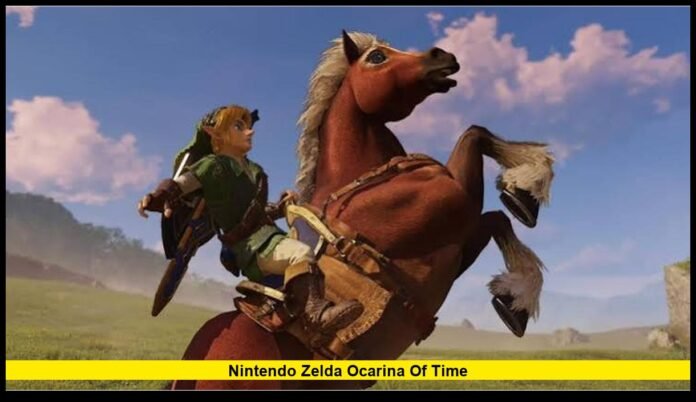

The nintendo zelda ocarina of time remains one of the most recognizable names in video game history, attracting interest from longtime fans and players discovering the Zelda franchise for the first time. Originally released in 1998 for the Nintendo 64, The Legend of Zelda: Ocarina of Time introduced a memorable three-dimensional adventure built around exploration, challenging puzzles, memorable characters, and an unforgettable musical experience. Nearly three decades later, its influence continues to shape conversations about Nintendo’s most important games.
The adventure follows Link, a young hero who becomes responsible for protecting Hyrule from Ganondorf’s growing ambitions. Along the way, players meet Princess Zelda, explore mysterious temples, discover powerful items, and learn melodies that influence the world around them. Its combination of fantasy storytelling and interactive gameplay helped establish a foundation for future three-dimensional action-adventure titles.
The latest development is the arrival of the Nintendo Switch 2 edition on November 5, 2026. This release brings a modern presentation to the familiar adventure, featuring redesigned environments, updated character models, improved controls, voiced story sequences, and refreshed music. Additional features provide new ways to follow Link’s progress and interact with the game’s musical elements.
For fans who remember playing the original, the new edition offers an opportunity to return to Hyrule with a different visual experience. For newcomers, it introduces a landmark Zelda adventure through a more contemporary gaming experience.
Nintendo Zelda Ocarina of Time: Latest Release Information
The biggest recent development surrounding Ocarina of Time is its Nintendo Switch 2 release in November 2026. The new edition preserves the original adventure while updating several aspects of its presentation and gameplay.
Rather than changing the story into an entirely new experience, the release focuses on making the established adventure more accessible and visually detailed.
The updated edition includes:
- Redesigned environments and character appearances.
- Improved lighting, textures, and animations.
- Voiced cutscenes and additional dialogue.
- Refreshed orchestral music.
- Updated camera and movement controls.
- A dedicated jump button.
- New progress-tracking features.
- Hall of Fallen Foes.
- ZELDA NOTES companion-app integration.
The game supports handheld, tabletop, and television play on Nintendo Switch 2.
Its U.S. listed price is $59.99, while the approximate digital installation size is 24.9 GB. Players purchasing the digital edition should consider the available storage on their console before downloading.
The new release also arrives during the 40th-anniversary year of The Legend of Zelda franchise, making it a particularly notable moment for the series.
An additional software update, version 1.1.1, became available on November 4, 2026. It introduced ZELDA NOTES compatibility and addressed several gameplay issues.
What Makes The Legend of Zelda: Ocarina of Time Special?
Ocarina of Time stands apart because it combines several different gameplay elements into one connected adventure.
Players are not restricted to fighting enemies or completing isolated missions. They must understand the world, investigate unfamiliar locations, communicate with characters, and discover how different objects can help them overcome obstacles.
The game begins in Kokiri Forest, where Link lives among a community of children. His peaceful surroundings change when the Great Deku Tree calls upon him to investigate a growing danger.
This early journey gradually introduces the wider kingdom of Hyrule and the characters connected to its future.
As Link travels, he discovers that his adventure is connected to a much larger struggle involving Princess Zelda, Ganondorf, and the Triforce.
The game uses its fantasy setting to introduce themes of courage, responsibility, friendship, and the consequences of time.
Its structure also encourages players to think carefully. An item discovered in one dungeon may become essential in another location. A melody learned during an early conversation may unlock an important opportunity much later.
This interconnected design helps explain why the game remains memorable.
The Story Behind Link’s Journey Through Hyrule
The central narrative begins with Link, who grows up in Kokiri Forest. Although he lives among the Kokiri, he is different from the other children because he does not initially have a fairy companion.
His circumstances change when the Great Deku Tree summons him and introduces him to the danger threatening the land.
Link receives Navi as his companion and begins traveling beyond the forest.
During the adventure, he encounters Princess Zelda, who understands that Ganondorf is pursuing a dangerous objective. Her concerns help Link recognize the importance of protecting the kingdom.
Ganondorf seeks the Triforce, a legendary source of power connected to Hyrule’s sacred history. His ambitions eventually transform the kingdom and create the central conflict of the game.
As the story progresses, Link must overcome challenges in different regions and obtain the abilities required to confront increasingly powerful enemies.
The narrative becomes particularly interesting when the game introduces its time-travel system.
Players experience Link’s journey during childhood and adulthood. These two periods show different versions of Hyrule, with changes in its locations, characters, and circumstances.
The passage of time gives the adventure a deeper emotional connection. Players can recognize places from earlier stages and understand how events have affected the kingdom.
The Nintendo Switch 2 edition retains this storyline while presenting important moments through updated cutscenes and additional dialogue.
Young Link and Adult Link: Two Different Experiences
The transition between young Link and adult Link is one of the most distinctive features of Ocarina of Time.
During the early part of the game, Link is a child who must discover the world and gradually understand his responsibilities.
His initial adventure introduces basic combat, exploration, musical mechanics, and the characters who become important to the larger story.
After a major turning point, players move forward in time and control an older version of Link.
The change affects much more than his appearance. Hyrule has developed differently, and familiar locations may contain new obstacles or dangers.
Some characters have changed, while others occupy different positions in the story.
The transition also influences gameplay. Certain equipment and abilities become available at different stages, meaning players must understand which version of Link is appropriate for particular challenges.
This system makes the game feel connected across two periods rather than divided into unrelated sections.
It also gives the story a memorable theme: the actions and discoveries of childhood can have significant consequences in adulthood.
Nintendo Zelda Ocarina of Time: Updated Graphics and Visual Design
One of the main reasons players are interested in the 2026 edition is its redesigned visual presentation.
The Nintendo 64 original was an important technical achievement when it launched. However, its graphics reflected the limitations of gaming hardware during the late 1990s.
The Nintendo Switch 2 edition gives Hyrule a new appearance through updated environments, character models, lighting, textures, and animations.
Forests appear more detailed, buildings have more developed surfaces, and familiar characters receive updated visual designs.
The changes are especially noticeable when exploring locations that returning players remember from the original.
Kokiri Forest, Hyrule Field, Death Mountain, and Zora’s Domain retain their recognizable identities while benefiting from the newer presentation.
Environmental details also make exploration more engaging. Players can examine surroundings more closely and appreciate aspects of the world that were less prominent in the original version.
The objective is not simply to make the game sharper. The redesign gives the adventure a more contemporary appearance while preserving the visual identity associated with Ocarina of Time.
For longtime fans, comparing the familiar environments with their updated versions is one of the most interesting aspects of the release.
Voiced Characters and Improved Storytelling
Another significant change is the introduction of voiced cutscenes and expanded dialogue.
The original Nintendo 64 adventure relied primarily on written conversations, animations, and musical cues to communicate its story.
The newer edition gives important scenes a more cinematic presentation.
Spoken performances allow characters to communicate emotions and reactions through their voices. Additional dialogue also creates opportunities to provide more information about the world and its inhabitants.
These changes can make certain interactions feel more personal.
For new players, the expanded storytelling may help them follow character relationships and important developments.
Returning players can experience familiar scenes with a different presentation.
However, the additional dialogue does not replace the original narrative. The main conflict, Link’s responsibilities, and the importance of Princess Zelda and Ganondorf remain central to the experience.
Improved Controls Make Exploration More Comfortable
Control improvements are another important part of the new release.
Three-dimensional movement was one of the defining achievements of the original Ocarina of Time. Its targeting system helped players manage combat in an environment where enemies and obstacles could appear from multiple directions.
The Nintendo Switch 2 edition preserves the familiar foundations while offering updated movement and camera options.
The right analog stick provides freely adjustable camera movement, allowing players to look around their surroundings without relying entirely on the original camera behavior.
A dedicated jump button also provides more direct control over Link’s movement.
This is a noticeable difference for people who are accustomed to modern action-adventure games.
Players can also select between different attack-control approaches, giving them flexibility in how they interact with enemies.
These adjustments make the game feel more familiar to contemporary audiences while maintaining its established gameplay structure.
The Ocarina: The Musical Heart of the Adventure
The ocarina is one of the most recognizable symbols associated with the game.
It is not simply an item that Link carries. The instrument is connected directly to the story, exploration, and puzzle-solving.
As players advance, they learn different melodies that produce specific effects.
Some songs help Link interact with the environment, while others are useful for traveling, communicating, or completing particular objectives.
Remembering these melodies is an important part of the experience.
Players must recognize situations in which music can provide a solution. Sometimes a song learned much earlier becomes useful in a completely different location.
The soundtrack also gives the game much of its emotional identity.
Several melodies are strongly associated with particular characters and regions. Their musical themes help create a memorable atmosphere throughout the adventure.
The Nintendo Switch 2 edition refreshes the music through orchestral arrangements and additional compositions for new story sequences.
The musical experience is further supported by ZELDA NOTES, which includes an interactive ocarina activity for compatible smart devices.
ZELDA NOTES: Features That Extend the Gaming Experience
ZELDA NOTES is a companion service designed to provide additional activities and information connected to Ocarina of Time.
Available through the Nintendo Switch App on compatible smart devices, the service offers several features for players who want to explore beyond the main campaign.
Its functions include:
Today’s Record
This feature provides a record of daily accomplishments and gameplay statistics. It allows players to review information about their progress and activities.
Gossip Quest
Players receive image-based clues that encourage them to locate particular places within the game. Completing these activities contributes toward rewards associated with the companion service.
Play Ocarina
The companion app includes an interactive musical activity that allows users to experiment with melodies through a virtual instrument.
Music Score Sharing
Players can create musical scores and share them through QR codes, providing another way to enjoy the game’s music.
Ocarina of Time Quiz
Fans can test their knowledge of the adventure through questions related to its characters, locations, and story.
Some connected functions require an internet connection, a Nintendo Account, and other applicable service requirements.
ZELDA NOTES is supplementary. Players can enjoy the central adventure without treating the companion app as a replacement for the main game.
Threads of Time: Keeping Track of Link’s Progress
Threads of Time is a new feature that helps players understand their progress throughout the story.
The feature uses a developing visual tapestry to represent important accomplishments and stages of the adventure.
As players advance, additional elements appear, creating a record of their journey.
This can be useful for players who do not complete the game in a short period.
Ocarina of Time includes several connected objectives, and returning to the adventure after a long break can sometimes make it difficult to remember previous accomplishments.
Threads of Time provides an additional reference point, helping players understand how far they have progressed.
It complements the existing gameplay without removing the need to explore locations and discover solutions independently.
Hall of Fallen Foes: Revisiting Enemies and Boss Battles
The Hall of Fallen Foes is another feature included in the new edition.
It provides players with a way to revisit information about enemies they have defeated and return to certain boss encounters.
The feature adds an additional activity for players who enjoy examining the creatures and challenges encountered throughout the campaign.
Boss battles are particularly important in Ocarina of Time because they often require players to understand enemy behavior and use the correct equipment.
Revisiting these encounters can provide another opportunity to appreciate the game’s combat design.
The Hall of Fallen Foes also gives the redesigned enemy models additional visibility beyond their original appearances during the main adventure.
Exploring the Most Important Locations in Hyrule
The kingdom of Hyrule contains several memorable regions, each contributing to the atmosphere and progression of the game.
Kokiri Forest
Kokiri Forest introduces players to Link’s childhood and the beginning of his adventure. Its woodland setting provides a peaceful introduction before the story expands into the wider kingdom.
Hyrule Field
Hyrule Field connects many important destinations. It provides room for exploration and helps players understand the geography of the world.
Hyrule Castle and Castle Town
These locations introduce important story developments and characters associated with the royal family.
Death Mountain
Death Mountain offers a volcanic environment and introduces challenges connected to the Goron people.
Zora’s Domain
This water-centered region features distinctive architecture, characters, and environmental challenges.
The Temples
The temples provide some of the adventure’s most demanding puzzles. Players must use their equipment, understand environmental mechanisms, and overcome enemies to progress.
The updated graphics make these destinations more detailed, giving returning players a new reason to explore familiar areas.
How Ocarina of Time Changed Three-Dimensional Adventure Games
Ocarina of Time is important not only because of its popularity but also because of its influence on game design.
When Nintendo moved the Zelda series into three dimensions, it faced the challenge of making exploration and combat understandable in a more complex environment.
The game’s lock-on targeting system became an important solution.
It allowed players to focus on particular enemies and manage their movement more effectively during battles.
This helped make three-dimensional combat more accessible and influenced the design of numerous later action-adventure games.
The game’s dungeons also demonstrated how environmental puzzles could work in a three-dimensional space.
Players had to understand the layout of rooms, identify interactive objects, and use equipment in creative ways.
The combination of these systems helped establish Ocarina of Time as a major milestone in gaming history.
Its influence remains relevant even as newer Zelda titles have introduced different approaches to exploration and progression.
Nintendo Zelda Ocarina of Time Compared With the Original Version
The Nintendo 64 original and the 2026 Nintendo Switch 2 edition share the same central adventure, but their presentation and features differ considerably.
| Category | Original Nintendo 64 | Nintendo Switch 2 |
|---|---|---|
| Release period | 1998 | November 2026 |
| Graphics | Original 3D presentation | Redesigned graphics |
| Environments | Original location designs | Updated environmental details |
| Camera | Original camera mechanics | Freely adjustable camera |
| Jumping | Context-based movement | Dedicated jump button |
| Storytelling | Primarily written dialogue | Voiced cutscenes and additional dialogue |
| Music | Original soundtrack | Refreshed orchestral arrangements |
| Progress tracking | Original guidance | Threads of Time |
| Additional features | Original gameplay experience | Hall of Fallen Foes and ZELDA NOTES |
The biggest difference is the way players experience the adventure.
The original remains historically important because of its pioneering design and distinctive presentation.
The newer edition focuses on modern accessibility and visual quality while retaining the story and gameplay structure that made the original recognizable.
Players who already know the adventure may enjoy comparing the two versions, while newcomers can experience its central ideas through updated technology.
Price, Storage, and Nintendo Switch 2 Availability
The Nintendo Switch 2 edition became available on November 5, 2026.
The listed U.S. price is $59.99, and the digital version requires approximately 24.9 GB of storage.
Before purchasing, players should consider the following details:
- The remake is designed for Nintendo Switch 2.
- It supports handheld, tabletop, and TV modes.
- Digital downloads require sufficient available storage.
- ZELDA NOTES requires a compatible smart device.
- Some companion features require internet access and applicable account requirements.
- Compatible amiibo figures are sold separately.
Nintendo has also announced Young Link and Young Zelda amiibo figures for 2027. These figures are associated with additional in-game rewards.
Prices, availability, and retail conditions may vary by region and retailer.
What Is Next for Nintendo Zelda Ocarina of Time?
Following the new release, players may be interested in whether Nintendo plans to introduce further improvements or additional content.
The current edition already includes redesigned graphics, updated controls, additional story presentation, Threads of Time, Hall of Fallen Foes, and ZELDA NOTES support.
The announced Young Link and Young Zelda amiibo figures are also part of the game’s upcoming product lineup.
However, Nintendo has not officially confirmed a separate story expansion, a future Master Quest addition, or another major downloadable-content release.
It is important to distinguish between features already included in the released game and developments that have not been announced.
For now, the main focus remains on experiencing the updated adventure and exploring the additional features available in the Nintendo Switch 2 edition.
Why Ocarina of Time Still Attracts New Players
Several decades after its original release, Ocarina of Time continues to attract interest because its central gameplay ideas remain engaging.
The adventure does not depend entirely on advanced graphics or complicated systems. Instead, it relies on carefully designed locations, memorable characters, challenging puzzles, and a story that develops through exploration.
Its music gives different locations a recognizable identity, while its dungeons provide challenges that reward observation and patience.
The relationship between young Link and adult Link also gives the narrative a distinctive structure.
For people who enjoy modern open-world games, Ocarina of Time offers a different experience. Its progression is more structured, and its dungeons play a central role in advancing the story.
That difference is part of its appeal.
The Nintendo Switch 2 edition provides a new opportunity to discover these qualities while benefiting from modern presentation and control improvements.
Final Thoughts
Nintendo Zelda Ocarina of Time continues to hold an important position in the history of Nintendo gaming. Its return on Nintendo Switch 2 brings together the familiar adventure of Link with redesigned visuals, modern controls, improved storytelling, orchestral music, and additional features.
The updated presentation gives players new reasons to explore Hyrule, but the heart of the experience remains unchanged. Link’s relationship with Princess Zelda, the threat posed by Ganondorf, the importance of the Triforce, and the challenges hidden within the temples continue to define the journey.
For longtime fans, the new edition provides an opportunity to revisit a memorable part of their gaming history. For newcomers, it offers a modern introduction to an adventure that helped shape the three-dimensional action-adventure genre.
The game’s continued relevance demonstrates that strong storytelling, thoughtful gameplay, and memorable music can remain meaningful long after their original release.
Have you played Ocarina of Time, or are you planning to experience it on Nintendo Switch 2? Share your favorite characters, locations, and memories in the comments, and stay updated for more Nintendo gaming news.