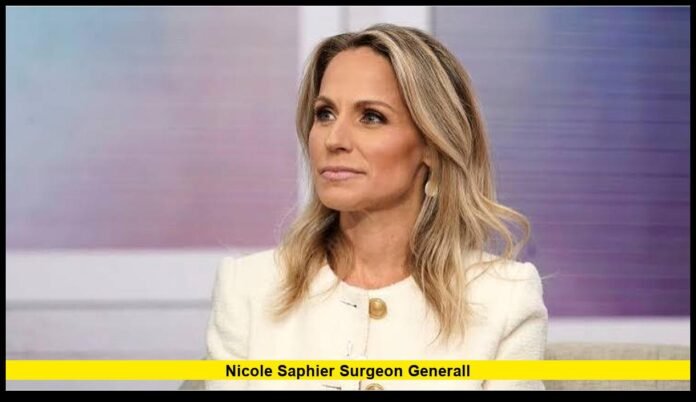

The nicole saphier surgeon general nomination is facing a major test in the U.S. Senate as Dr. Nicole Saphier undergoes confirmation scrutiny for one of the country’s most visible public-health positions. President Donald Trump selected Saphier in April 2026 after two previous nominees failed to secure a path to confirmation. Her latest Senate appearance has placed her medical background, vaccine views, public-health positions and financial interests at the center of attention.
Saphier is a radiologist specializing in breast imaging and has built a public profile through medical commentary, television appearances, writing and advocacy. If confirmed, she would become the nation’s top uniformed public-health communicator at a time when federal health policy is being debated over vaccines, chronic disease, nutrition, addiction and the role of government in medicine.
Who Is Dr. Nicole Saphier?
Dr. Nicole Saphier is a physician specializing in radiology and breast imaging. She has served as director of breast imaging at Memorial Sloan Kettering Monmouth in New Jersey and has developed a professional focus on breast cancer detection and women’s health.
Her medical education began at Ross University School of Medicine. She later completed residency training and an oncological imaging fellowship associated with the Mayo Clinic in Arizona.
Saphier’s career has extended beyond clinical medicine. She became a recognizable television medical commentator and appeared regularly on Fox News and Fox Business. Those appearances helped establish her as a public voice on subjects including COVID-19 policy, vaccines, cancer screening, chronic disease and government health regulations.
Her experience as a practicing physician is one of the central elements of her nomination. Unlike some recent candidates considered for senior federal health positions, Saphier has maintained a clinical medical career while simultaneously developing a public-facing role.
Trump Selected Saphier After Two Earlier Nominees
Saphier became Trump’s third nominee for surgeon general during his second administration.
The first nominee was Janette Nesheiwat, whose nomination was eventually withdrawn after questions surrounding her academic credentials. Trump subsequently nominated Casey Means, a prominent figure associated with the Make America Healthy Again movement.
Means’ nomination encountered significant resistance during the Senate confirmation process. Senators questioned her professional background and positions on vaccines, and the nomination ultimately stalled.
Trump then withdrew Means’ nomination and announced Saphier as his replacement in April 2026.
The selection gave the administration a nominee with a conventional medical degree and an established clinical career. At the same time, Saphier has expressed views on vaccination and federal health policy that have attracted considerable attention from both supporters and critics of the administration’s approach.
Saphier’s Medical Background Could Shape Her Approach
Saphier’s specialty is particularly relevant to her professional identity.
As a breast-imaging specialist, she has worked directly with patients facing cancer diagnoses and has advocated for greater awareness of breast cancer screening and dense breast tissue.
Dense breast tissue can make some cancers more difficult to identify through conventional mammography. Saphier has been involved in efforts encouraging patients to receive information about breast density and understand how it can affect screening.
Her background also gives her experience communicating complicated medical information to patients.
That communication experience could be particularly important in the surgeon general role. The office has historically relied heavily on public communication rather than direct control over federal health programs.
The surgeon general can issue public advisories, promote prevention efforts and communicate health risks, but does not independently run agencies such as the Centers for Disease Control and Prevention or the Food and Drug Administration.
Vaccine Questions Are Central to the Confirmation Process
Vaccines have become one of the most important issues surrounding Saphier’s nomination.
Her public record includes criticism of some vaccine mandates and questions about whether every newborn should automatically receive a hepatitis B vaccination at birth.
At the same time, Saphier has not embraced the claim that vaccines cause autism.
That distinction was especially significant during her Senate hearing, where lawmakers pressed her to address the question directly.
Saphier has previously stated that the overwhelming body of credible research does not establish a connection between vaccines and autism. During her latest Senate testimony, she said that vaccines are safe and do not cause autism.
Her position places her in a complicated position within the current federal health debate.
She has expressed skepticism about some vaccination mandates while also supporting vaccination and rejecting the claim that vaccines cause autism. This combination is important because the surgeon general would be expected to communicate about vaccination during a period of significant public disagreement over federal immunization policy.
Why the Hepatitis B Vaccine Debate Matters
One of the specific issues associated with Saphier is the hepatitis B vaccine given to newborns.
Saphier has questioned whether every newborn needs the vaccine immediately after birth in cases where the mother has tested negative for hepatitis B and other risk factors are absent.
Her comments have drawn attention because the birth dose has historically been part of U.S. childhood vaccination recommendations.
The issue is also politically significant because federal vaccine guidance has undergone substantial changes during the Trump administration.
For Saphier, the confirmation process therefore involves more than simply determining whether she supports vaccination generally. Senators are also examining how she would approach specific recommendations and whether she would support or challenge changes made by federal health officials.
Saphier Has Not Always Agreed With Trump
Although Trump selected Saphier for the position, her public record shows that she has not agreed with every health-related statement made by the president.
One example involves Trump’s comments about acetaminophen, commonly known by the brand name Tylenol, during pregnancy.
Saphier previously argued that the discussion needed greater medical context. She acknowledged that medication use during pregnancy should be approached carefully but also pointed to the risks associated with untreated fever and severe pain.
Her comments demonstrated that her public-health views are not identical to those of the president who nominated her.
That independence could become an important consideration if she is confirmed.
The surgeon general’s office is highly visible, and its occupant frequently communicates directly with the public on medical and scientific issues. Questions about how closely Saphier would align herself with the administration’s broader health agenda are therefore likely to remain relevant.
Her Connection to the MAHA Movement
Saphier has also attracted attention because of her relationship to ideas associated with the Make America Healthy Again movement.
Interestingly, she published a book using the words “Make America Healthy Again” in its title before the phrase became closely associated with Robert F. Kennedy Jr.’s political movement.
Her book focused on chronic disease, individual health behavior and government policy.
Saphier has argued for greater attention to lifestyle choices, nutrition and prevention in addressing America’s chronic health problems.
However, her public record does not indicate complete agreement with every position associated with the broader MAHA movement.
She has criticized some federal health decisions under Kennedy’s leadership and has publicly questioned certain approaches to vaccine policy.
That combination makes her nomination different from a straightforward appointment of a close ideological ally.
Financial Disclosures Are Another Major Issue
Saphier’s financial disclosures have become another important part of the confirmation debate.
Her filings identify investments in companies operating in industries that can intersect with public-health policy, including healthcare, food and tobacco.
Among the disclosed holdings are companies associated with processed food and beverages, pharmaceutical and healthcare businesses, and tobacco.
These investments do not automatically establish a conflict of interest. However, the surgeon general routinely addresses issues involving smoking, nutrition, chronic disease, addiction and other areas connected to the industries represented in such portfolios.
Saphier’s ethics arrangements address these concerns.
If confirmed, she has agreed to divest certain holdings that could create conflicts with her government responsibilities.
DropRx and Empower MD Also Face Scrutiny
Saphier’s ownership of DropRx has attracted additional attention.
DropRx sells dietary and herbal supplement products through Empower MD, a company in which Saphier has held an ownership interest.
Her financial filings state that she would resign from her positions with DropRx and Empower MD if confirmed to serve as surgeon general.
The supplement business has become relevant to the confirmation process because dietary supplements are regulated differently from prescription medications, and some ingredients used in supplements have raised safety questions.
One ingredient associated with products from the company is kava, an herbal substance that has been the subject of federal safety warnings concerning potential liver injury.
Saphier’s decision to separate herself from the business if confirmed is part of the ethics arrangements surrounding her nomination.
What Does the Surgeon General Actually Do?
The surgeon general is sometimes described as the nation’s doctor, but the title can create confusion about the position’s actual authority.
The surgeon general does not personally oversee every federal health agency.
Instead, the office has a prominent role in public-health communication and education. The surgeon general can issue advisories, highlight health emergencies, promote prevention initiatives and speak to the public about significant medical risks.
Past surgeons general have addressed subjects including smoking, obesity, HIV/AIDS, addiction, mental health and infectious disease.
The position also involves leadership of the U.S. Public Health Service Commissioned Corps.
That means Saphier’s potential appointment would give her a national platform, but it would not give her unilateral authority over vaccine policy, FDA regulation or CDC operations.
Why the Timing of Her Nomination Matters
Saphier’s confirmation comes during a particularly contentious period for federal health policy.
The United States is dealing with significant debate over vaccination recommendations and measles outbreaks. Senators at the latest hearing have focused heavily on whether federal health officials are providing clear and scientifically grounded information to the public.
Senate Health Committee Chairman Bill Cassidy, a physician, used the hearing to raise concerns about vaccination policy and recent measles deaths.
That environment makes the surgeon general position particularly visible.
If confirmed, Saphier would enter the office while the federal health system is undergoing major policy changes under Health Secretary Robert F. Kennedy Jr.
Her ability to communicate health information clearly while navigating disagreements within the administration would likely be an important feature of her tenure.
September 2026 Senate Hearing
The Senate Health, Education, Labor and Pensions Committee held Saphier’s confirmation hearing on September 16, 2026.
She appeared alongside other nominees for senior positions within the Department of Health and Human Services.
The hearing focused on several issues, with vaccines receiving particular attention.
Senators sought clear answers about her views on vaccine safety and autism, as well as her approach to public-health communication.
Financial interests also form part of the broader scrutiny surrounding her nomination.
The hearing itself does not make Saphier surgeon general. Senate confirmation remains necessary before she can formally take the position.
Is Nicole Saphier the Surgeon General Yet?
No.
As of the latest update, Saphier remains a nominee.
Her appearance before the Senate committee represents a major step in the confirmation process, but she must still receive Senate confirmation before becoming U.S. surgeon general.
This distinction is important because reports describing her as “surgeon general” before confirmation could incorrectly suggest that she has already taken office.
The position has remained vacant throughout Trump’s second term following the failure of previous nominees to complete the confirmation process.
What Happens Next?
Following the hearing, the Senate committee will consider the nomination before the broader Senate confirmation process can proceed.
The timing of any committee action and subsequent Senate vote will determine whether Saphier becomes the next surgeon general.
Her nomination is being considered against a backdrop of continuing disagreements over vaccines, chronic disease, food policy, pharmaceuticals, tobacco and the federal government’s role in healthcare.
Her medical background provides extensive clinical experience, particularly in breast imaging and cancer screening, while her public profile gives her familiarity with communicating medical subjects to a large audience.
At the same time, her previous comments on vaccines, her business interests and her financial disclosures are likely to remain important parts of the confirmation debate.
For readers searching for the nicole saphier surgeon general latest update, the key fact is that she has completed her major Senate hearing but has not yet been confirmed to the office.
What to Watch in the Confirmation Process
Several developments will determine the next stage of Saphier’s nomination.
First, the Senate committee’s handling of the nomination will indicate whether she has sufficient support to move forward.
Second, senators may continue examining her vaccine positions and her approach to federal health recommendations.
Third, her ethics agreement and proposed divestments will remain relevant because of her investments and business interests.
Finally, lawmakers will likely continue examining how she would operate within an HHS leadership structure that has pursued significant changes to federal health policy.
Until the Senate completes its process, Saphier’s status remains that of a presidential nominee rather than the confirmed surgeon general.