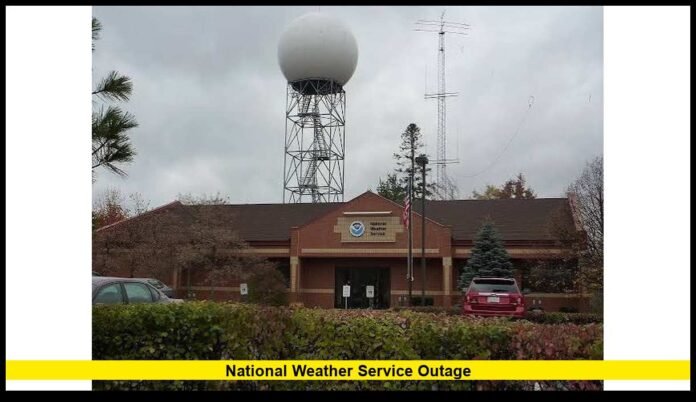

The National Weather Service outage reports circulating across the United States have raised concerns about access to weather forecasts, live radar images, severe weather alerts, and other critical information. However, the latest official information provides an important clarification: the National Weather Service (NWS) has confirmed that its radar systems and network communications are operating normally, with no widespread information technology or network outage reported.
Confusion intensified on November 13, 2026, when reports of a nationwide weather service disruption began circulating online. The situation attracted additional attention because the Federal Aviation Administration (FAA) was dealing with a separate nationwide telecommunications disruption that affected air traffic operations. As a result, some people questioned whether the country’s weather monitoring infrastructure was also experiencing technical problems.
The latest update from NWS Central Operations directly addresses those concerns. Its November 13 administrative message confirmed that radar data systems and network communications were functioning normally. The agency also clarified that there was no widespread National Weather Service IT or network outage.
For Americans checking whether weather.gov is working, the distinction between an actual service disruption and outdated information is important. The latest available information indicates that the agency’s primary weather services remain operational.
National Weather Service Outage: What Happened?
The National Weather Service became the subject of widespread online discussion after reports suggested that its weather information systems were experiencing nationwide technical problems.
The reports appeared during a period of heightened concern about telecommunications reliability across the country. The FAA had issued a nationwide ground stop on November 13 following communications problems affecting air traffic control operations. News about the aviation disruption contributed to confusion surrounding the separate reports involving the National Weather Service.
Some online discussions also referenced an NWS webpage carrying a notice titled “Attention: National Radar Outage.” The notice appeared to suggest that radar services across the country were unavailable.
However, the page contained outdated information and did not represent the agency’s current nationwide operating status.
The NWS subsequently clarified that its radar systems were functioning normally. Its central operations team also issued an administrative message confirming that network communications and radar data systems were operating as expected.
This clarification is particularly important because the National Weather Service provides information that millions of Americans depend on when preparing for dangerous weather conditions.
The latest information does not support claims that the entire national weather radar network has gone offline.
Latest National Weather Service Outage Update
The most important development is the official confirmation from NWS Central Operations on November 13, 2026.
In an administrative message issued at 23:01 UTC on Friday, November 13, the agency stated that its radar and network communications were operating normally.
The message specifically confirmed that there were no widespread NWS information technology or network outages.
This statement directly addressed concerns about a possible nationwide disruption affecting weather information.
The confirmation also helps distinguish between isolated technical problems, outdated website notices, and an actual nationwide service interruption.
As of the latest available update on November 14, there is no official confirmation of an ongoing nationwide National Weather Service outage.
The agency’s public website continues to provide access to several important weather information services, including:
- Local weather forecasts and current conditions.
- Active weather alerts and warnings.
- Standard and enhanced radar products.
- Flood and river information.
- Satellite imagery.
- Severe weather information.
- Marine and aviation weather forecasts.
These services are essential for people monitoring weather conditions, planning travel, preparing for storms, and protecting their homes and businesses.
Although individual webpages or specific services can occasionally experience temporary problems, those issues should not automatically be interpreted as evidence of a nationwide outage.
Why Did Reports of a Nationwide Radar Outage Spread?
Several factors contributed to the confusion surrounding the reported disruption.
One important factor was the appearance of an outdated National Weather Service notice. An old webpage maintained by the NWS Anchorage office contained a radar outage announcement without a clear publication date.
When people encountered the notice, some interpreted it as a current nationwide warning.
The timing also contributed to the misunderstanding. The FAA was experiencing a separate telecommunications problem that disrupted air traffic control operations. The resulting nationwide flight disruption generated considerable media attention.
Because both situations involved critical government-operated infrastructure, reports about the weather service attracted additional attention.
However, the two situations should not be treated as the same incident.
The FAA’s telecommunications disruption affected air traffic control communications. The NWS subsequently confirmed that its radar systems and network communications were operating normally.
There is no official confirmation establishing a connection between the FAA disruption and an NWS nationwide outage.
Social media also played a role in spreading conflicting information. Screenshots of older notices and reports without updated context can make a resolved or outdated issue appear current.
For readers following breaking weather news, checking the latest official agency statements is more reliable than relying on an isolated screenshot or an unverified social media post.
Is the National Weather Service Website Working?
The latest available information indicates that the primary National Weather Service website is operational.
The website remains the central public platform for accessing official U.S. weather forecasts, warnings, and safety information.
Visitors can use the platform to check weather conditions for their location by entering a city, state, or ZIP code.
The website also provides access to important weather resources through its navigation system.
These include local forecasts, graphical forecast maps, active alerts, radar imagery, satellite information, and specialized weather products.
The radar section is particularly important because it allows users to monitor precipitation and developing weather systems.
The availability of these services is especially valuable during periods of severe weather, when people need timely information to make decisions about outdoor activities, travel, and emergency preparations.
A website may occasionally load slowly or fail to display a particular feature because of a temporary connection issue, browser problem, or localized technical disruption.
That does not necessarily mean the entire National Weather Service infrastructure is experiencing an outage.
The agency’s central operations confirmation provides a more reliable picture of the nationwide situation than an individual user’s experience with a particular webpage.
Are National Weather Service Radar Systems Operating Normally?
Radar operations have been a central part of the recent discussion.
Weather radar allows meteorologists and the public to observe precipitation patterns, track storms, and monitor developing weather conditions.
The National Weather Service operates an extensive network of weather radar facilities across the United States.
These systems provide important information about thunderstorms, heavy rainfall, winter storms, and other potentially dangerous weather events.
The radar network is particularly important when meteorologists need to evaluate storm movement and identify areas that may experience hazardous conditions.
According to the latest administrative confirmation, NWS radar data systems were operating normally on November 13.
This directly contradicts claims that a nationwide radar outage had taken place.
However, normal nationwide operations do not mean every individual radar facility is guaranteed to be available at every moment.
Individual radar sites can experience scheduled maintenance, equipment problems, communication interruptions, or other localized technical issues.
Such incidents are different from a nationwide failure.
For that reason, users should distinguish between an isolated radar issue and a broader disruption affecting the entire national radar network.
How the National Weather Service Provides Weather Information
The National Weather Service operates under the National Oceanic and Atmospheric Administration (NOAA), which is part of the U.S. Department of Commerce.
Its primary responsibility is to provide weather, water, and climate forecasts and warnings that help protect lives and property.
The agency maintains a nationwide network of forecasting offices, observation systems, radar facilities, and specialized operational centers.
Local Weather Forecast Offices play an important role in monitoring conditions within their respective service areas.
Meteorologists use information from radar, satellites, surface observations, weather balloons, and numerical forecasting models to evaluate atmospheric conditions.
This information helps the agency produce forecasts and issue warnings when hazardous weather threatens communities.
The NWS also works with emergency management agencies, transportation organizations, broadcasters, and other government partners.
Its information supports decisions involving public safety, aviation, agriculture, marine operations, and emergency preparedness.
Because so many organizations depend on its information, maintaining reliable communication and data systems is essential.
A significant technical disruption could affect the delivery of weather products even if meteorologists continued monitoring conditions through other available systems.
That is one reason the agency’s November 13 clarification about normal radar and network operations was important.
Why National Weather Service Alerts Matter to Americans
Weather alerts are among the most important services provided by the National Weather Service.
These notifications help people understand when dangerous weather conditions are developing or approaching their communities.
The agency issues different types of alerts depending on the nature and severity of a potential hazard.
A weather watch generally indicates that conditions are favorable for a particular weather event.
A warning indicates that a hazardous event is occurring, imminent, or expected to develop within the affected area.
Advisories communicate weather conditions that may create inconvenience or hazards requiring additional precautions.
These alerts cover numerous threats, including:
- Tornadoes and severe thunderstorms.
- Flash flooding and river flooding.
- Hurricanes and tropical storms.
- Winter storms and blizzards.
- Extreme heat and dangerous cold.
- High winds and coastal hazards.
- Hazardous marine conditions.
For residents, timely access to these notifications can make a meaningful difference in emergency preparation.
People should not assume that an online discussion about a possible outage means weather warnings have stopped being issued.
The latest available NWS operational information does not establish a nationwide interruption in radar systems or network communications.
Nevertheless, maintaining multiple ways to receive emergency notifications is a sensible safety measure.
What Should People Do If Weather.gov Is Not Loading?
Although the agency has confirmed normal nationwide operations, some users may still encounter problems accessing specific weather products.
A website that fails to load on one device may work normally on another.
The problem could involve a local internet connection, browser settings, cached website information, or a temporary issue affecting a particular service.
People experiencing difficulty can take several practical steps.
Check the website again: Temporary loading problems may disappear without any action.
Try another browser: Comparing different browsers can help determine whether the issue is related to browser settings.
Check the internet connection: A weak or unstable connection can prevent weather maps and other information from loading correctly.
Use another device: Opening the service on a smartphone, tablet, or different computer can help identify a device-specific problem.
Check official NWS information: The agency’s operational status information provides updates about important service disruptions.
Monitor emergency notifications: NOAA Weather Radio and Wireless Emergency Alerts provide additional ways to receive important weather information.
During dangerous weather, people should avoid relying on a single website or application for emergency information.
Having multiple ways to receive warnings can help reduce the risk of missing important notifications.
How the National Weather Service Protects Communities During Severe Weather
The importance of reliable NWS operations becomes particularly clear during severe weather events.
When thunderstorms develop, meteorologists monitor atmospheric conditions and radar observations to identify potentially dangerous storms.
If conditions warrant, the agency can issue severe thunderstorm warnings or tornado warnings for affected locations.
During flooding events, the NWS monitors rainfall, river levels, and other hydrological information to assess potential threats.
Winter weather operations involve monitoring snowfall, ice accumulation, freezing temperatures, and wind conditions.
The information helps communities prepare for dangerous road conditions, power interruptions, flooding, and other weather-related emergencies.
Local emergency managers also use NWS forecasts and warnings to make decisions about evacuations, public announcements, and emergency response operations.
This cooperation makes the National Weather Service an important part of the country’s broader emergency preparedness infrastructure.
A functioning radar and communications network allows critical weather information to move between observation systems, forecasting offices, government agencies, and the public.
The latest confirmation that NWS radar and network communications were operating normally therefore provides important reassurance amid the recent confusion.
National Weather Service Outage and Public Safety Concerns
The recent discussion has highlighted how quickly uncertainty about government weather services can spread.
Weather information is not simply a convenience for people checking whether they need an umbrella.
For many Americans, it is essential for making decisions about personal safety, transportation, outdoor employment, farming, and emergency planning.
A person living in an area under a tornado warning may need immediate information about where the storm is moving.
A coastal community may depend on hurricane forecasts and storm surge warnings.
Drivers may need information about flash flooding, heavy snowfall, or dangerous winds before beginning a journey.
These situations explain why accurate information about the National Weather Service’s operational status matters.
At the same time, inaccurate outage reports can create unnecessary confusion.
People who believe that all radar and warning services have stopped functioning may turn away from reliable information or share misleading claims with others.
The November 13 confirmation from NWS Central Operations provides an important correction to those concerns.
It establishes that the reported nationwide radar outage was not supported by the agency’s latest operational assessment.
Latest Developments and What to Watch Next
As of November 14, 2026, the most significant confirmed development is that the National Weather Service has reported normal radar data systems and network communications.
The NWS Central Operations administrative message issued late on November 13 remains an important reference point for understanding the situation.
The public website also continues to provide access to forecasts, active alerts, radar information, and other weather resources.
There is no official confirmation of an ongoing nationwide NWS outage or a nationwide radar shutdown.
The agency’s operational status information remains the appropriate place to check for subsequent developments.
Users should also remember that individual service interruptions can occur without affecting the entire organization.
Any future reports of technical problems should be evaluated according to the affected system, geographic area, and official agency confirmation.
At present, the available evidence does not support claims that Americans have lost access to the National Weather Service’s nationwide radar infrastructure.
Final Thoughts
The National Weather Service outage reports that attracted attention on November 13 created understandable concerns about the availability of weather forecasts, radar imagery, and emergency alerts.
However, the latest official information provides a clearer picture of what happened.
NWS Central Operations confirmed that radar data systems and network communications were operating normally and that there were no widespread information technology or network outages.
Outdated information on an individual NWS webpage contributed to confusion, while the separate FAA telecommunications disruption added to public concern.
As of November 14, there is no official confirmation of an ongoing nationwide National Weather Service outage.
Americans can continue using the agency’s primary weather services while remaining attentive to local conditions and official emergency notifications.
Reliable weather information remains essential, particularly during periods of severe storms, flooding, winter weather, and other dangerous conditions.
Stay informed about the latest National Weather Service developments, and share your experience with weather radar and forecast services in the comments below.