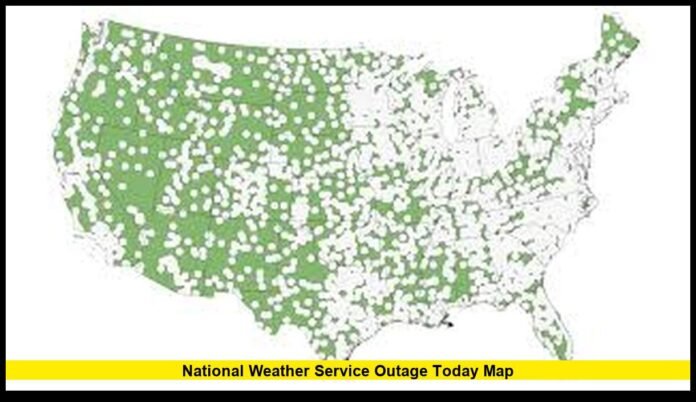

The National weather service outage today map has become an important search for Americans looking to determine whether the country’s weather monitoring network is experiencing technical difficulties. Questions about radar availability, weather.gov accessibility, NOAA Weather Radio interruptions, and emergency alert services have attracted attention following reports of a possible nationwide disruption. However, the latest official information provides an important clarification: the National Weather Service (NWS) reported that its radar data systems and network communications were operating normally on November 13, 2026. The agency also rejected reports suggesting that its entire national radar network had gone offline. As of November 14, there is no verified official confirmation of a nationwide NWS radar shutdown in the latest information reviewed.
Understanding the current situation requires looking beyond individual outage reports. The National Weather Service operates several interconnected but distinct services, and a problem affecting one website or local weather product does not necessarily indicate a failure across the entire forecasting system.
National Weather Service Outage Today: Latest Situation Across the United States
The recent discussion surrounding a possible National Weather Service outage developed after reports circulated online claiming that national radar services were unavailable. The timing attracted additional attention because the Federal Aviation Administration experienced a separate telecommunications disruption on November 13 that resulted in a nationwide ground stop for departing flights.
As information about the aviation disruption spread, some online posts suggested that weather radar services were also experiencing widespread technical problems.
The NWS addressed those reports directly. Its public communication stated that no nationwide radar outage had occurred and that the agency’s radar website was operational. The agency also explained that outdated information appearing on individual webpages had contributed to the confusion.
NWS Central Operations provided additional clarification through an administrative message issued at 6:01 p.m. Eastern on November 13. The notice confirmed that radar data systems and network communications were operating normally, with no widespread NWS information technology or network outages.
A subsequent administrative message at 11:01 p.m. Eastern also stated that NWS radar and network communications were operating normally.
These updates are significant because they distinguish an actual operational disruption from inaccurate or outdated information circulating online.
For people checking the National Weather Service outage today map, the central takeaway is that the reported nationwide radar shutdown was not confirmed by the agency.
What the National Weather Service Outage Map Actually Shows
An outage map can help users identify areas where people are experiencing difficulties accessing a particular online service. However, not every map associated with the National Weather Service provides the same information.
There are three different types of information that people commonly confuse when searching for NWS outage updates.
Third-party website outage maps
Independent monitoring platforms collect reports from users who encounter problems accessing websites and digital services. Their maps may display geographic concentrations of reported errors, connection failures, or slow loading times.
These reports can help identify possible patterns, but they do not establish that an official government system has experienced a confirmed technical failure.
NOAA Weather Radio outage information
The National Weather Service also provides information about NOAA Weather Radio transmitter interruptions. This resource focuses on broadcast stations experiencing outages or degraded performance.
It can help people determine whether a local transmitter is unavailable, but it does not represent the operational condition of the entire national radar network.
National weather radar maps
The NWS radar platform displays precipitation and atmospheric activity across the United States. It is designed for weather monitoring rather than tracking website outages.
These different resources serve separate purposes. Anyone researching a possible service disruption should identify which system the map actually monitors before interpreting its results.
Latest NWS Radar Status and National Weather Map Availability
The National Weather Service radar network plays a central role in monitoring weather conditions throughout the United States.
Its radar products help meteorologists observe precipitation, track developing storms, examine rainfall intensity, and monitor weather systems moving across different regions.
The national radar mosaic combines information from individual radar installations to provide a broader picture of weather activity.
Users can also examine individual radar locations when they need more localized information.
Important radar features include:
- National radar imagery showing precipitation across large geographic areas.
- Local radar products for monitoring weather near individual communities.
- Reflectivity information showing the intensity and distribution of precipitation.
- Radar loops that help users follow the movement of storms.
- Weather information that supports severe storm monitoring.
- Additional products used by meteorologists and emergency management organizations.
The recent outage reports raised questions about whether these products were still receiving information.
However, the NWS confirmed that its radar data systems were operating normally during the November 13 incident. Its administrative communications also indicated that network operations remained normal.
This does not mean every individual radar installation is guaranteed to remain available continuously. Equipment maintenance, local hardware failures, and temporary data transmission problems can affect individual products.
Nevertheless, those isolated interruptions should not be confused with a nationwide radar shutdown.
Why the National Weather Service Outage Reports Created Confusion
The November 13 reports attracted attention partly because they appeared during a separate disruption involving the country’s aviation communications infrastructure.
The FAA ordered a nationwide ground stop for departing flights after a telecommunications problem affected air traffic control communications. The disruption prompted extensive coverage and raised questions about the reliability of systems supporting critical national services.
During the same period, online discussions began circulating claims that the National Weather Service was experiencing a nationwide radar outage.
An outdated webpage maintained by the NWS Anchorage office contributed to the confusion. The page contained a heading referring to a national radar outage but did not clearly display the original publication date.
People who encountered the notice could reasonably mistake it for a current announcement, particularly when they saw similar claims circulating elsewhere.
The NWS subsequently clarified that the information was outdated and did not represent the current operational condition of its radar network.
Another factor was the speed at which screenshots and short social media posts circulated. When people share technical notices without their original publication dates or surrounding context, older information can appear to describe a developing emergency.
The NWS response helped establish the difference between the outdated webpage and the actual status of its operational systems.
There is no verified official finding establishing that the FAA telecommunications disruption caused an NWS radar outage. The two incidents should therefore be treated separately.
Different Types of National Weather Service Outages
The National Weather Service operates multiple information systems. Understanding their differences helps explain why users can experience technical problems without the entire agency becoming unavailable.
1. Weather.gov website problems
Weather.gov provides access to local forecasts, watches, warnings, advisories, and other weather information.
A website accessibility problem may prevent someone from opening a forecast page or retrieving information for a particular location.
Such a problem does not automatically mean radar equipment or meteorological forecasting operations have stopped.
2. Radar data interruptions
Radar interruptions involve the collection, processing, or distribution of radar information.
A problem affecting one installation may create a gap in local radar coverage. Other radar stations can continue providing information across surrounding areas.
3. Weather observation problems
Weather observations provide information about current atmospheric conditions, including temperature, wind, humidity, and pressure.
Some observation stations may experience equipment failures or reporting delays. These issues can affect individual data points without establishing a nationwide outage.
4. NOAA Weather Radio interruptions
NOAA Weather Radio broadcasts weather information and emergency messages through a network of transmitters.
A transmitter problem can affect reception in a particular coverage area. Other stations may continue broadcasting normally.
5. Communication and data distribution problems
The NWS depends on communication infrastructure to exchange information among weather offices, operational centers, and external distribution systems.
A communication interruption can affect the delivery of certain products or delay updates. Its actual impact depends on which systems experience difficulties.
Keeping these categories separate is essential when evaluating reports about the National Weather Service outage today map.
How to Check Whether the National Weather Service Is Down Today
People experiencing problems with weather information can follow a few practical steps to determine whether the issue is widespread.
The first step is to review the official NWS operational status information.
The National Weather Service maintains a status page that directs users to NCEP Central Operations for administrative announcements about operational services and applications.
These announcements can provide information about system maintenance, communication interruptions, technical developments, and other operational conditions.
The NWS Central Operations website is also useful because it provides access to the latest administrative messages and information about national forecasting operations.
Users should examine the publication time of each notice. An announcement from a previous day may describe a situation that has already been resolved.
Another useful step is to compare different NWS services. If a local forecast page does not load, users can check whether the national radar platform remains accessible.
A practical verification process includes:
- Review the most recent NWS operational announcement.
- Check the national radar mosaic for current imagery.
- Open an individual radar product to compare availability.
- Examine the local forecast page separately.
- Review NOAA Weather Radio transmitter information when broadcasts are unavailable.
- Compare third-party outage reports with official agency statements.
This process provides a more reliable assessment than relying on one screenshot or an isolated social media report.
What to Do When Weather.gov or NWS Radar Will Not Load
Even when national systems are operating normally, individual users may encounter problems accessing weather information.
These difficulties can result from browser settings, local internet connectivity, temporary server responses, or device-related issues.
Several basic troubleshooting steps may help.
Refresh the webpage: Reloading the page can resolve a temporary loading issue or retrieve updated information.
Try another browser: Opening the same forecast in a different browser can help identify whether the problem involves browser settings or extensions.
Check the internet connection: A weak Wi-Fi signal or local network problem may prevent weather information from loading.
Use another device: Testing the service on a smartphone, tablet, or computer can help determine whether the issue is limited to one device.
Check other official weather products: If a local forecast page is unavailable, another NWS product may still provide useful information.
Users should also be careful with older screenshots showing outage announcements. Always consider the original publication date and check for subsequent agency updates.
How an Actual Weather Service Outage Could Affect Americans
Reliable weather information supports decisions involving public safety, transportation, agriculture, aviation, business operations, and emergency planning.
The National Weather Service provides forecasts and warnings covering numerous hazards, including tornadoes, severe thunderstorms, hurricanes, flash floods, winter storms, and extreme temperatures.
A genuine interruption affecting an important service could create challenges for people who depend on timely weather information.
For example, unavailable radar imagery could make it harder to follow the movement of approaching storms. Delayed observations could limit access to current weather conditions at particular reporting locations.
Similarly, a website accessibility problem could prevent users from viewing certain forecasts or warning details through their usual method.
However, the consequences depend on the specific system involved.
A temporary website problem does not automatically mean meteorologists have stopped producing forecasts. Likewise, an interruption involving one NOAA Weather Radio transmitter does not establish that every emergency notification channel has failed.
This distinction is particularly important during severe weather.
Americans should maintain access to more than one reliable source of emergency information instead of depending entirely on a single website or mobile application.
Alternative Ways to Receive Weather Alerts During Technical Problems
People should have alternative ways to receive urgent weather information, especially during periods of dangerous weather.
Several established systems provide additional access to forecasts and emergency notifications.
NOAA Weather Radio: Dedicated receivers can provide weather forecasts, watches, warnings, and emergency broadcasts through local transmitters.
Wireless Emergency Alerts: Compatible mobile phones can receive geographically targeted emergency notifications for certain serious threats.
Local television stations: Television weather departments provide radar coverage, forecast information, and updates about developing storms.
Local radio stations: Radio broadcasts remain useful for receiving weather information, particularly when internet access becomes unreliable.
Local emergency management agencies: State and local authorities may distribute safety information through established notification systems.
Each option has different coverage and availability requirements. For example, NOAA Weather Radio reception depends on transmitter coverage, while wireless alerts depend on compatible devices and cellular network availability.
Using multiple notification methods can help households remain informed when an individual service becomes temporarily inaccessible.
What the Latest Updates Mean for the National Weather Service
The recent reports highlight the importance of accurate operational information when technical problems attract national attention.
The NWS response on November 13 addressed the central concern by confirming that its radar systems and network communications were functioning normally.
NWS Central Operations also provides a continuing source of administrative updates about national weather technology and forecasting infrastructure.
Its operational responsibilities include monitoring network services, managing information technology systems, supporting weather applications, and maintaining the infrastructure used across the NWS.
These functions are important because weather forecasting depends on the availability of reliable information and communication systems.
As of November 14, the latest verified information reviewed for this report does not establish a nationwide NWS radar shutdown. Individual technical interruptions may still occur, but there is no official confirmation that the entire national radar network has stopped operating.
People following the National Weather Service outage today map should pay attention to new administrative announcements rather than assuming that older outage notices describe current conditions.
Final Thoughts
The National Weather Service outage today map remains relevant to Americans seeking dependable information about radar availability, website performance, NOAA Weather Radio interruptions, and national weather monitoring.
The latest official developments provide an important clarification regarding the November 13 reports. The NWS stated that its radar website was operational, while NWS Central Operations confirmed that radar data systems and network communications were functioning normally.
The confusion largely involved outdated information that appeared to describe an active nationwide outage. The agency’s statements did not support that conclusion.
For users, the most reliable approach is to distinguish between website problems, local radar interruptions, transmitter outages, and nationwide system disruptions. Checking current operational announcements and maintaining alternative sources of emergency weather information can help people make informed decisions.
Weather conditions can change quickly, and reliable warnings remain essential for public safety across the United States.
Share your thoughts in the comments and continue checking for the latest verified National Weather Service radar and outage updates.